Maecenas sollicitudin

California, United States.

Author title

Autem vel eum iriure dolor in hendrerit in vulputate velit esse molestie consequat, vel illum dolore eu feugiat nulla facilisis at vero eros et dolore feugait.

Author Archive by admin

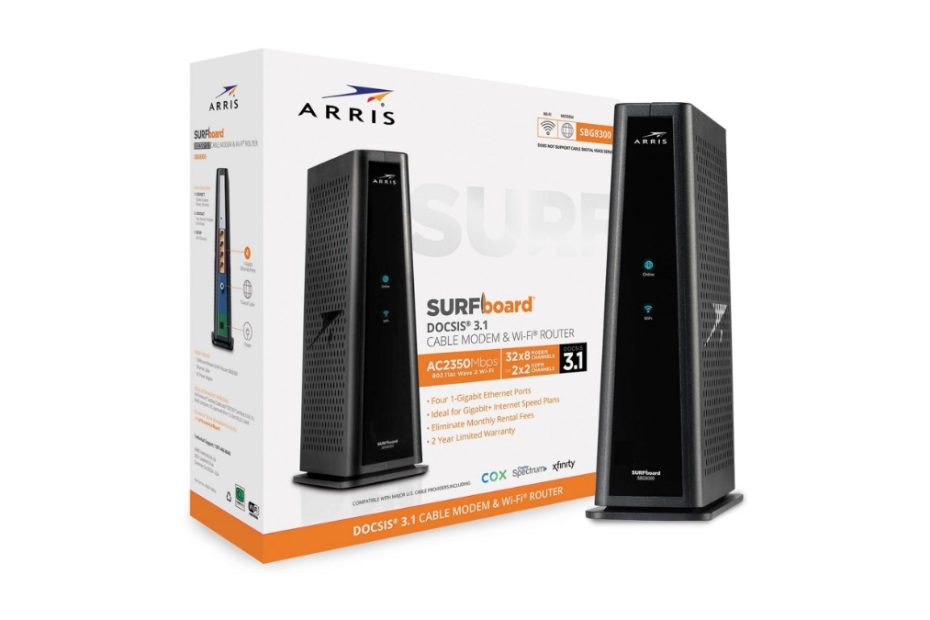
Arris Surfboard sbg8300

Arris Sbg8300 vs Netgear C7800 Which One is Better

Arris Sbg8300 is a wireless cable modem gateway with legacy wifi 6, a wireless ac2350 router with built-in DOCSIS 3.1 cable modem. How does Arris sbg8300 vs Netgear c7800 perform?

In this article:

Legacy Cable Modem Gateway

Arris enters the WiFi-6 arena with the release of the Surfboard G36 wireless gateway, following the success of its predecessor, the Surfboard SBG8300, which relied on legacy WiFi-5 technology. And Arris just unveiled its ultimate product with the flavored of next generation wifi 7 technology – the Arris Surfboard G54.

The question arises: is it still a wise choice to invest in the Arris SBG8300, or is the new Arris G36 a more compelling option?

See also Netgear CM2000 and Motorolla MB8611 DOCSIS 3.11 cable modem, native cable modem you may add to wifi router such as Deco X95, or connect to new eero 7.

Similarly, Netgear introduces the CAX80 and CAX30 with WiFi-6 technology after the triumph of the Netgear C7800, a device based on legacy WiFi-5 technology. In a dilemma between Arris SBG8300 and Netgear C7800, especially if you’re sticking with a legacy WiFi-5 network, which one offers a more economical solution?

Arris Cable Modem Gateway

So far Arris introduced few numbers of cable modem gateway products – the compact device that integrates wifi router and cable modem for simple installation and reduce network cable cluttering, ranging from legacy wifi-5, wifi-6 and the latest one is wifi 7.

  • Arris SBG7400
  • Arris SBG7600
  • Arris SBG8300
  • Arris G34 / G36
  • Arris G54

Before the Surfboard SBG8300 series, Arris had already unveiled cable modem wireless router products that were popular at that time including Surfboard SBG7400 and SBG7600 series. These cable modem gateway products, with varying speeds, shared a commonality – an integrated wireless router boasting wave 2 WiFi AC2350 simultaneous dual-band capabilities. Technically, each model promises WiFi speeds of up to 1733Mbps @5GHz and up to 600Mbps @2.4GHz.

Arris SBG8300

Distinguishing factors

The primary distinctions lie in the cable modem types and speeds integrated into the wireless router. Refer to the following table for a detailed breakdown. While both Surfboard SBG7400 and SBG7600 operate on DOCSIS 3.0, the Arris SBG8300 steps into the DOCSIS 3.1 realm, offering speeds ten times faster than its predecessor.

The second differentiation is in the downstream internet speed, particularly in the number of channel bonding. The SBG7600 boasts 32x channel bonding with speeds up to 1.23Gbps, a notable difference compared to the 24x channel bonding of the SBG7400. Given the backward compatibility of the DOCSIS 3.1 cable modem with existing DOCSIS 3.0 infrastructure, investing in the SBG8300 proves worthwhile for those seeking blazing internet speeds of up to 4Gbps. As a reference, the ultimate Arris G54 supports double blasting internet speed of up to 10Gbps.

Spec comparison table Surfboard Series

Table 1 Surfboard Sbg8300 vs Sbg7600 vs Sbg7400

 Surfboard sbg7400Surfboard sbg7600Surfboard sbg8300
Cable modemDOCSIS 3.0DOCSIS 3.0DOCSIS 3.1
Channel bonding24 x 832 x 82×2 OFDMA / 32 x 8 DOCSIS 3.0
Downstream Internet speed1.0Gbps1.23Gbps4Gbps
Upstream speed240Mbps240Mbps1Gbps

As the Arris SBG8300 hits the market, its primary contender emerges in the form of the Netgear C7800 (aka Nighthawk X4s), which debuted a few months before the SBG8300 release. The competition between these two products sets the stage for a comprehensive comparison.

With the advent of WiFi 7 technology, Arris expands its lineup by introducing the ultimate Arris Surfboard G54 alongside the popular Arris G34 and Arris G36, both still grounded in WiFi 6 technology with built-in DOCSIS 3.1 cable modems. The Arris G54 boasts two multi-gig 10Gbps Ethernet ports and two additional 2.5Gbps ports. To delve into further details about the Arris Surfboard G54, click here Arris Surfboard G54.

To learn more details about Arris G34 and G36, click here Motorola Mg8725 which discusses those two Arris g34 and g36 cable modem gateway which are still based on wifi 6 standards.

Now let’s discuss which of the arris sbg8300 and Netgear C7800 is worth buying if you don’t want to switch to wifi-6 network or super fast wifi 7 technologies.

Arris Sbg8300 vs Netgear C7800

Upon its initial release, the Arris SBG8300 was competitively priced at around $100 less than the Netgear C7800, strategically positioning itself as a more economical alternative. This pricing strategy aimed to capture the attention of customers seeking a similar product at a more budget-friendly rate, despite a few technical specification differences.

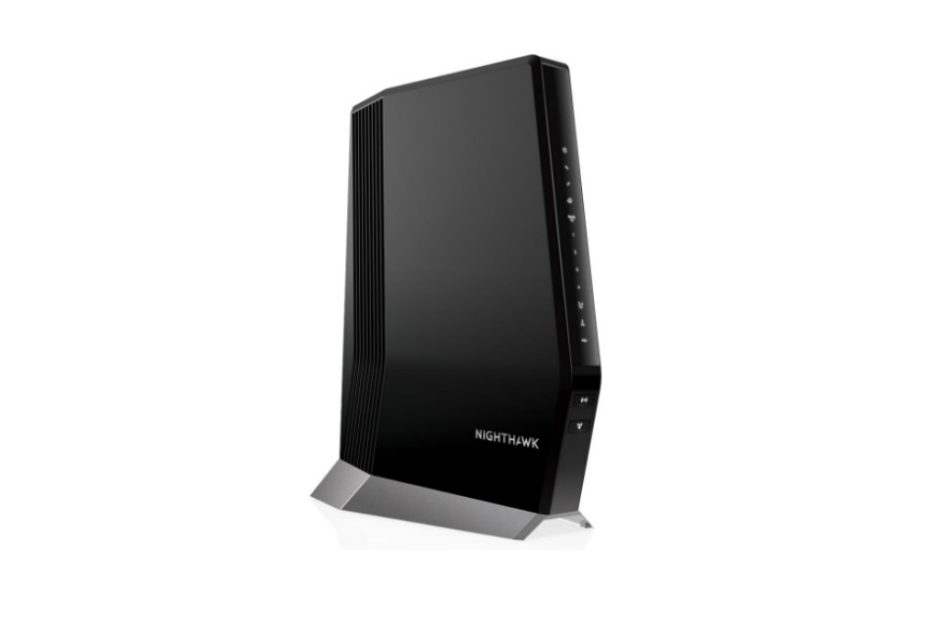
Netgear C7800 Cable Modem Wifi

So, what sets these two products apart? The spec comparison table below outlines the primary distinctions between the Arris SBG8300 and Netgear C7800, aiding you in identifying the main differences, if any.

See also comparison Motorola DOCSIS 3.1 cable modem vs Arris, both native DOCSIS 3.1 cable modem and gateway.

Cable modem

Both products share a commonality in featuring a built-in DOCSIS 3.1 cable modem, offering speeds up to 10Gbps. This ensures compatibility with cable providers employing DOCSIS 3.1 infrastructure, such as Cox, Spectrum, Xfinity, and other US cable providers. The backward interoperability with DOCSIS 3.0 infrastructure provides added flexibility and peace of mind.

Wifi router

While both devices utilize simultaneous dual-band technology, they operate in different network segments. The Surfboard SBG8300 employs wave-2 AC2350 technology with a total aggregated bandwidth of up to 2,350Mbps. In contrast, the Netgear C7800 utilizes wave 1 AC3200 technology, delivering a total aggregated bandwidth of up to 3,200Mbps.

Port interfaces

And one more physical difference is the existence of two USB 3.0 ports on the Nighthawk X4s (Netgear C7800) that is absent on the Arris Sbg8300. This USB port is typically used for sharing printer or hard disk storage. However, when you use Windows PC platform at home you can utilize printer and file sharing feature offered by Windows series as well as Mac platform.

Table 2 Arris Sbg8300 vs Netgear C7800

ModelArris Surfboard SBG8300Netgear C7800 (aka Nighthawk X4s)
Cable modemDOCSIS 3.1DOCSIS 3.1
Cable speeds10Gbps download speed (2 x 2) OFDM 32 x 8 Modem Channel , up to 1Gbps downstream2×2 OFDM ready up to 9Gbps / 32 x 8 channel bonding speeds of up to 1Gbps internet downstream
Wifi technologyDual band AC2350 wave 2Dual band AC3200 wave 1
Wifi speeds1,733Mbps @5GHZ 600Mbps @2.4GHz2,200 Mbps @5GHz 1,000 Mbps @2.4GHz
Antenna3 x 3 and 4 x 4 MIMO antenna arraysFour (4) high performance active antennas
Ethernet ports4 x 10/100/1000 Base-T Ethernet (RJ-45 connector) MDI /MDI-XFour (4) Gigabit Ethernet LAN ports
USB portsN/ATwo (2) USB 3.0 ports
ProcessorUnspecifiedDual core 1.5GHz processor with 128MB Flash and 256MB RAM
Price$249.00$199.99
Which One to choose

With few technical advantages on Netgear C7800 Nighthawk x4s cable modem wireless router, you can choose between Netgear c7800 with better technical features, however this products has been marked as discontinued. So, it’s much better to choose Arris SBG8300, or you also like to opt Arris G36.

To learn more spec details and manufacturer’s description, click the product link below to shop in Amazon (#ads).

Related products

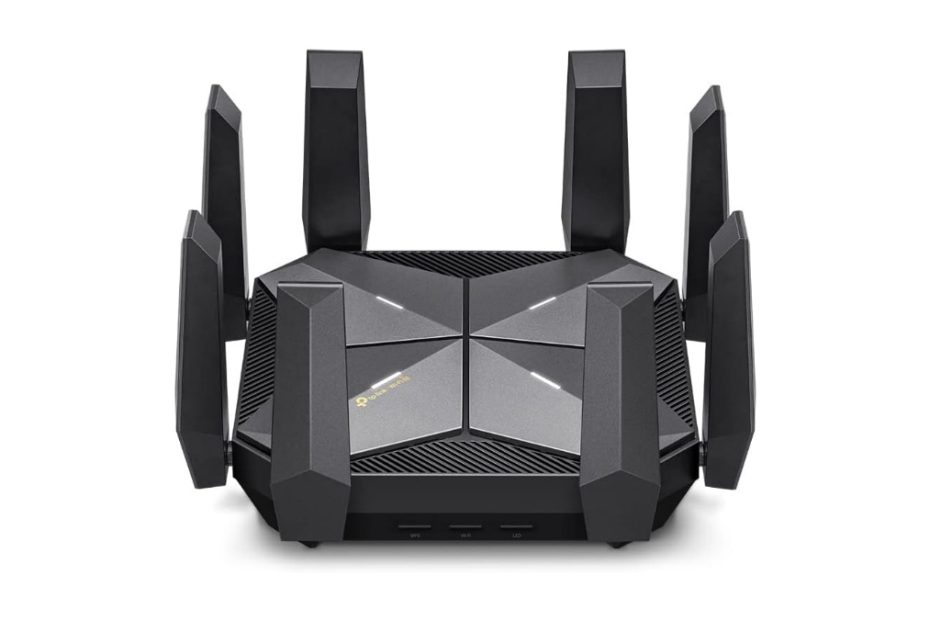
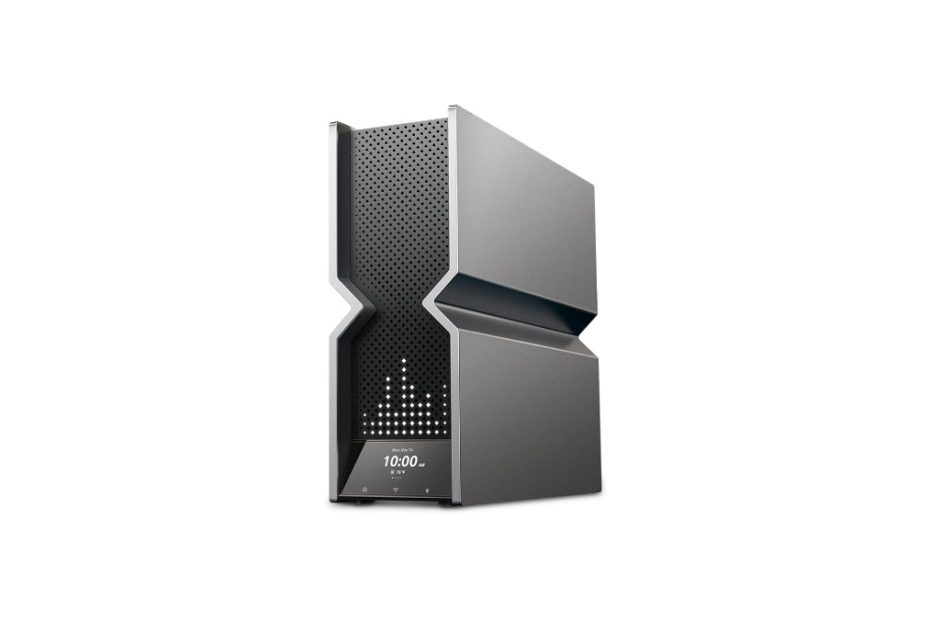
To taste the next generation of wifi 7 technology, you may start with lower level wifi 7 network segment product, try this Archer BE550 BE10000, instead of Asus Rog Rapture AXE11000.

TP-Link Deco X95 vs Orbi vs Asus Which One is Better Value

After the triumph of the Deco X90, TP-Link launched the Deco X95, which boasts several enhanced features. This move was likely aimed at competing with the latest Orbi and Asus products in the mid-range network segment, specifically between the AX6000 and AX7800 models. When considering the best value for your money, which of these products would be the ideal choice?

In this article:

Newer TP-link Deco X95

Why did TP-Link feel the need to introduce the new Deco X95 alongside their previous model, the Deco X90? Is it because their competitors, Asus and Netgear, have also released new products with only minor feature enhancements? We will explore this further in the following paragraphs.

TP-Link Deco X95 vs X90

To begin our analysis, let us take a closer look at the new Deco X95. What sets it apart from the Deco X90? Table 1 below presents a specification comparison between the two models, highlighting a few key differences.

Network segment different

The most notable distinction is in the network segment each series operates in. The Deco X95 functions at the AX7800 network segment, while the Deco X90 operates at the AX6600 level. One of the 5GHz bands on the Deco X95 delivers twice the bandwidth of the Deco X90, with speeds of 2400Mbps compared to the Deco X90’s 1200Mbps. The other two bands distribute the same bandwidth for both models.

TP-Link Deco X95

See also comparison between Orbi 863 vs Deco X90 which also sit at ax6000 network segment.

Ethernet Ports

Both the Deco X90 and Deco X95 feature a single multi-gig 2.5Gbps WAN/LAN port with auto-sensing capabilities. This means that if your internet service provider offers a multi-gig plan of up to 2.5Gbps, you can take advantage of it. However, it is essential to ensure that your modem also supports a 2.5Gbps port, such as the Arris S33 or Netgear CM2000, if you have a cable internet connection.

The Deco X95 has an advantage over the Deco X90 when it comes to Ethernet ports, as it features three ports compared to the X90’s two. This additional port is particularly advantageous when configuring a wired Ethernet backhaul with a star topology, especially when using three Deco nodes. With three Deco X90 units, you can only use a daisy chain backhaul topology, and a separate unmanaged switch is required to implement a star backhaul topology.

The addition of another Ethernet port is a strategic move by TP-Link to gain a competitive edge. This is because their main rivals, Orbi and Asus, offer models with more ports, making it easier to configure a star backhaul topology.

The other specifications and features of both models are largely similar. They both have eight data streams, the same number of internal antennas, the same coverage area, and the same type of processor integrated into the board. Specifically, both models feature four high-gain internal antennas with beamforming technology that provide extensive coverage. Additionally, they both include two smart antennas that help in auto-detecting other Deco units and connecting to a stronger backhaul between nodes.

AI-driven mesh

TP-Link introduces different technology with its AI-driven mesh starting its deco x90 including this deco x95, deco xe75, and also the ultimate deco xe200.

Deco’s AI-driven mesh technology refers to the use of artificial intelligence (AI) algorithms and machine learning (ML) techniques to optimize and manage the mesh network. Deco’s mesh routers use AI algorithms to continuously monitor the network and make adjustments to optimize the network performance based on the traffic patterns and usage behavior of the connected devices. The AI-driven mesh technology enables Deco’s mesh network to adapt and optimize itself in real-time, providing a seamless and reliable wireless experience to the users.

Spec comparison table Deco series

Take a look at the comparison table below for more details.

Table 1 TP-Link Deco X95 vs X90

Deco SeriesDeco X95Deco X90
Wifi technologySimultaneous tri-band ax7800 mesh wifi 6 with 8-streamsSimultaneous tri-band ax6600 mesh wifi-6 system  with 8-streams (for connected devices)
Signal rate4,804 Mbps on 5 GHz (1) 4×4 2,400 Mbps on 5 GHz (2) 2×2 574 Mbps on 2.4 GHz 2×24,804 Mbps on 5 GHz (1) 4×4 1,201 Mbps on 5 GHz (2) 2×2 574 Mbps on 2.4 GHz 2×2
4x high gain antennas + 2 smart antennasYesYes
Coverage6,100 sq ft / 2-pack connect up to 200 devices6,000 sq ft / 2-pack connect up to 200 devices
Ethernet1x 2.5Gbps WAN/ LAN port 2x 1.0Gbps LAN Ports1x 2.5 Gbps port (WAN/LAN auto-sensing) 1x gigabit port per Deco unit
1.5 GHz Quad-Core CPU YesYes
Price$449.99$449.99

Typically, the prices for both series are comparable. However, with the introduction of the Deco X95, some online stores such as Amazon and Best Buy may offer deals on the Deco X90 at a lower price.

How this product is compared with the other two products from its rival Asus and Netgear.

Deco X95 vs Orbi vs Asus

Netgear made a big splash with the release of its mesh wifi 6 system, starting with the Orbi rbk850, followed by the ultimate model Orbi rbk960. Now, there’s a newer model available, the Orbi rbk860, with a few feature enhancements. Meanwhile, Asus has also added a new model to its lineup, the Asus xt9, which builds on the popularity of the Asus zenwifi xt8 by incorporating a few feature enhancements.

Orbi RBK863

To help you compare these products, we’ve included two tables. Table 2 provides a spec comparison between the Deco x95 and Orbi rbk862, while Table 3 shows you a spec comparison between the Deco x95 and Asus xt9.

Wifi

Both Deco and Asus operate on the same ax7800 network segment, while Orbi operates at ax6000. All three products have the ability to deliver 8 streams over three bands. Although Orbi technically offers a lower aggregated bandwidth than the other two products, this is not the only parameter that determines Orbi’s inferiority. There are other features that need to be considered as well.   

All three products are well-suited for homes with high traffic and a large number of connected devices, including laptops, desktops, mobile devices, and any other IoT devices.

Backhaul

Orbi has a distinctive design that sets it apart from other mesh wifi systems. Orbi distinguishes between the router node and the satellite nodes, with the router node featuring a WAN port while the satellite nodes only have LAN ports. Additionally, the Orbi router typically has more Ethernet ports than the satellite nodes. As a result, it’s not possible to interchange Orbi units like you can with Deco and Asus zenwifi series. With Deco and Asus zenwifi series, you have the flexibility to interchange each unit to function as either the router or the satellite node.

Orbi features a standard backhaul design that utilizes one of its 5GHz radio bands as a dedicated backhaul link between nodes. In contrast, Asus xt9 offers more flexibility in backhaul methods by providing users with the option to choose from three options: a dedicated backhaul, wired ethernet backhaul, or automatic backhaul selection. Deco also uses a dedicated backhaul at the 5GHz band but with an AI-based approach that leverages two smart internal antennas and four high-gain antennas to optimize the backhaul performance. All three products offer wired ethernet backhaul options, either using daisy chain or star backhaul topology.

Is asus with auto backhaul selection is better?

The option of automatic backhaul selection in Asus is a convenient feature that allows the system to dynamically select the best backhaul option based on the network conditions at that moment. This can be particularly helpful in situations where there are interference or signal strength issues that might affect the performance of a dedicated backhaul.

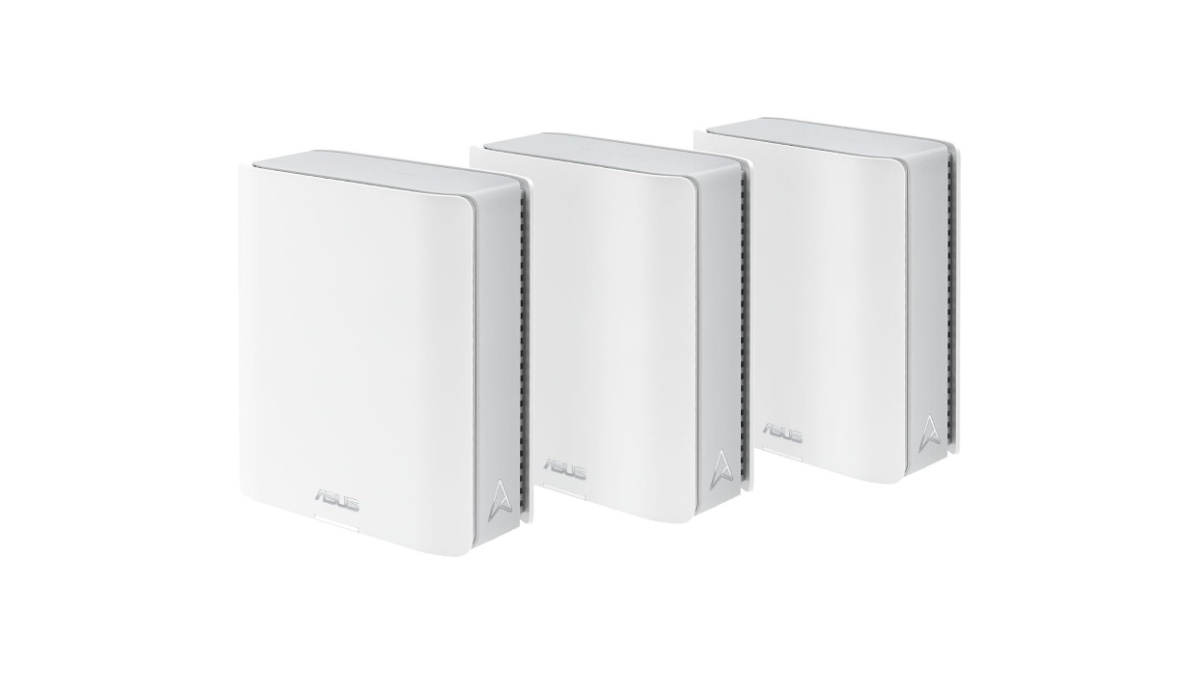
Asus Zenwifi XT9

However, the performance of the automatic backhaul selection may not always be as reliable or consistent as that of a dedicated backhaul. Dedicated backhaul is designed to provide a consistent and reliable link between nodes, regardless of other network conditions. Therefore, the choice between the two options ultimately depends on the specific needs and requirements of the user’s network.

Ethernet Ports

Both Deco X95 and Asus XT9 are equipped with 2.5Gbps Ethernet ports that support auto sensing, allowing users to connect the XT9 / X95 router node to a high-speed modem or use it as a multi-gig wired LAN connection to other Ethernet-based devices such as a NAS device for the satellite node. In contrast, Orbi offers an impressive multi-gig 10Gbps WAN port on its router node. This 10Gbps port is advantageous when the next generation of DOCSIS 4.0 cable technology arrives, which will support 10Gbps internet speeds. Additionally, the upcoming Wifi 7 technology is expected to feature 10Gbps internet ports for even faster speeds.

Spec Comparison tables

Take a look at table 2 below for spec comparison between deco x95 and netgear orbi rbk862.

Table 2 Deco X95 vs Orbi

ModelTP-Link Deco X95Netgear Orbi Rbk862
Wifi technologySimultaneous tri-band ax7800 mesh wifi 6 with 8-streamsSimultaneous tri-band ax6000 mesh wifi 6 with 8 streams
Signal rates4,804 Mbps on 5 GHz (1) 4×4 2,400 Mbps on 5 GHz (2) 2×2 574 Mbps on 2.4 GHz 2×21,200Mbps @2.4GHz 4×4 2,400Mbps @5GHz 1 2×2 2,400Mbps @5GHz 2 2×2  
Antennas4x high gain antennas + 2 smart antennas8pcs high-performance internal antennas with high-power amplifiers
BackhaulDedicated Wifi backhaul @5GHz with smart antennas Optional wired Ethernet backhaulDedicated backhaul @5GHz and optional wired backhaul
Coverage6,100 Sq ft / 2-pack2,700 sq. ft./ unit
Ethernet1x 2.5Gbps WAN/ LAN port 2x 1.0Gbps LAN Ports1x 10.0 Gbps Multi-Gigabit WAN port (router) +  4x Gigabit LAN ports (router and satellite)
 Network ProtectionTP-Link homeshieldNetgear armor network protection services
Processor1.5 GHz Quad-Core CPUPowerful Quad-Core 2.2 GHz processor with 512MB NAND Flash and 1GB RAM
Price$449.99 / 2-pack$1099.99 / 3-pack
Spec Comparison table Deco vs Asus

Table 3 below shows you spec comparison between deco x95 and asus xt9. See that in terms of network protection, asus offers free lifetime Asus AiProtection pro powered by trend micro. While the other two products give you option to subscribe network protection plan.

Table 3 Deco X95 vs Asus

ModelTP-Link Deco X95 Asus Zenwifi XT9
Wifi technologySimultaneous tri-band ax7800 mesh wifi 6 with 8-streamsSimultaneous Tri-band ax7800 wifi 6
Signal rates4,804 Mbps on 5 GHz (1) 4×4 2,400 Mbps on 5 GHz (2) 2×2 574 Mbps on 2.4 GHz 2×2574 Mbps @2.4Ghz 2×2; 2,400Mbps @5GHz band 1 2×2;  4,800Mbps @5GHz band 2 4×4
Antennas4x high gain antennas + 2 smart antennas 
BackhaulDedicated Wifi backhaul @5GHz with smart antennas Optional wired Ethernet backhaulDedicated backhaul @4,800; wired backhaul or system auto selection for the best link 
Coverage6,100 Sq ft / 2-pack5,700 sq ft / 2-pack
Ethernet1x 2.5Gbps WAN/ LAN port 2x 1.0Gbps LAN Ports1x 2.5Gbps WAN port  3x 1.0Gbps LAN Ports, supports 2 LAN aggregated link
USB PortN/AUSB 3.2 Gen 1 x 1
 Network ProtectionTP-Link homeshieldlifetime free AiProtection Pro powered by Trend Micro
Processor1.5 GHz Quad-Core CPU1.7 GHz quad-core processor Memory: 256MB Flash + 512 MB RAM
Price$449.99 / 2-pack$457.00 (2-pack)
Which one to pick

After reviewing the previous spec and feature comparisons between the three products, it is up to you to decide which one is best suited to meet your business needs. Click on the links provided for each product to learn more details, check the current price, and possibly find the best deal on Best Buy or Amazon (#ads).

Related Products

Should you like to taste popular eero with wifi 7 technology, you may consider eero 7. Click here to see eero 7 max vs Deco, which compete with popular and affordable Deco.

To taste the next generation of wifi 7 products, you may consider Archer BE550 and see comparison with Netgea raxe500 and Asus rog Rapture GT-AXE11000.

Netgear CM2000 vs Motorola MB8611 DOCSIS 3.1 Cable Modem

Netgear CM2000 is of popular DOCSIS 3.1 cable modems that support high speed internet plan from your cable provider. This product competes tightly with another popular products – the Motorola MB8611.

In this article:

The need for wider internet bandwidth is becoming increasingly pronounced considering our lifestyle and all connected devices depend on an internet connection. This is especially for gamers in mind that demand smooth and responsive online gaming with no lags and also the needs of video streaming. It is therefore Netgear introduces new faster cable modem up to 2.5Gbps internet plan; CM2000 cable modems, and Motorola also offers competing product Motorola MB8611.

Netgear CM2000

If you’re currently using a DOCSIS 3.0-based cable modem at home and your internet speed is capped at 1Gbps, it may be worth considering a switch to a DOCSIS 3.1-based cable modem. With this upgraded technology, you could experience internet speeds up to 10 times faster than your current setup. Fortunately, most cable internet providers now offer DOCSIS 3.1 cable infrastructure, so making the switch should be relatively easy.

Netgear CM2000

While there are a few DOCSIS 3.0 cable modems available on the market with maximum speeds up to 1Gbps, such as the Netgear CM700 and Surfboard sb6190, upgrading to a DOCSIS 3.1-based modem would allow you to take full advantage of the faster speeds offered by your cable provider.

DOCSIS 3.1

Building on the success of their earlier model, the Netgear CM1000, Netgear has now released the updated CM2000 series. This new DOCSIS 3.1 cable modem features a powerful multi-gigabit 2.5Gbps Ethernet port, designed to handle the lightning-fast internet speeds available through DOCSIS 3.1 infrastructure up to 2.0Gbps.

For those who need additional phone lines, Netgear also offers the CM2050V, which is essentially the same as the CM2000 but includes two phone lines. While this product is certified by Xfinity, it is not currently compatible with Verizon, AT&T, or CenturyLink.

Upgrade your internet connection to the next level with Netgear’s latest series of DOCSIS 3.1 cable modems. The CM2000 and CM2050V offer impressive speeds and features that will keep your home connected and ready for the future.

Compared to its predecessor, the CM1000, the Netgear CM2000 offers a significant upgrade with its 2.5Gbps WAN port. This is particularly useful for connecting to newer Wi-Fi 6 routers that have 2.5Gbps WAN ports, such as the new Archer AXE300 or Asus Rog Rapture.

One of the great benefits of the Netgear CM2000 is that it remains backward compatible with DOCSIS 3.0 infrastructure. So even if your provider is still using DOCSIS 3.0, you can still benefit from the CM2000’s advanced features. The CM2000 is capable of 32×8 channel bonding DOCSIS 3.0, delivering speeds up to 2.0 Gbps.

Upgrade your home network with the Netgear CM2000, and experience faster speeds and better connectivity with your Wi-Fi 6 router. Whether your provider is using DOCSIS 3.0 or the newer DOCSIS 3.1 infrastructure, the CM2000 is a reliable and future-proof choice.

For Multi Gig Routers

To achieve optimal data throughput, it’s important to connect your premium Wi-Fi 6 router with a cable modem that has a multi-gigabit Ethernet port, such as the Netgear CM2000 or Motorola MB8611. Today, you can find several models of premium Wi-Fi 6 routers on the market that come equipped with multi-gigabit WAN ports, up to 2.5Gbps.

For example, the Orbi RBK860 series and its business model, Orbi SXK80, both feature 2.5Gbps WAN ports, as does the Asus Zenwifi XT8. For even higher bandwidth requirements, the new Orbi RBK963 is equipped with a lightning-fast 10Gbps WAN port, designed to welcome the next generation of cable lab technology – DOCSIS 4.0 – which can achieve speeds of up to 10Gbps.

Most new Wi-Fi router products with next-generation Wi-Fi 7 technology are expected to come with a multi-gigabit 10Gbps WAN port. Whether you’re a casual home user or a power user with demanding bandwidth needs, there’s a premium Wi-Fi 6 router on the market that’s perfectly suited to your requirements. Upgrade your home network today and experience lightning-fast connectivity and performance!

Highlights
  • DOCSIS 3.1 cable modem with internet speed up to 2.5Gbps
  • DOCSIS 3.1 32×8 channel bonding and OFDM(A) 2×2
  • Compatible with all major cable internet providers including Xfinity, COX and Spectrum. NOT compatible with Verizon, AT&T, CenturyLink
  • Ideal connecting to premium wifi routers with multi gigabit Ethernet port
  • Equipped with 1×2.5Gbps Ethernet Port

The Netgear Nighthawk CM2000 is a sleek and stylish cable modem designed with aesthetics in mind. Its wireless gateway model, the Nighthawk CAX80 DOCSIS 3.1 Wi-Fi 6 cable modem, is a mesh Wi-Fi 6 router with a built-in DOCSIS 3.1 cable modem. Unlike a cable gateway, the Nighthawk CM2000 is a native DOCSIS 3.1 cable modem that does not include a NAT feature. With its advanced features and sleek design, the Nighthawk CM2000 is an excellent choice for anyone looking to upgrade their home network.

This product is tagged with the price around $299.99 in Amazon (#ads).

Click here to SHOP Nighthawk cm2000 (#Ad)

Now, there is a competing product for this model offered by Motorola – Motorola MB8611 DOCSIS 3.1 cable modem.

Nighthawk CM2000 vs Motorola MB8611

The Motorola MB8611 is an excellent alternative to the Netgear Nighthawk CM2000, especially considering its price point which is only half of the Nighthawk CM2000. This DOCSIS 3.1 cable modem is backward compatible with 32×8 channel bonding DOCSIS 3.0 cable modem and boasts a 2.5Gbps Ethernet port, just like the Nighthawk CM2000. It is also approved for use with Comcast Xfinity and offers downstream speeds just below 2,500 Mbps and upstream speeds up to 800 Mbps.

Motorola MB8611
Spec comparison table

If you’re interested in comparing the Netgear Nighthawk CM2000 and Motorola MB8611 DOCSIS 3.1 cable modems, take a look at the following spec comparison table. These two products have a lot in common and offer similar features, so it’s important to compare them side by side to determine which one is the best fit for your needs.

Table 1 Netgear CM2000 vs Motorola MB8611

DOCSIS 3.1 cable modem modelNetgear CM2000Motorola MB8611
Cable modem technology: DOCSIS 3.1YesYes
1x 2.5Gbps Gigabit Ethernet port with auto-sensing technologyYesYes
Provider supported Compatible with all major US Cable SP and Works right out of the box with XFINITY from Comcast, Spectrum, Cox more – NOT compatible with Verizon, AT&T, CenturyLink, DSL providers, DirecTV, DISH and any bundled voice serviceWorks with Comcast XFINITY, Comcast Business, Cox Communications, Charter Spectrum and other US service providers
Dimension6.8 x 3.7 x 8.2 in / (172 mm  x 94mm  x 208 mm)7.25 x 2.25 x 7.88 In (184.1mm x 57.1mm x 200.1mm)
Weight1.02lb (482g)1.1 lb (498.9grams)
Price (Feb 2023)$299.99$219.99
Price Points

While the price difference between the Netgear Nighthawk CM2000 and Motorola MB8611 DOCSIS 3.1 cable modems is not significant, the Nighthawk offers a sleek and stylish design compared to the conventional look of the Motorola. Retail prices for both products may vary, so we recommend clicking the link below to check the current prices and learn more details on Amazon (#ads).

Click here to SHOP Motorola Mb8611 in Amazon (#ads)

Related products

Should you prefer cable modem router combo, a combination of wifi router with built-in cable modem, you have a try Motorola MG8725. This comes with ax6000 wifi 6 router with built-in DOCSIS 3.1 cable modem.

For lower model, you may consider Netgear CAX30 that comes with AX2700 wifi 6 ad built-in DOCSIS 3.1 cable modem. Click here Netgear cax30 vs Motorola MG8702.

All New Eero 7 vs Deco Which One Gives You Better Value

Last quarter of 2024 Amazon released its ultimate eero Max 7, tri-band be22000 mesh wifi 7. And today you can find other two series eero 7 and eero pro 7 series. How these eero 7 series are performed compared to Deco products?

In this article:

The advent of WiFi 7 technology is upon us, and numerous networking vendors have swiftly incorporated this cutting-edge WiFi advancement into their latest products. TP-Link stands out as a pioneering vendor, leading the way by introducing several router and mesh WiFi models that leverage this new WiFi 7 technology achieving this milestone even before prominent vendors like Netgear, Asus, and Linksys. End of 2024 marked a significant development as eero entered the WiFi 7 arena with the release of its inaugural eero Max 7. And today you can find two additions: eero 7 and eero pro 7.

What this eero 7 does

eero is a well known brand in networking products for its mesh Wi-Fi systems, designed to provide reliable and seamless wireless coverage throughout homes or offices. The eero gained popularity for its user-friendly approach to home networking, especially for those seeking easy-to-install and manage mesh Wi-Fi systems.

The brand is recognized for its focus on simplicity, reliability, and the ability to provide stable Wi-Fi coverage in larger spaces, and the performance is often praised for its reliable connectivity and the ability to handle multiple devices simultaneously. The eero products, like most mesh Wi-Fi systems, tend to be positioned in the mid to higher price range as opposed to similar products offered by TP-Link and Netgear.

With the emerging of products based on next generation of wifi 7 technology, finally eero unveiled its debut in this wifi 7 technology with its eero max 7 last Dec 2024.

Amazon Eero 7

Eero 7 Lineup Series

Eero stands as the trailblazer in consumer-grade mesh WiFi systems, and its latest triumvirate of models, notably the Eero 7 series, continues this legacy. Each of these models represents a step forward, aligning with WiFi 6, WiFi 6E, and the cutting-edge WiFi 7 technologies. The trio comprises:

  1. Eero max 7
  2. Eero 7 pro
  3. Eero 7

The previous eero series were based on wifi 6 technology including eero 6 pro and eero pro 6e. The Eero 6 Pro takes the lead as the top-tier series, leveraging WiFi 6 technology. With the evolution of WiFi 6E – an enhanced version of WiFi 6 – Eero responded by unveiling the Eero Pro 6E. The latest addition to the series, the Eero Max 7, is the flag bearer for the next generation of WiFi 7 technology. Take a glance look at the previous eero 6 pro and eero pro 6e as shown at table 1 below.

Table 1 eero wifi 6 series

Eero modelsEero Pro 6eEero 6 Pro
Wifi technologyTri-band AXE5400Tri band AX4200
Signal rates600 Mbps @2.4GHz 2×2
2,400 Mbps @5GHz 1 2×2
2,400 Mbps @6GHz 2 2×2
600 Mbps @2.4GHz 2×2
1,200 Mbps @5GHz 1 2×2
2,400 Mbps @5GHz 2 4×4
Ethernet Ports1x 2.5 Gbps
1x 1.0 Gbps
2x 1.0 Gbps
Maximum Internet PlanUp to 2.0 GbpsUp to 1.0Gbps
Processor1 GHz dual-core processor with 1 GB RAM, 4 GB flash1.6 GHz quad-core processor with 1 GB RAM, 4 GB flash

Each of these previous wifi 6 series delivers bandwidth of up to 5000Mbps, now let’s have a look at how the leap of the bandwidth from wifi 6 series to the latest wifi 7 series.

Eero wifi 7 lineups comparison

Refer to Table 2 for a comprehensive spec comparison of these distinguished members of the Eero 7 lineup..

4x more bandwidth

The bandwidth capacity of the Eero Max 7 is nearly four times that of its predecessor, the Eero 6E Pro. For an in-depth exploration, peruse the spec comparison table below. Notably, the first two series, Eero Max 7 and Eero pro 7, have embraced the new 6GHz radio band, supplementing the standard 2.4GHz and 5GHz bands – an advancement that the Eero 6 Pro does not share.

In the present landscape, several WiFi 7 adapters equipped with the 6GHz radio band are available, such as Tp-Link Archer Tbe401uh. This is a USB 3.0 BE6200 Tri-Band Wi-Fi 7 Adapter. Upgrading your computers with these adapters ensures compatibility with the pristine 6GHz radio band, guaranteeing swift and stable connections.

10Gbps Internet supports

Most high end products that adopt wifi-7 technology mostly come equipped with multi-gig 10Gbps Ethernet port for WAN connection. The new model of router cable modem combo offered by Arris – the ultimate Arris G54 which is based on latest wifi 7 technology, it supports multi-gig cable internet plan up to 10Gbps. So does this new eero max 7, comes with two 10Gbps ports to allow you connect to high speed internet plan up to 10Gbps.

While the eero pro 7 is a tri-band be10800, double the bandwidth as eero 7. The low end tier is eero 7 which is only a dual band be5000 wifi 7. 

Spec comparison Eero 7 series

Table 2 below shows a specification comparison between the three latest eero mesh wifi series: eero max 7; eero pro 7; and eero 7. The eero max 7 has twice the bandwidth of the eero pro 7. And the eero pro 7 has twice the bandwidth of the lower-end eero 7.

Table 2 eero lineup comparison

Eero modelsEero Max 7Eero 7 ProEero 7
Wifi technologyTri-band BE20800Tri-band BE10800Dual band BE5000
Signal rates11,530Mbps @6GHz 4×4 8,647Mbps @5GHz 4×4 688 Mbps @2.4GHz 2×25765 Mbps @6GHz 2×2 4324 Mbps @5GHz 1 2×2
688 Mbps @2.4GHz 2 2×2
688 Mbps @2.4GHz 2×2 4324 Mbps @5GHz 1 2×2  
Ethernet Ports2x 10.0Gbps 2x 2.5Gbps2x 5 GbE2x 2.5 Gbps
Maximum Internet PlanUp to 10GbpsUp to 5.0 GbpsUp to 2Gbps  
ProcessorQuad-core A73 processor, 2GB RAM, 4GB flash storage1.5 GHz quad-core processor Memory 1024 MB; 4GB flash1.1 GHz quad-core processor Memory: 1024 MB;  4 GB flash

Eero 7 Series vs Deco 7

Today, you can find bunch of wifi 7 products available in the market that eero 7 series come to compete with them. TP-Link with its deco 7 series and Netgear with its Orbi 7 series will be the main competitors for eero 7 series.

TP-Link offers a wide range of Mesh WiFi 7 systems, starting from the low-end Deco BE25, moving up to the mid-range Deco BE63 and BE67, and reaching the high-end Deco BE85 and BE95 series.

In the low-end category, eero has its popular and budget-friendly eero 7, which is comparable to the Deco BE25. For the mid-range segment, eero offers the eero Pro 7, which lines up well with the Deco BE63. And in the high-end tier, the eero Max 7 competes closely with the Deco BE85.

Eero 7 vs Deco BE25

TP-Link products are mostly offered to the market with budget friendly solution as opposed to its competitor including Amazon eero series, and Netgear Orbi series. Amazon eero 7 and deco be25 are almost having the same specs and features; however the price gap is large enough.

Deco BE25

The main difference between the two is the Zigbee feature. The built-in Zigbee feature on compatible eero Wi-Fi routers functions as a smart home hub, allowing you to connect and control low-power smart home devices with Alexa without needing a separate, dedicated hub. Almost all of eero series come with built-in zigbee feature, while all of Deco series don’t.

Spec comparison table eero 7 vs deco

Take a look at the following spec comparison table 3 below, see that specs are almost the same or similar including the bandwidth capacity, antennas designs and the Ethernet ports. While the processor embedded on the board is the same, eero series mostly come with large capacity of flash memory for storage.  

 Table 3 Eero 7 vs Deco be25

Wifi 7 productEero 7Deco BE25
Wifi segmentDual band be5000 True Mesh softwareDual band BE5000 Ai-driven mesh
Signal rates4324 Mbps @5GHz 2×2
688 Mbps @2.4GHz 2×2
4324 Mbps @5GHz 2×2
688 Mbps @2.4GHz 2×2
Antennas2.4 GHz: 2×2;
5 GHz: 2×2
4 high-gain antennas and 4 high-power FEMs
CoverageCovers up to 6,000 sq. ft./3-pack6,600 sq ft
Ethernet Ports2x 2.5Gbps2x 2.5Gbps
Internet Speed2.5 Gbps2.5 Gbps
Processor1.1 GHz quad-core processor Memory: 1024 MB;  4 GB flashQuad core processor  
Network securityEero plus servicesHome shield service
ZigbeeYes (as a controller only)N/A
Price$349.99 (3-pack)$208.99 (3-pack)

The price gap between the two products is quite large, more than 100 bucks. Click the product’s link below to read more details and get the best deal on Amazon.

Both eero 7 and deco be25 are categorized as low end wifi 7 products. Now, let’s switch to middle range category which eero pro 7 will challenge deco be63.

Eero pro 7 vs Deco be63

In the mid-range WiFi 7 category, Amazon offers the eero Pro 7. In the same segment, TP-Link introduces several options, including the Deco BE63, BE65, BE67, BE68, and BE75. Let’s focus on one of the most popular models – the Deco BE63 – and see how it compares to the eero Pro 7.

Spec comparison eero pro 7 vs deco

Table 4 below shows a side-by-side comparison of their specifications. You’ll notice that their total bandwidth capacity is only slightly different, placing them in the same lower tier of the mid-range WiFi 7 segment. However, their Ethernet ports set them apart: the eero Pro 7 includes two auto-sensing 5Gbps ports, while the Deco BE63 offers four 2.5Gbps ports plus a USB 3.0 port that can be configured as a Samba server, FTP server, or media server.

If your internet needs are only up to 2.5Gbps, the Deco BE63 is a solid choice. But if you’re planning for future upgrades – especially with the upcoming DOCSIS 4.0 cable standard supporting speeds up to 10Gbps – the eero Pro 7 may offer better long-term value.

Table  4 eero pro 7 vs deco be63

Wifi 7 modelEero pro 7Deco be63
Wifi 7 segmentTri-band be10800Tri-band be10000
Signal rates5765 Mbps @6GHz 2×2
4324 Mbps @5GHz 1 2×2
688 Mbps @2.4GHz 2 2×2
5188 Mbps @6GHz 2×2
4324 Mbps @5GHz  2×2
574 Mbps @2.4GHz  2×2
Coverage6,000 sq ft7,600 sq ft (3-pack)
Ethernet Ports2x 5.0 Gbps4x 2.5 Gbps
Internet speedUp to 5 GbpsUp to 2.5Gbps
Processor1.5 GHz quad-core processor Memory 1024 MB; 4GB flashQuad core, details unspecified
Zigbee featureYes, built-in zigbeeN/A
SecurityEero plus servicesHome Shield services
Prices$699.99 (3-pack) $489.99 (3-pack)
Price gap

The prices gap between the two products is quite large, about 200 dollars. Click the product’s link below to learn more details about the product and get best deal from Amazon.

Click here to shop Deco be63 on Amazon (#ad)

Eero Max 7 vs Deco BE85

As of late December 2025, eero’s top-tier model is the eero Max 7. This model competes directly with TP-Link’s Deco BE85, which has become quite popular on several online stores. Customers usually respond well to products that offer similar performance at a better price—and in this case, the price gap between the two models is noticeably large. So what sets them apart? Take a look at the comparison in Table 5 below.

Deco BE85
Same bandwidth capacity

Both models fall into the same high-end category. One key difference is that the Deco BE85 provides double the bandwidth on the 2.4GHz band and supports more data streams compared to the eero Max 7. Meanwhile, the 5GHz and 6GHz bands are evenly matched, both offering 4×4 throughput. In practical terms, if you have two devices with 2×2 MU-MIMO, the router can send two data streams to each device simultaneously.

Ethernet Ports

On the connectivity side, both the eero Max 7 and the Deco BE85 include multi-gig 10GbE Ethernet ports. Each offers two 10GbE ports, but the Deco BE85 adds flexibility with an additional SFP+ combo port. This means both systems can handle 10Gbps internet and high-speed wired LAN connections. For example, if you need to connect a 10GbE NAS like the Ugreen NASync DXP4800, you can use one of the 10Gbps ports. And if you require fiber-optic connectivity, the Deco BE85’s SFP+ port has you covered.

Comparison table Eero max vs deco

All the eero series come with built-in zigbee, a smart home hub for connecting and controlling smart home devices. This feature is not available for all deco series, except the old model deco m9.

Table 5 eerp max 7 vs deco be85

Wifi 7 productsEero Max 7Deco be85
Wifi 7 segmentTri-band be20800 10-streamsTri-band be22000 12-streams
Signal rates11,530Mbps @6GHz 4×4 8,647Mbps @5GHz 4×4
688 Mbps @2.4GHz 2×2
11,520Mbps @6GHz 4×4 8,640Mbps @5GHz 4×4
1376 Mbps @2.4GHz 4×4
Coverage7,500 sq ft9,500 sq ft.
Ethernet Ports2x 10.0Gbps
2x 2.5Gbps
1x 10 Gbps
1x 10 Gbps SFP+/RJ45 Combo
2x 2.5 Gbps
Internet speedUp to 10GbpsUp to 10Gbps
ProcessorQuad-core A73 processor, 2GB RAM, 4GB flash storageQuad core processor (no details)
Smart Home HubYes, Works with Alexa, Smart Home Hub, Thread devices and Matter and Zigbee devices (as a controller only), Bluetooth Low Energy 5.0Works with Alexa
SecurityEero plus servicesHome shield services
Prices$1,699.99 (3-pack)$1,299.99 (3-pack)
Price points

The price points gap between the two products is quite large, around $400. This is the reason why deco be85 is the main competitor for eero max 7. Click the product’s link below to learn more details and see that listed prices may be different with the current price.

Related products

Should like to use a compact all-in-one product, you may consider Arris Surfboard G54. It is a compact be18000 wifi 7 router with built-in DOCSIS 3.1 cable modem.

Should you still prefer the current wifi 6 standards instead of latest nexr generation of wifi 7, you may consider Motorola MG8725 AX6000 wifi 6 with built-in DOCSIS 3.1 cable modem. 

Archer BE550 vs Asus vs Netgear Which One is Best Value

TP-Link introduced Archer be550 and be9300 wifi 7 routers, lower segment models of wifi 7 products in addition of its ultimate Archer BE900 and Archer BE800. How tp-link be550 vs asus and be550 vs netgear perform?

In this article:

What this BE550 does

Wifi -7 technology, the next generation of wifi standards has been around and few networking vendors have adopted this wifi 7 technology into their latest products. You can say TP-Link that have introduced few series of Deco wifi 7 such as Deco BE85, BE95, and Archer BE900, BE850, and still more. So have Asus and Netgear with their few wifi 7 products. However, most of those high end products with this latest wifi 7 standard are mostly tagged with costly price point.

Budget-friendly wifi 7 product

It is therefore TP-Link introduced lower level network segment with this next wifi 7 technology with its Archer BE550 and BE9300 wifi 7 routers with budget friendly price point under $300 USD. On the other hand, you can find that few products based on wifi 6/6e are tagged with higher price point such as Asus with its Rog Rapture series.

TP-Link Archer BE550

What make wifi 7 set apart from wifi 6/6e?

There are source of discussions out there regarding this new wifi 7 standards that will be officially released end of 2024. What makes significant difference is MLO (Multi-link Operation) feature that allows the system with two or three radio bands to enable simultaneous connections across multiple bands, including the aggregation of 5GHz and 6GHz bands for multi-gig bandwidth demand.

Wifi6 doesn’t come with 6GHz band, but the enhancement wifi 6e does. Both wifi6 and wifi6e feature channel bandwidth up to 160MHz, but the new wifi7 supports up to 320MHz channel bandwidth.

Simultaneous 3-band

Typically ultimate models of wifi7 products come with quad radio bands, however middle range wifi7 models come with three bands. This tp-link archer be550 comes equipped with three radio bands with the following signal rates:

  • 574Mbos @2.4GHz;
  • 5760Mbos @6GHz
  • 2880Mbps @5GHz

with total aggregated bandwidth up to 9214Mbps (BE9300). So if currently your wifi network is still based on legacy wifi5 and you want to taste the next generation of wifi 7 technology, you may consider this budget friendly Archer BE550.

Archer BE550 vs BE9300

In this lower wifi 7 network segments, TP-Link introduced twin models; the Archer BE550 and Archer BE9300 which work at the same network segment. So what makes these archer models set apart? Both models are designed with the same physical body and the same footprint. Both models come with same number of Ethernet ports (5ports). However, Archer BE9300 comes with 2x 2.5Gbps ports and 3×1.0gbps LAN ports. On the other hand, BE550 comes with 5x 2.5Gbps Ethernet ports.      

In terms of VPN features, Archer BE9300 supports both WireGuard Server and clienst, but Archer BE550 doesn’t. These two items make these two archer series set apart. While all other spec and features are the same except those Ethernet ports and VPN feature.

Spec comparison table BE550 vs BE9300

The following table 1 shows you spec comparison table between Archer be550 and be9300.

Table 1 Archer BE550 vs BE9300

ModelArcher BE550Archer BE9300
Ethernet Ports1 x 2.5 Gbps WAN 4 x 2.5 Gbps LAN1x 2.5 Gbps WAN 1x 2.5 Gbps LAN 3x 1.0 Gbps LAN
WireGuard VPN Server / clientN/AYes

This product is currently the lowest level of wifi 7 router products offered by TP-Link. The higher level of these Archer series is Archer BE800, and the price is almost doubled as BE550.

Archer BE550 vs BE800

What makes the Archer BE800 is tagged with double price that of BE550? Let’s take a look at the following spec comparison table.

Table 1 Archer BE550 vs BE800

Archer SeriesArcher BE800Archer BE550
WifiTri-band BE19000 with Easy Mesh compatibleTri-band BE9300 with Easy Mesh compatible
Signal rates11520 Mbps @6GHz 5760 Mbps @5GHz 1376 Mbps @2.4GHz574Mbos @2.4GHz; 5760Mbos @6GHz 2880Mbps @5GHz
Antennas8x Optimally Positioned Internal Antennas6x Smart Internal Antennas
Ethernet Ports4× 2.5 Gbps LAN Ports (5 Gbps Aggregation Speed) 10 Gbps WAN/LAN Port 10 Gbps SFP+ Fiber / RJ45 Ethernet Combo WAN/LAN Port1x 2.5 Gbps WAN 4x 2.5 Gbps LAN
USB Ports1x USB 3.01x USB 3.0
 Router / AP ModesYesYes
Guest NetworkGuest network each band (3x)Guest network each band (3x)
On body displayDisplays the weather, time, text, and even emojis with up to 3000+ customized graphicsN/A
Price$499.99$299.99

See that the price difference between BE550 and BE800 is around $200 (BE550 is 40% cheaper than BE800).

With the budget friendly products based on next generation of wifi 7 technology, it is a challenge for previous models of wifi 6e products to compete with this Archer BE550 model. There are few models of today’s wifi 6/6e standards such as Asus Rog Rapture GT-AXE11000, and one of Netgear wifi 6e products – the Netgear raxe500 which the prices so far are around $450 in Amazon.

Archer BE550 vs Netgear vs Asus

Netgear has released its wifi 7 products including Orbi 970 series, and Netgear RS700 wifi 7 router. However, their price points are still costly. Its wifi 6e product Netgear raxe500 axe11000 is also more expensive compared with Archer BE550.

Netgear RAXE500

So far Asus has released its wifi 7 product, the Asus RT-be96u BE19000, and the price so far is still costly around $499. While its wifi 6e product such as Asus ROG Rapture gt-axe11000 is also still high around $599.99.

See also TP-Link Archer Axe300 vs Asus Rog Rapture AXE16000.

So when you would like to taste the next generation of wifi 7 technology, considering archer be550 is a good idea which is budget-friendly products compared with other similar products in the market instead of choosing wifi 6e products,

Let’s take netgear raxe500 and asus gt-axe11000 and compare them with new Archer BE550. Please refer to the following spec comparison tables below.

Wifi technology

Archer BE550 adopted next generation of wifi 7, but its competitors Asus and Netgear are still based on latest wifi 6e technology. Archer is one step forward, one level higher wifi generation than its competitors, asus and netgear. In terms of wifi generation, be550 is more advantages and yet the price is cheaper than its competitors.

Asus ROG Rapture AXE11000

All the three products support 6GHz radio band, however wifi 7 supports 320MHz channel bandwidth, while the other two products support up to 256MHz. Moreover, both asus gt-axe11000 and netgear axe11000 don’t support MLO (Multi-link Operation), but archer 550 does. This MLO delivers huge bandwidth when the demand for this high bandwidth exists. However, it can only work when connecting to the same compatible wifi 7 devices.

Ethernet Ports

For budget friendly product that support next generation of wifi 7 technology, and come equipped with five multi-gig 2.5Gbps ethernet ports, this BE550 product is really generous. You can connect to multi-gig Internet plan up to 2Gbps from your internet provider, and you still have four wired LAN connections to high speed wired devices such as NAS, computers , game consoles etc.

Netgear raxe500 only comes with one 2.5Gbps configurable either for WAN or LAN port, the other ports are 1.0Gbps, so does Asus GT-axe11000. Both asus and netgear Ethernet ports support link aggregation, but Archer be550 doesn’t. Archer comes with multi-gig 2.5Gbps ports, no need of link aggregation feature, so it’s easy to setup.

Spec comparison Archer vs Netgear

 Table 2 below shows you spec comparison between be550 and raxe500.

Table 2 Archer wifi 7 vs Netgear

Wifi 7 router modelArcher BE550Netgear Nighthawk Raxe500
WifiTri-band BE9300 with Easy Mesh compatibleSimultaneous tri-band axe11000 wifi 6e with 12-streams
Signal rates574Mbos @2.4GHz; 5760Mbos @6GHz 2880Mbps @5GHz1,200 Mbps @2.4GHz 4×4;
4.8 Gbps @5GHz 4×4;
4.8 Gbps @6GHz 4×4
Antennas6x Smart Internal Antennas8x Internal antennas
Ethernet Ports1x 2.5 Gbps WAN 4x 2.5 Gbps LAN1x Gigabit WAN port (support aggregated with LAN port #1);
4x Gigabit LAN port with aggregated link support (Port #3 and #4);
1x 2.5Gbps WAN / LAN configurable
USB Ports1x USB 3.02x USB 3.0
Guest NetworkGuest network each band (3x)Yes, secure and separate guest network
ProcessorHigh performance processor, no detailPowerful quad-core 1.8GHz processor
Network securityHomeShield SecurityNETGEAR ARMOR Advanced cyber security service –paid one subscription; Support WPA3
Price$299.99$599.99

See that the price for netgear raxe500 is twice as much expensive as archer be550, this product is worth buying to taste the next generation of wifi 7 technology.

Spec comparison Archer vs Asus

Table 3 below represents spec comparison between be550 and asus axe11000. One thing what you need to notice is that Asus gt-axe11000 is designed for gamers in mind with its five gaming features. These features are essential to boost the online gaming performance; on the other hand Archer be550 doesn’t come with specific gaming features.

Table 3 Archer wifi 7 vs Asus

Wifi 7 router modelArcher BE550Asus Rog Rapture GT-AXE11000
WifiTri-band BE9300 with Easy Mesh compatibleSimultaneous tri-band ax11000 wifi 6e gaming router with AiMesh support
Signal rates574Mbos @2.4GHz; 5760Mbos @6GHz 2880Mbps @5GHz1,200 Mbps @2.4GHz 4×4;
4.8 Gbps @5GHz 4×4;
4.8 Gbps @6GHz 4×4
Antennas6x Smart Internal Antennas8x external antennas with power amplifiers
Ethernet Ports1x 2.5 Gbps WAN 4x 2.5 Gbps LAN1xGigabit WAN port (supports WAN aggregation link)
1×2.5Gbps WAN/LAN port 
4x Gigabit LAN with Link aggregation
USB Ports1x USB 3.02x USB 3.2
Game featuresN/AGame Boost / Acceleration Game Radar WTFast ROG_First OpenNAT (Game Profile) Gaming Port
Processor High performance processor, no detailAsus AiProtection Pro powered by Trend Micro with regular auto security signature update
Network securityHomeShield Security1.8GHz 64-bit Quad-core CPU with 1GB RAM and 256MB Flash
Price$299.99$549.99
Which One to choose

Now, should you prefer to step one level higher in implementing wifi technology, archer be550 is worth buying. When you are a gamer in mind, you may like to choose Asus rog rapture gt-axe11000.

Click the products link below to see current price in Amazon (#Ads); the best deals may be offered to save some money.

Click here to learn more details Archer BE550 on Amazon (#ad)

Related products

 Other wifi 7 products you may consider are eero and arris g54. Amazon introduced its ultimate All new eero Max 7 pro which comes with new look, more stylist than its previous models. Should you like a compact all-in-one device, a wifi 7 router with built-in DOCSIS 3.1 cable modem, you may consider new Arris G54 cable modem router.

Motorola MG8725 Cable Modem Wifi vs Netgear vs Arris

If you’re in the market for cable modem products with a built-in Wi-Fi 6 router, you’ll be pleased to know that the previously dominant Netgear cax80 now has some competition from Motorola and Arris. With these new options, how is the competition shaping up for all-in-one cable modems with built-in Wi-Fi 6 routers?

In this article:

Cable Modem with Wifi 6

For nearly a year, the dominant player in the market for Wi-Fi 6 router products with built-in DOCSIS 3.1 cable modem was Netgear cax80, while competitors such as Arris and Motorola did not release similar products until the end of the last quarter of 2021. Now, consumers have a wider range of options with all-in-one Wi-Fi 6 router products featuring built-in DOCSIS 3.1 cable modems from both vendors.

Motorola has recently released two new models, the Motorola mg8725 and mg8733, following the success of their flagship product, the Motorola mg8702, which had been on the market for a few years. Meanwhile, Arris has released two new models, the Surfboard G34 and G36, in addition to their successful flagship product, the Surfboard sbg8300. The latest model introduced was Arris G54 that comes with wifi 7.

See also Orbi RBK863 vs Deco X90, medium class mesh wifi 6.

Motorola MG8725 and MG8733

Motorola has introduced two new models, the Mg8725 and Mg8733, which are nearly identical except for a few key differences. The main distinction between the two is that the Mg8733 includes two telephony interfaces, RJ11, which can be used with Comcast Xfinity, whereas the Mg8725 does not.

Motorola MG8725

In addition, the Mg8733 is equipped with a UPS battery backup system (sold separately), which can provide up to 8, 16, or 24 hours of backup power. Because of the two phone line feature, the LED lights on the Mg8733 also differ slightly from those on the Mg8725, with additional LEDs for Tel1, Tel2, and UPS.

Both of these products are all-in-one Wi-Fi 6 ax6000 routers with built-in DOCSIS 3.1 cable modem representing the next generation of Wi-Fi technology. In general, both products share the same specifications and features, with the exceptions mentioned earlier for the Mg8733.

Highlights

  • Simultaneous dual band ax6000 wifi 6 routers with 8 data streams
  • Wifi speeds up to 1200Mbps (4×4) @2.4GHz and up to 4800 Mbps (4×4) @5GHz
  • Multi SSIDs, up to 4x SSIDs (2 SSIDs / band)
  • Equipped with 4x internal dual-band antennas with power boost wireless amplifiers
  • Comes with 1x 2.5Gbps LAN port and 3x Gigabit LAN ports with auto sensing technology 
  • Comes with built-in DOCSIS 3.1 cable modem, supports up to 3,780Mbps downstream and up to 800Mbps upstream
Cons
  • No USB port for storage disk sharing
  • Ethernet LAN ports don’t support link aggregation

Given their impressive features, can these two products compete with other similar products in the market, particularly the widely popular Netgear Nighthawk cax80, which has been available for almost a year before Motorola released these new models?

See also wifi 6e routers offered by TP-Link and Asus. Click here TP-Link Archer AXE300 vs Asus ROG Rapture GT-AXE16000.

Motorola Mg8725 vs Nighthawk Cax80

To be able to see the spec and feature differences between Motorola and Netgear products, you can refer to table 1 below to make it easier to see the strengths and weaknesses of each product. We take mg8725 instead of mg8733 since mg8725 doesn’t come with Telephone line port, so doesn’t cax80.

Netgear CAX80

Both come with the same wifi technology, ax6000 wifi 6 with 8 data streams, each radio band supports 4×4 MU-MIMO technology.

Are there wifi card adapters that support wifi 6 technology available in the market today? Of course, there are many PCI-e adapters that support 2×2 mu-mimo dual band ax3000, such as the archer ax3000 adapter or the asus ax3000 adapter.

If there are two desktops in your home with this Asus or Archer adapter installed, a 4×4 router like Motorola and Cax80 can send two data streams to two desktops at once, without having to take turns one by one so that your network is more efficient and latency-free.

Port Interfaces

When it comes to Ethernet ports, the Netgear Cax80 surpasses Motorola by offering an additional Ethernet port. The benefit of both products, however, is that they each offer a 2.5Gbps multi-gig port that can be used for wired connections to desktops with multi-gig ports or to NAS storage with multi-gig ports, such as the Asustor Lockerstor 2 AS6602T.

Another factor worth considering is that the Cax80 offers support for teaming ports or link aggregation, which combines two Ethernet ports to achieve faster multi-gig network speeds. To take advantage of this feature, simply enable it and connect to a compatible network device that also supports link aggregation, such as the QNAP TS-231K NAS with its two 1Gbps Ethernet ports. It’s important to note that link aggregation is disabled by default on the Cax80, so you will need to enable it before connecting to a compatible NAS that supports link aggregation.

Link Aggregation

Access your web browser and type http://www.routerlogin.net and from the basic home page you need to select ADVANCED > Advanced Setup > Ethernet Port Aggregation, you need to enable the LACP-IEEE 803.3ad (by default is disabled).

The Cax80 outperforms Motorola in yet another aspect: it offers a USB 3.0 port, which Motorola lacks. This USB port enables users to share USB disk storage across the network using Netgear ReadyShare technology. To access the connected USB disk from the router on Windows-based devices, simply select Start > Run and enter \readyshare in the dialog box. You can also map the drive with the usual drive letter for easy access across the Windows network.

On the other hand, the Motorola MG8725 does not come with a USB port that allows for external USB disk sharing across the network. Therefore, the Netgear Cax80 offers more advantages than the MG8725 in terms of storage sharing. However, with the absence of USB port you still can use NAS device for network storage.

Security Protection

Network protection is not offered by Motorola, but the Cax80 does provide this feature. Netgear offers a paid subscription for network security protection with its Netgear Armor, powered by Bitdefender. Motorola does not have such security protection available, so if you want to safeguard your network environment, you’ll need to use third-party network protection software, such as Bitdefender, Norton 360 Deluxe, McAfee Total Protection, or Kaspersky Internet Security.

For more details see the following spec comparison table for Motorola mg8725 vs netgear cax80.

Table 1 Motorola Mg8725 vs Netgear Cax80

ModelMotorola MG8725Netgear Nighthawk Cax80
Simultaneous dual band ax6000 with 8 streamsYesYes
Signal rates: 1.2Gbps @2.4GHz 4×4  4.8Gbps @5GHz 4×4YesYes
Antennas4x dual band internal antennas with power boost wireless amplifiersInternal antennas
Ethernet Ports1x 2.5Gbps LAN; 3x Gigabit LAN ports ; with Auto-MDI/MDIX1x 2.5Gbps Ethernet LAN port; 4x 1.0Gbps Ethernet LAN ports, dual gigabit Ethernet port aggregation
USB PortsN/A1x USB 3.0 for storage device
ProcessorUnspecified1.5GHz Dual core processor
SecurityWireless Security: WPA-PSK/WPA2-PSK, WPA/WPA2,TKIP/AES, WPS, 802.1xNetgear Armor Powered By Bitdefender: 30-day free trial; Supports WPA/WPA2 wireless security protocols
SSIDs4x SSIDs (2 SSIDs / radio band )One network name or each band
DOCSIS 3.1 cable modem;2×2  OFDM  32×8 Channel bonding DOCSIS 3.0 Cable Modem  Yes  Yes
Dimension and weight8.8″ H x 5.7″ W x 3.5″ D Weight: 32 Ounces10.4 in x 8.5 in x 4.3 in / (264 mm x 215 mm x 110 mm) 2.55 lb (1.16 Kg)
Price in Amazon (Mar 2023)$399.99$369.99 (MSRP: $424)
Price Points

The prices are almost the same, not so much difference at the first time the products were released to the market. Generally the prices will drop when new products released with better technology. You may also like to consider Motorola MG8733 series, the same series as mg8725 with the addition of two phone lines.

Click the product’s link below to see current price and learn more details in Amazon (#ads).

Apart from Motorola and netgear, Arris also released two series of wifi 6 cable modem products after surviving for a long time with its flagship product Surfboard Sbg8300 that still based on wifi 5 technology. 

Arris Surfboard wifi 6 cable modem

Similar to Motorola, Arris has also released two models of Wi-Fi 6 routers with built-in DOCSIS 3.1 cable modems. ARRIS is a well-known manufacturer of cable modems, and two of their recent series are the Surfboard G36 and G34. Both modems offer impressive performance and are designed to work with most cable internet providers.

These two models are identical, except for the G36’s inclusion of a multi-gig 2.5Gbps port. Unlike Motorola and Cax80, which are both based on ax6000, Arris has released these two models based on ax3000.

In our previous discussion, we compared the Motorola MG8725 and the Netgear Nighthawk Cax80, which were comparable as they both operate within the same ax6000 network segment. This time, we’ll be comparing the Arris Surfboard G36 with the Netgear Nighthawk Cax30, which are also comparable as they both operate within the same ax3000 network segment.

Table 2 below shows you spec comparison between Arris Surfboard g36 and Netgear Nighthawk cax30s (the affix s means the purchase includes 90-days Netgear Armor network security subscription).

 Slightly different specs

Both of these products operate on the same network segment, although there is a slight difference in the signal rate at the 2.4Ghz radio band. However, the signal rate is the same at the high band of 5GHz. The Netgear Cax80 series is designed for the middle-class product segment, while the Netgear Cax30 series is designed for the entry-level product segment.

Arris Surfboard G36

When compared to the Cax30, which lacks a multi-gig Ethernet port, the G36 comes equipped with a 2.5Gbps Ethernet LAN port. However, unlike the Cax30, the G36 does not have a USB port. If you do not require high-speed NAS capabilities using the multi-gig port on the G36, the Cax30’s USB port can be used to share USB disk storage across the network.

Spec comparison Surfboard vs Cax30

Table 2 Arris Surfboard G36 vs Nighthawk cax30s

ModelSurfboard G36Nighthawk Cax30s
Wifi technologySimultaneous dual band ax3000 wifi 6Simultaneous dual band ax2700 wifi 6 with 6 streams
Signal rates1,200Mbps @2.4GHz; 1,800Mbps @5GHz 3×30.9Gbps @2.4 GHz 3×3; 1.8Gbps @5GHz 3×3
ModemBuilt-in DOCSIS 31 cable modem OFDM 2×2 + 32 x 8 Channel bondingBuilt-in DOCSIS 31 cable modem OFDM 2×2 + 32 x 8 Channel bonding
Ethernet ports1x 2.5Gbps LAN Port; 4x Gigabit LAN ports4x 1.0Gbps LAN Ethernet Ports, dual gigabit Ethernet port aggregation
USB portN/A1x USB 3.0 port for share storage
ProcessorUnspecified1.5GHz dual core processor
Dimension10.87 in x 9.92 in x 3.31 in (276 mm x 251,9 mm x 84 mm)10.0 in x 8.3 in x 4.3 in / (254 mm x 211 mm x 110 mm)
Weight3.15 pounds / 1043 gram2.10 lb / 0.95 kg
Price$299.99$282.00

When considering whether to purchase a separate cable modem with a WiFi 6 AX1800 router or an all-in-one device like the Surfboard G36 or Cax30s, which option is more cost-effective?

If we do the calculations, a DOCSIS 3.1 cable modem, such as the Motorola MB8611 or Surfboard SB8200, costs around $150, and a WiFi 6 AX1800 router costs around $100. Therefore, opting for the Surfboard G36 or Cax30 all-in-one device would be more economical and help reduce the number of devices cluttering your room.

However, if you opt for an all-in-one device, you may lose the flexibility to upgrade your WiFi network for faster speeds, since the cable modem cannot be separated from the router.

Click here to SHOP Arris Surfboard G36 On Amazon (#Ad)

Related products

To taste the mesh wifi 7 products, you may starts with lower level of wifi 7 products offered by Asus and TP-Link. Check here Asus BT6 vs Deco BE63 BE10000 mesh wifi 7.

For premium model you may like to check Asus BT10 and TP-Link deco BE85 which are designed on BE22000 network segment. Click here Deco BE85 vs Asus BT10 mesh wifi 7.

Netgear Cax30 vs Motorola MG8702 How They Compare

Netgear Cax30 is a wifi 6 router with a built-in Docsis 3.1 cable modem in one compact device. This product is an addition of previous most popular product offered by Netgear – the Netgear Cax80.

In this article:

When the cax30 was released, Arris and Motorola still had not released similar products based on wifi 6 standard. Today you can find Arris products with wifi6 standard were released with its flagships Surfboards g36 and g34 following its success with Arris surfboard Sbg8300 that come with wifi-5 standard. Meanwhile, Motorola has also released the Motorola mg8725 wifi 6 product continuing its success with Motorola mg8702 that still come with wifi5 standard.

Now back to this netgear cax30 product and compare it with Motorola mg8702 see which one is more valuable to your business?

Netgear Nighthawk Cax30

Previously, netgear had released the netgear nighthawk cax80 in addition to the mesh gateway version with its product Orbi cbk752 ax4200 DOCSIS 3.1 cable modem. Netgear always strives to be in the forefront with new technology-based products including modem gateway products with wifi-6 technology where its competitors such as Arris and Motorola had not released similar products at the same time.

Netgear cax30 vs cax80

Unlike Orbi cbk752 which is a mesh gateway with wifi-6 router, both cax80 and cax30 series are wifi-6 routers with built-in DOCSIS 3.1 cable modem, not mesh routers. What is the difference between cax30 and cax80? Please refer to table 1 below which provides a spec comparison between the two gateway series.

Netgear CAX30

Different wifi-6 segment

Both are gateway products based on wifi 6 routers, both of which have built-in DOCSIS 3.1 cable modem, however they have different wifi network segment design. For the needs of a small to medium size home wifi network and for those who need a single device product, the Cax30 netgear is sufficient.

For those who need a wifi network with a wider range of around 3000 sq. ft they can choose cax80 series that coms with faster network performance with ax6000 network. Both support mu-mimo concurrent data streams.

Netgear cax80 with 8-streams can send data streams to multiple clients faster than cax30 which comes only with 6-streams. Fortunately today you can find few models of usb adapters available in the market with wifi-6 technology such as Asus usb-ax56 with 2×2 mu-mimo supports.

Cax80 with 4×4 can send two data streams to two connected devices with USB ax1800 adapters that support 2×2 mu-mimo concurrently.   

Hardware

Although the nighthawk cax80 is designed for higher network segment (ax6000), both of these product series use the same processor in their machine board, embedded with dual core 1.5ghz CPU. Probably we might expect the cax80 series to be equipped with a quad core processor.

Besides that, on the cax80 you can find an additional 2.5Gbps multi Gig Ethernet port that you can use to connect to high speed NAS that comes with 2.5Gbps port as well such as the Asustor Lockerstor 2 AS6602T – 2 Bay NAS.

Spec comparison table

Table 1 Netgear cax30 vs cax80

Gateway modelsNetgear cax30Netgear cax80
Cable modem certifiedDOCSIS 3.1 cable modem / compatible with 32×8 DOCSIS 3.0DOCSIS 3.1 cable modem / compatible with 32×8 DOCSIS 3.0
Internet speed  Max1Gbps1Gbps
Wifi technologySimultaneous dual band ax2700 wifi -6 with smart connect with 6-streamsSimultaneous dual band ax6000 wifi -6 with smart connect with 8-streams
Signal rate0.9Gbps @2.4GHz 3×3
1.8Gbps @5GHz 3×3
1.2Gbps @2.4GHz 4×4;
4.8Gbps @5GHz 4×4
Coverage2,500 sq ft up to 25 connected devices3,000 sq ft
Ethernet Ports4x Gigabit Ethernet Ports,
dual gigabit aggregation
4x Gigabit Ethernet Ports,
dual gigabit aggregation
1x 2.5Gbps Ethernet Port
USB port1x USB 3.0 port1x USB 3.0 port
Processor1.5GHz dual core processor1.5GHz dual core processor
Dimension10.0 in x 8.3 in x 4.3 in ( 254 mm x 211 mm x 110 mm)10.4 in x 8.5 in x 4.3 in (264 mm x 215 mm x 110 mm)
Weight2.10 lb / 0.95 kg2.55 lb / 1.16 kg
MSRP$329.99$429.99

The prices difference between the two series is quite a lot around $100 with different network segment.

We’ll take netgear cax30 to compare with latest product offered by Motorola which is still based in wifi5 technology – the Motorola mg8702.

Netgear Cax30 vs Motorola MG8702

When the Motorola mg8725 had not been released to the market, the Motorola mg8702 was quite successful in the market and became the main competitor product for netgear cax30. And today you can find the new release of Motorola mg8725 which works @ ax6000 network segment with a built-in modem. In this article we only discuss the comparison between cax30 and mg8702 so that you can have an idea which product suits your business needs at home.

Motorolla MG8207

Table 2 below shows you spec comparison between Netgear Cax30 and Motorola mg8702 that can be used as reference for spec comparison between the two products.

Network segment

Both products are single wifi router devices with built-in Docsis 3.1 cable modem that can support internet plans up to 1Gbps from your cable provider. The main difference is the wifi technology applied to each product. Motorola mg8702 is still using legacy wifi-5 (wireless ac), while cax30 is already using the 6th generation wifi-6 (wireless ax).

There are many questions which is more profitable between a router with wifi ac3200 and a router with ax2700. Regarding total aggregated bandwidth they are certainly different; moreover they are also different in terms of wifi technology applied.

If all your connected devices at home are still based on wifi-5, of course the choice of Motorola mg8702 is more profitable with a wider aggregate bandwidth. However, your gateway router cannot be maximized if some of your new devices are already based on wifi-6. You will find that wifi-5 devices connect faster to wifi-6 router than connect to the same wifi-5 router.

Spec comparison table

Take a look more details on the following spec comparison table below.

Table 2 Netgear cax30 vs Motorola mg8702

Gateway modelsNetgear cax30Motorola Mg8702
Cable modem certifiedDOCSIS 3.1 cable modem / compatible with 32×8 DOCSIS 3.0 2×2 OFDMA2×2 OFDM DOCSIS 3.1 up to 3.7Gbps downstream / 800Mbps upstream 32x 8 DOCSIS 3.0 compatible
Wifi technologySimultaneous dual band ax2700 wifi -6 with smart connect with 3×3 MU-MIMO1Simultaneous dual band AC3200 wave 2 with 4×4 MU-MIMO
Signal rate0.9Gbps @2.4GHz 3×3
1.8Gbps @5GHz 3×3
Up to 2167Mbps @5GHz 4×4
Up to 1,000Mbps @2.4GHz 4×4
Internet planUp to 1GbpsUp to 1Gbps
Ethernet Ports4x Gigabit Ethernet Ports, dual gigabit aggregation4x 1Gigabit LAN Ports  with Auto-MDI/MDIX
USB port1x USB 3.0 port1x USB 3.0 port with DLNA
Compliant withXfinity from Comcast, Spectrum, Cox & moreXfinity from Comcast Xfinity, Spectrum, Cox  & more
Processor1.5GHz dual core processorUnknown
Dimension10.0 in x 8.3 in x 4.3 in ( 254 mm x 211 mm x 110 mm)9.5 in x 2.8 in  x 8.8 in (241 mm x 225 mm x 71 mm)
Weight2.10 lb / 0.95 kg30.43 ounces / 862 grams
Price (Oct 2021 in Amazon)$329.99$268.99

In some retails shop you will find additional ‘s’ suffix on cax30 to cax30s means netgear cax30 plus free subscription of 90 days Netgear Armor, network threat protection powered by BitDefender.

Price Points

See that the price difference between the two products is around $50. Now you will judge which one gives you best value between the two products. Netgear cax30 is ready with the latest wifi 6 technology and works at ax2700 network segment. Click the product link below to read more details in Amazon (#ads).

Related products

If stepping to the next generation of wifi 7 technology is too much budget for premium wifi 7 network, while you still have Arris S33 cable modem in place, you may consider medium range wifi 6 network. You can start deploying Orbi RBK863 or deco x90, or you may consider lower budget by deploying Orbi 763 or Deco X75.

For easier deployment of wifi 6 network for small to medium sized building, you may consider POE-based mesh wifi network, TP-Link Deco X50-poe. With POE you can reduce complicated of installing network cable and power with onlu a single UTP cable network. Ideal for ceiling installation.

Archer AXE300 vs Asus Rog Rapture Which One is Better

TP-Link archer axe300 was one of huge capacity axe16000 wifi 6e routers available in the market at that time. How this tplink axe16000 vs asus axe16000 compete?

In this article:

What is Archer AXE300

Prior to the official release of Wifi 7, the AXE16000 represented the apex of network innovation, standing as the ultimate entrant into the market within the realm of the latest wifi 6E technology, epitomized by offerings like the TP-Link Archer AXE300 and the Asus ROG Rapture AXE16000. However, today’s landscape showcases the emergence of a handful of products infused with the latest wifi 7 technology from notable vendors like TP-Link, Netgear, and Asus. This begs the question: when faced with the choice, should one opt for the cutting-edge wifi 6E or plunge into the sphere of wifi 7 products?

The TP-Link Archer AXE300 stands tall as a significant player in the market, boasting formidable axe16000 wifi 6E capabilities. Positioned as the primary rival to the Asus ROG Rapture GT-AXE16000 gaming router, which made its debut a few months ahead. However, the entrance of the Archer BE800 and Archer BE900 by TP-Link and the Asus RT-BE96U, both wielding the prowess of the latest wifi 7 technology, promises a shift in the landscape.

TP-LinkArcher AXE300

With this dynamic in mind, the crucial decision arises: should one gravitate towards the novel allure of wifi 7 products, or does the recent evolution of wifi 6E products presented by TP-Link and Asus hold the upper hand?

Archer AXE300 vs Archer BE800

Let’s delve into the distinctions between the recent Archer AXE300, based on the latest wifi 6E technology, and the new Archer BE800, heralding the advent of the next generation wifi 7. To fully appreciate these differences, a glance at the spec comparison table below, juxtaposing the two TP-Link Archer series, will provide clarity.

The Archer AXE300 resides one generation behind the Archer BE800. While the aggregated bandwidth exhibits a difference of approximately 3,000Mbps, it’s crucial to note that the Archer AXE300 stands as a quad-band wifi 6E router, whereas its counterpart, the Archer BE800, takes the form of a tri-band wifi 7 router. Both series do indeed embrace the 6GHz radio band; however, the BE800 boasts a double-channel bandwidth as opposed to the AXE300, leading to enhanced data throughput and reduced latency. An important point to consider is that this amplified channel bandwidth can only be harnessed when connecting to devices that also support the same 320MHz channel.

Ethernet Connectivity

Both series arrive equipped with two multi-Gig 10Gbps Ethernet ports, featuring one RJ45 port and another combo port that accommodates either an RJ45 or SFP+ fiber optic connection. Within this combo setup, the choice must be made between using the RJ45 or SFP+ port at a given time. Furthermore, all of these port types can be flexibly configured to serve as either LAN or WAN connections. See also Arris Surfboard S33 cable modem that comes equipped with 2.5Gbps port.

You may also like to consider Arris G54, a wifi 7 router with built-in cable modem.

It’s worth noting that the new Archer BE800 no longer features 1.0Gbps Ethernet ports. Instead, the lowest Ethernet port now stands at 2.5Gbps, boasting a total of 4x 2.5Gbps ports for LAN connections, supporting an aggregated speed of 5Gbps. In contrast, the Archer AXE300 is equipped with 4x 1.0Gbps LAN ports, showcasing LAN aggregation capabilities as well.

Spec comparison table Archer axe300 vs be800

Table 1 Archer AXE300 vs BE800

ModelArcher AXE300Archer BE19000
Wifi technologyQuad band Axe16000 wifi 6e routerBE19000 wifi 7 router
Signal rates6 GHz: 4804 Mbps
5 GHz-1: 4804 Mbps
5 GHz-2: 4804 Mbps
2.4 GHz: 1148 Mbps
6GHz: 11,520Mbps
5GHz: 5,760Mbps
2.4GHz: 1,376Mbps
Ethernet Ports1x 10Gbps RJ45/SFP+ Combo WAN/ LAN Port
1x 10 Gbps WAN/LAN Port,
1x 2.5 Gbps WAN/LAN Port
4x 1 Gbps LAN Ports (2 Gbps aggregate speed)  
4x 2.5 Gbps LAN Ports (5 Gbps Aggregation Speed)
10 Gbps WAN/LAN Port
10 Gbps SFP+ Fiber / RJ45 Ethernet Combo WAN/LAN Port
USB Ports1x USB 3.0 Port;1x USB 3.0 Port
Multi-Link OperationsN/AYES
Channel BandwidthUp to 160 MHzUp to 320 MHz
MLO

The next generation of wifi 7 technology supports MLO (Multi Link Operation). The MLO is a feature introduced in wifi 7 technology to enhance the efficiency and performance of wireless networks. MLO allows a wifi 7 device, such as a router or access point, to simultaneously connect to multiple client devices across multiple radio bands. This feature can help distribute traffic and optimize data transfer, resulting in improved overall network performance.

In a wifi 7 network, there are typically multiple radio bands available, including traditional 2.4GHz and 5GHz bands, as well as the new 6GHz band introduced in wifi 6E. With MLO, a wifi 7 device can establish connections with client devices on different bands simultaneously, aggregating their bandwidth to achieve higher data transfer rates. This is particularly beneficial in scenarios where there are multiple devices concurrently utilizing the network.

It’s important to note that for MLO to work effectively, both the wifi 7 device (router or access point) and the connected client devices need to support this feature. Additionally, not all wifi 7 devices may support MLO, so it’s advisable to check the specifications and capabilities of the specific device you’re interested in.

Archer AXE300 vs Asus Rog Rapture

Now, let’ see how Archer AXE300 perform with Asus Rog Rapture GT-axe16000. As a reference you can use table 2 below for spec comparison between Archer axe300 and Asus Gt-axe16000.

AXE16000

The AXE16000 stands as the current pinnacle in the world of wifi 6E routers, boasting the fastest network segment available in the market. Previously, we observed that leading vendors introduced top-tier wifi 6 and wifi 6E products centered around the AXE11000, exemplified by offerings like the Asus ZenWiFi ET12 AXE11000 mesh wifi 6E and the TP-Link Deco XE200. It appeared that the AXE11000 was the zenith of network tiers. However, both TP-Link and Asus have now unveiled AXE16000 wifi 6E routers, ascending to an unprecedented level of network sophistication.

Asus Rog Rapture GT-AXE16000

This AXE16000 model seems to encapsulate the ultimate network tier achievable in wifi 6E routers before the imminent arrival of the 7th generation of wifi technology (wifi 7). We are well aware that wifi 7 is poised on the horizon. In fact, TP-Link has already showcased several products built upon this wifi-7 technology, including the Deco BE33000, TP-Link Archer BE24000 which have been already available on Amazon.

Huge bandwidth capacity

Amidst this technological evolution, the TP-Link Archer AXE300 AXE16000, serving as direct contenders to the Asus ROG Rapture GT-AXE16000, feature a quad radio band configuration. This design approach is reminiscent of the popular Orbi RBKE963, acclaimed as the first quad-band product on the market, underpinned by wifi 6E technology. The Archer AXE16000 employs a 4×4 MU-MIMO setup across each radio band, summing up to an impressive 16 data streams, all while ensuring a latency-free network experience—much like the Asus AXE16000.

Currently, the market offers a selection of pci-e wifi 6E adapters, compatible with 2×2 MU-MIMO. Should you have two desktop computers fitted with pci-e slots and these wifi 6E adapters, the router can concurrently deliver two data streams to each computer, facilitating seamless performance.

Mesh Wifi

If larger coverage is needed, no worries this archer axe300 features Onmesh technology you can add compliant onemesh devices such as tplink archer re715x to join and create whole home network. This is similar feature applied to asus gt axe16000 with its Aimesh technology to create mesh wifi network when you add compatible aimesh devices such as asus rp-ax56 ax1800 range extender.

Asus Rog Rapture Port Interfaces

Ultra High Speed Internet Support

TP-Link is immensely generous in equipping this archer axe300 with three options of multi-gig wan ports and the good thing is that each of this port can function either as wan or lan port:

  1. 1x 2.5Gbps wan / lan port
  2. 1x 10Gbps wan / lan port
  3. 1x 10Gbps Ethernet / fiber combo wan / lan port

Option 3 is the combo port that pairs 10Gbps RJ45 port and SPF+ optic port. You cannot use both 10Gbps RJ45 port and at the same time you use SPF+ port for optical port. You can only use either RJ45 port or SPF port at a time.

Default setting

Choosing one of the three WAN port options establishes its respective function for the device. If you designate a WAN port for connection to your modem, the remaining two port options automatically default to LAN ports. For an optimal configuration, it’s advised to employ the 10Gbps combo port as your designated WAN port to interface with the modem. This can be achieved through either an RJ45 cable modem connection or the utilization of the SPF port for fiber/optical modem connections.

From the perspective of ethernet ports, a comparison between the Archer AXE300 and the Asus ROG Rapture GT-AXE16000 reveals that the key distinction lies in the 10Gbps combo port. While the Archer AXE300 boasts an integrated 10Gbps combo port, the Asus GT-AXE16000 does not incorporate this feature.

However, it’s important to note that the disparity doesn’t solely revolve around the combo port. Asus AXE16000, in fact, employs a default multi-gig 2.5Gbps port as its WAN port for modem connection. Should you require a multi-gig 10Gbps port for WAN connectivity, it’s necessary to initiate the Asus setup wizard and manually designate the 10GE port as the WAN connection.

Dual wan

The Archer AXE300 doesn’t provide the option for dual WAN usage, whereas Asus offers this feature. The Asus ROG Rapture GT-AXE16000, equipped with dual WAN functionality, empowers you to employ two distinct internet providers. This setup can be configured for either load balancing or failover operation. For instance, the primary WAN might connect to a cable internet provider, while the secondary WAN connects to USB internet, functioning as a backup. With the failover mode, if the primary connection falters, the router seamlessly switches to the secondary connection, reverting back to the primary once it’s restored. You can learn more about configuring dual WAN failover or load balancing by clicking here.

From an internet connection standpoint, the TP-Link Archer AXE300 and AXE16000 offer various WAN connection options, including 2.5GE, 10GE, or optic connections. However, they are restricted to a single WAN connection. In contrast, the Asus AXE16000 supports dual WAN connections, available in failover or load balance modes. This configuration proves indispensable for businesses requiring uninterrupted internet connectivity, ensuring that even a single hour of downtime is unacceptable. The dual WAN setup with failover and failback modes makes the Asus AXE16000 an ideal solution for such critical scenarios.

Security Protection

While security protection against online threats is vital for both home and business networks, it often falls to the wayside in priority for many users. Recognizing this tendency, both TP-Link and Asus embed built-in network protection features into their premium wifi 6/6E products. The TP-Link Archer AXE300 comes equipped with Homeshield, offering a range of features including a home network scanner, parental control, and Quality of Service tools. This built-in software protection is offered as a standard, but for enhanced robustness, upgrading to Homeshield Pro is advised. This advanced version safeguards your network against DDoS attacks, provides IoT device protection, and offers advanced parental control features.

On the other hand, the Asus AXE16000 goes a step further by generously providing free lifetime Asus AiProtection Pro. This similar network protection is bolstered by Trend Micro, providing an added layer of defense for your network.

Game features

For gamers in mind, wifi router with game features to support smooth and fast online gaming experience is a preference. Archer axe16000 doesn’t come with specific game features; however you can give first priority to the game device by enabling QoS by device.

On the other hand, gt-axe16000 is one of Asus Republic of Game (ROG) rapture series which is designed for gamers in mind with its triple level of game accelerator that optimize from the game device, the packet traffic prioritization up to the shortest path selection of the game servers. For lower level of this gt-axe16000 you may also consider asus rog-rapture gt-axe11000.

Take a look at the following spec and features comparison between tplink archer axe300 axe16000 and asus rog raoture gt-axe16000.

Spec comparison table Archer vs Asus

Table 1 TP-Link Archer Axe16000 vs Asus

Axe16000 ModelTP-Link Archer AX300 Axe16000Asus Rog Rapture Gt-axe16000
Quad band axe16000Yes, with OneMesh™ Supported and 16 streamsYes, with AiMesh technology 16 streams
6 GHz: 4804 Mbps 5 GHz-1: 4804 Mbps 5 GHz-2: 4804 Mbps 2.4 GHz: 1148 MbpsYesYes
Antennas8x Fixed High-Performance dual band Antennas with beamforming8x External antenna (non-detachable) and 4x Internal antenna, and exclusive ASUS RangeBoost Plus for better signal coverage
Ethernet Ports1x 10Gbps RJ45/SFP+ Combo WAN/ LAN Port
1x 10 Gbps WAN/LAN Port,
1x 2.5 Gbps WAN/LAN Port
4x 1 Gbps LAN Ports (2 Gbps aggregate speed)  
1 x 2.5 Gigabit WAN Port
2 x 10 Gigabit WAN/LAN Ports
4 x Gigabit LAN Ports  
USB Ports1x USB 3.0 Port; 1 x USB 3.2 Gen 1 Port
1 x USB 2.0 Port
Gaming featuresNo specific gaming features, but QoS by device you can configure for your game consoleTriple level game acceleration: 1. game devices prioritization 2. game packet prioritization 3. shortest path to the game server
Processors2.0 GHz 64-bit Quad-Core CPU2.0GHz 64-bit quad-core CPU
Memory1 GB RAM256MB NAND flash and 2GB DDR4 RAM
Security ProtectionBasic TP-Link Home Shield, the pro version need paid subscriptionFree lifetime Asus AiProtection Pro powered by Trend micro
Mode OperationWireless Router / Wireless AP modeAiMesh Primary AiMesh router AiMesh node
Dimension9.1 in x 9.1 in x 2.7 in (232 mm x 232 mm x 68 mm)13.94 in x 13.94 in x 7.6 in (354 mm x 354 mm x 193 mm)
WeightShipping weight: 6.949 pounds (3.152 gram)5.346 pounds (2,425 grams)
Price$599.99$699.99

Price Tagged

Both archer axe300 and asus gt-axe16000 are premium products with huge bandwidth capacity. For best experience in online gaming, asus axe16000 is preference with its triple level game accelerator. Moreover, the capacity of ddr4 memory is huge enough for demanding gaming experience. Click the link below to learn more details each of the product; see the current price and get the best deals in Amazon (#ads).

Related products

With your current wifi 6 environment, you may taste the lower level of mesh wifi 7 introduced by Asus and TP-Link, see Asus BT6 vs Deco BE63 BE10000 wifi 7. Should prefer high bandwidth wifi 7 router rather than mesh wifi 7, you may consider TP-Link BE900 BE24000 wifi 7 router.

Ultimate TP-Link Archer BE900 Wifi 7 Router vs Netgear

Archer Be900 is one of wifi 7 products introduced by TP-Link; it’s a quad band be24000 wifi 7 router. How does archer be900 compare with netgear wifi 7 router.

In this article:

TP-Link is leading the way in the networking industry by introducing a lineup of cutting-edge products based on the 7th generation of WiFi technology. Be among the first to experience lightning-fast speeds with the Deco BE95 and Archer BE900, available to purchase today. Plus, stay tuned for a range of exciting new TP-Link WiFi 7 products coming soon, all showcased on the TP-Link website.

One of TP-Link competitors is Netgear, which is releasing Nighthawk RS700 similar product based on wifi 7 technology. How will these new products compete in the market?

Archer BE900

Deco BE95 is considered the cream of the crop among Deco mesh Wifi 7 offerings. Similarly, TP-Link’s Archer BE900 is the crème de la crème of the Archer router series, boasting wifi 7 technology. TP-Link’s Archer axe300 axe16000 wifi 6e router represents the pinnacle of their latest wifi 6e technology offerings. Although both of these cutting-edge products are quad-band, they differ in wifi generation and total aggregation bandwidth.

Archer BE900

Archer BE900 vs Archer AXE300

What are the differences between these two ultimate products with difference wifi generation, which one is better value when it comes to pick one of them, knowing that investing Be900 is $100 more expensive than Archer AXE16000?

When it comes to deciding between the Archer BE900 and Archer axe16000, there are a few factors to consider:

Wifi Generation:

The Archer BE900 uses wifi 7 technology, which is the latest and fastest wifi generation currently available. The Archer axe16000 uses wifi 6e technology, which is also very fast but not quite as advanced as wifi 7.

Aggregation Bandwidth:

The Archer BE900 has a total aggregation bandwidth of 24,000 Mbps, while the Archer axe16000 has a total aggregation bandwidth of 16,000 Mbps. This means that the Archer BE900 has the potential for faster overall speeds than the Archer axe16000.

Price:

The Archer BE900 is $100 more expensive than the Archer axe16000. While the Archer BE900 has faster speeds and a higher total aggregation bandwidth, whether or not it’s worth the extra cost will depend on your specific needs and budget. Nighthawk RS700 which is also ready to pre order, is tagged with the same price point as Archer BE900.

In terms of value, the Archer axe16000 offers a great balance of performance and price, with the latest wifi 6e technology and respectable speeds. However, if you need the absolute fastest speeds and a higher total aggregation bandwidth, the Archer BE900 may be worth the extra cost. Ultimately, the best choice for you will depend on your specific needs and budget.

Ultimately, the decision between the two routers will depend on the specific needs and budget of the user. If they require the absolute fastest speeds and are willing to pay the extra $100, the Archer BE900 is the clear choice.

Take a look at the following table 1 below for technical spec comparison between these two ultimate products with different wifi generation.  

Wifi

The Archer BE900 with the latest wifi 7 technology has a total aggregation bandwidth of 24,000 Mbps when all connecting devices are compatible with the same wifi 7 technology to get full data rate throughput. See that each radio bands for be900 deliver difference speed than axe300.

Fast Wired Connection

Both of these products are equipped with next-generation DOCSIS 4.0 cable technology ready, allowing for blazing multi-gig 10GE internet speeds. Each product includes a 1x 10Gbps SFP+/RJ45 port, which can be used to connect to either a multi-gig 10Gbps modem or fiber optic as WAN port, or can be utilized as a high-speed LAN port.

While the BE900 only allows for the use of the 10Gbps port as a WAN connection, either through the SFP/RJ45 combo port or the 10Gbps RJ45 Ethernet port, the Archer axe300 offers three different options for internet connectivity. Users can choose to use either the 10Gbps port or the SFP/RJ45 combo port, or they can connect to the 2.5Gbps port. Most modern DOCSIS 3.1 cable modems come equipped with a 2.5Gbps Ethernet port, so users can switch to the 10Gbps port when upgrading to a DOCSIS 4.0 cable modem.

The other thing that makes this new Archer BE900 is different with the latest Archer axe16000 in terms of Wired Connectivity is that BE900 comes with 4x 2.5Gbps LAN ports instead of 4x 1.0Gbps with Link aggregation feature as on Archer axe16000. Of course be900 LAN ports doesn’t need to feature link aggregation since all the ports are 2.5Gbps ready.   

The other key difference between the Archer BE900 and the latest Archer axe16000 is their wired LAN connectivity. While the Archer axe16000 features 4x 1.0Gbps LAN ports with link aggregation, the BE900 comes equipped with 4x 2.5Gbps LAN ports that do not require link aggregation since each port is already capable of 2.5Gbps speeds.

USB Port

You can connect a USB storage device (such as a flash drive or an external hard drive) to the router’s USB port and use it to share files over the network. This allows you to easily share files with other devices on your network without having to transfer them manually.

Both Archer routers come with USB 3.0 port you can use to create FTP server, Media server or Samba server storage you can access across the network. There are bunch of USB 3.0 disk storage available in the market nowadays such as Fantom Drives 16TB, or you can use 500MB USB model SSD memory.    

Table 1 below represents spec comparison between TP-Link Archer BE900 and Archer AXE300.

Spec Comparison table Archer Series

Table 1 Archer BE900 vs AXE16000

Archer SeriesTP-Link Archer BE900TP-Link Archer Axe300
Wifi TechnologyQuad band BE24000 easymesh compatibleQuad band axe16000 with Onemesh support and 16 streams
Signal Rates1,1520 Mbps @6GHz (802.11be) 4×4 5,760 Mbps @5 GHz-1 (802.11be) 4×4 5,760 Mbps @5 GHz-2 (802.11be) 4×4 1,376 Mbps @2.4 GHz (802.11be) 4×44,804 Mbps @6 GHz 4×4 4,804 Mbps @5 GHz-1 4×4 4,804 Mbps @5 GHz-2  4×4 1,148 Mbps @2.4GHz 4×4
Antennas12x Optimally Positioned Internal Antennas8x Fixed High-Performance dual band Antennas with beamforming
Ethernet Ports1x 10 Gbps WAN/LAN 1x 10 Gbps SFP+/RJ45 Combo WAN/LAN 4x 2.5 Gbps LAN 1x 1 Gbps LAN1x 10Gbps RJ45/SFP+ Combo WAN/ LAN Port
1x 10 Gbps WAN/LAN Port,
1x 2.5 Gbps WAN/LAN Port
4x 1 Gbps LAN Ports (2 Gbps aggregate speed)  
USB Ports1x USB 3.0, 1x USB 2.0 supports: FTP Server Media Server Samba Server1x USB 3.0 Port; Supported Functions: FTP Server Media Server Samba Server
Gaming featuresN/A QoS by DeviceTriple level game acceleration:
1. game devices prioritization
2. game packet prioritization
3. shortest path to the game server
ProcessorsUnspecified2.0 GHz 64-bit Quad-Core CPU
MemoryUnspecified1 GB RAM
Security ProtectionTP-Link HomeShieldBasic TP-Link Home Shield, the pro version need paid subscription
Mode OperationWireless Router / Wireless AP modeWireless Router / Wireless AP mode
Dimension3.8 x 11.9 x 10.3 in (96 x 302 x 262.5 mm)9.1 in x 9.1 in x 2.7 in (232 mm x 232 mm x 68 mm)
WeightUnknownShipping weight: 6.949 pounds (3.152 gram)
Price$599.99$599.99

See that the price difference between the two products is around $100, the BE900 with wifi 7 is tagged with more expensive price than archer axe16000.

TP-Link Archer BE900 vs Netgear Nighthawk RS700

The latest Netgear product based on recent wifi 6e technology is Netgear Nighthawk Raxe500 AXE11000 wifi 6e router. 

Let’s take a look at what Netgear has to offer in terms of wifi 7 technology. Their debut product in this category, the Nighthawk RS700, is now available for pre-order on their website at the same price point as the Archer BE900. To compare these two products from a technical perspective, we need to examine their specifications and features.

Netgear RS700

Body Design

The Archer series has a unique body style compared to other Archer wifi 6 routers series, which typically have external antennas. Instead, all Archer wifi 7 routers feature a tower form factor with an array of internal antennas. The Archer BE900, for example, comes with 12 internal antennas that are strategically positioned for optimal signal transmission and reception. Another stylist design is the addition of Touch screen and LED screen.

Netgear’s debut wifi 7 router, the Nighthawk RS700, also features a tower form factor, which is different from their previous wifi 6 models that were flat with left and right wings. Tower models tend to take up less space on a surface but are taller in height.

Table 2 below shows you spec comparison between TP-link Archer BE900 and Netgear Nighthawk RS700 Wifi 7 routers.

Bandwidth Capacity

The Archer BE900 features quad-band technology with a total aggregated bandwidth capacity of up to 24,000Mbps. In contrast, Netgear’s Nighthawk RS700, as its debut product in wifi 7 technology, offers aggregated bandwidth of up to 19,000Mbps with three radio bands, with one band at 5GHz reduced to 5.8Gbps. As a result, the Archer BE900’s quad-band technology has the potential for higher overall speeds and the ability to connect to more devices than the Nighthawk RS700’s tri-band technology.

Both Archer be900 and Netgear rs700 feature 4×4 MU-MIMO each band to simultaneously communicates with multiple MU-MIMO connected devices to reduce latency and for optimum data rate throughput.

Nowadays you can find bunch of wifi 6e adapters that support 6GHz band available to upgrade your computers, either PCI-e based wifi 6e adapters or USB. You name it: Asus PCE-AXE58BT or TP-Link TXE75E and still more PCI-e wifi 6e products that generally come equipped with Bluetooth technology to allow your Bluetooth-based devices such as Bluetooth speakers, Bluetooth mouse and keyboards, and wireless Bluetooth earbuds connect to the PC.  

Ethernet Ports

Both Archer BE900 and Nighthawk RS700 are embedded with two multi-gig 10Gbps Ports, and also 2.5Gbps as shown on the ‘Ethernet Ports’ row on the table below.

The Archer BE900 features one 10Gbps SFP+/ RJ45 combo port and one 10Gbps RJ45 port that can be used as either a WAN or LAN port. On the other hand, the Nighthawk RS700 from Netgear comes with a single 10Gbps WAN port that can be aggregated with other 10Gbps LAN ports to create a 20Gbps WAN port.

Archer BE900 Ports

This means that the Archer BE900 offers more flexibility in terms of port usage, as both of its 10Gbps ports can be configured as either WAN or LAN ports. The Nighthawk RS700 with two 10.0Gbps Ethernet ports, on the other hand, is designed to provide a faster WAN port by aggregating multiple 10Gbps LAN ports as teaming 20Gbps port, which may be advantageous in certain network setups.

Both of these two wifi 7 routers are ready to support next generation of DOCSIS 4.0 cable lab technology that supports downstream speed up to 10Gbps and up to 6Gbps upstream capacity and supports multi-gigabit symmetric services over HFC networks.

Other embedded ports are USBs, Archer comes with two USB ports while RS700 comes with one USB 3.0 port. Both types of USB ports are useful for sharing USB disk storage to function them as FTP server, Media server, and Samba server.

Network Protection Service

Archer be900 is like other current archer and deco series models that mostly come with 1year free TP-Link Home Shield software for internet threats protection. Netgear Nighthawk RS700 comes with similar network protection with its Netgear Armor plan and 1 year free subscription.

Take a look at the following spec comparison table between TP-Link and Netgear wifi 7 routers.

Table 2 Archer BE900 vs Netgear RS700

Archer SeriesTP-Link Archer BE900Netgear Nighthawk RS700
Wifi TechnologyQuad band BE24000 with 16 streams and 320 MHz Channel supports and easymesh compatibleTri-band BE19000 with 12 streams
Signal Rates1,1520 Mbps @6GHz (802.11be) 4×4 5,760 Mbps @5 GHz-1 (802.11be) 4×4 5,760 Mbps @5 GHz-2 (802.11be) 4×4 1,376 Mbps @2.4 GHz (802.11be) 4×41.4Gbps @2.4GHz (802.11be) 4×4 5.8Gbps @5GHz (802.11be) 4×4 11.5Gbps @6GHz (802.11be) 4×4
Antennas12x Optimally Positioned Internal Antennas8x high performance internal antennas with high-powered amplifiers
Ethernet Ports1x 10 Gbps WAN/LAN 1x 10 Gbps SFP+/RJ45 Combo WAN/LAN 4x 2.5 Gbps LAN 1x 1 Gbps LAN1x 10Gbps WAN Port with Link aggregated up to 20Gbps 1x 10Gbps LAN Port 4x 1.0Gbps LAN Ports with aggregated link
USB Ports1x USB 3.0, 1x USB 2.0 supports: FTP Server Media Server Samba Server1x USB 3.0 Type-A for network storage
CoverageLarge homes / 4-bedrooms houses up to 3,500 sq. ft. of 360-degree WiFi coverage.
ProcessorsUnspecifiedQuad-core 2.6GHz processor  
MemoryUnspecified512MB NAND Flash and 1GB RAM
Security ProtectionTP-Link HomeShieldNetgear Armor Services (1 year free)
Dimension3.8 in x 11.9 in x 10.3 in (96 mm x 302 mm x 262.5 mm)11.09 in x 4.88 in x 5.59 in (281.70mm + 124.03mm + 142mm)
WeightUnknown3.61lb (1.635kg)
Price$599.99$425.99
Price Tags

See that the price tagged between the two products is the same, typically the price will drop over time particularly when the new products introductions are coming with better specs and features.

Related products

For affordable TP-Link mesh wifi 7 product, you may consider Deco BE85. See how this Deco BE85 vs Asus BT10 perform. Or you may also consider the new Arris Surfboard G54 wifi 7 routers with built-in DOCSIS 3.1 cable modem.

Asus Zenwifi BT6 vs Deco BE63 Which One is Worth Buying

Both Asus and TP-Link, and also other wifi vendors introduce various models of wifi 7 products ranging from lower models up to high end models. In lower end models, Asus comes with its Zenwifi BT6 and TP-Link with its Deco BE63. We’ll focus on these two products and see which one is worth buying.

In this article:

Asus Zenwifi BT6

Asus has released few models of mesh wifi 7 products, not as various models as deco has. Within the lower end models, Asus released Zenwifi BT6 and BT10. The lower end models are typically tagged with cheaper price tagged in compare with those high end models. However these lower models deliver unprecedented speeds like never before (wifi 5 and wifi 6 products).

Asus Zenwifi BT6

For small to medium sized homes, opting lower end wifi 7 products is appropriate when your budget is limited. No wonder that the market share for lower end products is huge enough. TP-Link with its Deco lineup offers more various models of lower end wifi 7 products, and one of them is Deco BE63 which we will compare it with Asus later.

Asus BT6 vs BT10

Asus released two models of lower end wifi 7 products, the Zenwifi BT6 and BT10. What make the two products set apart? As a reference, table 1 below shows you spec comparison between BT6 and BT10.

More bandwidth

Asus Zenwifi BT10 delivers double bandwidth (BE 18000) as wide as BT6 (BE9400) does.  

I/O ports

The other main differences are the I/O port interfaces embedded on the board. BT6 comes equipped with four Ethernet ports; one of them is high speed 2.4Gbps WAN port. On the other hand, BT10 comes equipped with three Ethernet ports; two of them are 10.0Gbps multi-gig ports. In terms of WAN port, you can use 1.0Gbps port or multi-gig 10.0Gbps WAN/LAN port. 10.0Gbps WAN port is ready for the next generation of DOCSIS 4.0 cable technology.   

Processor

In terms of processor embedded on the board, both BT10 and BT6 use the same processor. However, the capacity of the memory is different. Asus BT10 comes equipped with double memory capacity as opposed to BT6. This will accelerate the networking processing tasks faster.

Table 1. Asus Zenwifi BT6 vs BT10

Asus Wifi 7 modelsZenwifi BT6Zenwifi BT10
Wifi standardsBE9400 Wifi 7BE18000 Wifi 7
Signal rates2.4 GHz up to 688 Mbps
5.0 GHz up to 2882 Mbps
6.0 GHz up to 5762 Mbps
2.4 GHz up to 688 Mbps
5.0 GHz up to 5764 Mbps
6.0 GHz up to 11529 Mbps
Antennas7x internal antennas
2.4GHz 2×2
5GHz 2×2
6GHz 2×2
8x internal antennas
2.4GHz 2×2
5GHz 4×4
6GHz 4×4
I/O Ports2.5Gbps WAN x 1
1.0 Gbps LAN x 3
USB 3.0 x1
10 Gbps WAN/LAN x 1
10 Gbps LAN x 1
1.0 Gbps WAN/LAN x 1
USB 3.0 x1
Processor & Memory2.0 GHz quad core processor With 1GB RAM; 128MB Flash2.0 GHz quad core processor With 2GB RAM; 256 MB Flash
PriceSoon$499.00

For small to medium sized homes, Asus BT6 is appropriate. For larger sized homes and with multiple high intensive bandwidth applications, Asus BT10 is recommended.

See also comparison between Deco BE85 vs Asus BT10.

Asus BT6 vs Deco BE63

TP-Link is aggressively introduces various models of wifi 7 products, ranging from the entry level BE3600 network segment up to the high end BE33000. On the BE10000 middle network segment, TP-Link offers Deco BE63. 

Now, let’s focus on Asus BT6 and compare it head to head with TP-Link Deco BE63.You can use table 2 below as a reference.

Deco BE63

Network segment

Both Asus BT6 and Deco BE63 work at the same middle range network segment, just slightly aggregated bandwidth difference as shown on the ‘signal rates’ row. Each of the three bands deliver different signal rates. With the nature feature of Multi Link Operation (MLO), when they connect to the same wifi 7 deices, they can intelligently combining and switching between the 2.4GHz, 5GHz, and 6GHz bands.

With this MLO feature, backhaul link between each nodes work intelligently the way the MLO feature works by combining and switching between the bands for optimized performance and low latency.

Port Interfaces

In terms of Ethernet port interfaces, Deco BE63 offers four high speed 2.5Gbps Ethernet ports (1x WAN port; 3x LAN ports). On the other hand, Asus BT6 comes equipped with only one 2.4Gbps Port for WAN connection, while the other three ports are 1.0Gbps interface. You may connect to Arris S33 DOCSIS 3.1 cable modem that supports 2.5Gbps Port.

Deco BE63 with all the four Ethernet Ports are high-speed 2.4Gbps, is more advantages as opposed to Asus BT6.

Table 2. Asus BT6 vs Deco

Asus Wifi 7 modelsZenwifi BT6TP-Link Deco BE63
Wifi standardsBE9400 Wifi 7 with AiMesh technologyBE10000 wifi 7
Signal rates2.4 GHz up to 688 Mbps
5.0 GHz up to 2882 Mbps
6.0 GHz up to 5762 Mbps
2.4 GHz: 574 Mbps 
5 GHz: 4324 Mbps
6 GHz: 5188 Mbps
Antennas7x internal antennas
2.4GHz 2×2
5GHz 2×2
6GHz 2×2
4x High-Performance Internal Antennas
2.4GHz 2×2
5GHz 2×2
6GHz 2×2
BackhaulIntelligent mesh wifi backhaulWired and wifi combined backhaul
I/O Ports2.5Gbps WAN x 1
1.0 Gbps LAN x 3
USB 3.0 x1
2.5 Gbps x4
USB 3.0 x1
Processor & Memory2.0 GHz quad core processor With 1GB RAM; 128MB FlashUnspecified
Price  

Technically Deco BE63 offers better value in terms of wider aggregated bandwidth and al the four Ethernet ports are high speed 2.4GHz. Click the product’s link below to read more details about the products and shop on Amazon.

Related products

Should you like a compact all-in-one wifi 7 router with built-in Cable modem, you may consider Arris Surfboard G54.

Exit mobile version