Maecenas sollicitudin

California, United States.

Author title

Autem vel eum iriure dolor in hendrerit in vulputate velit esse molestie consequat, vel illum dolore eu feugiat nulla facilisis at vero eros et dolore feugait.

Author Archive by admin

Netgear Orbi Rbk863

Orbi Rbk863 vs TP-link Deco X90 Which One is Better

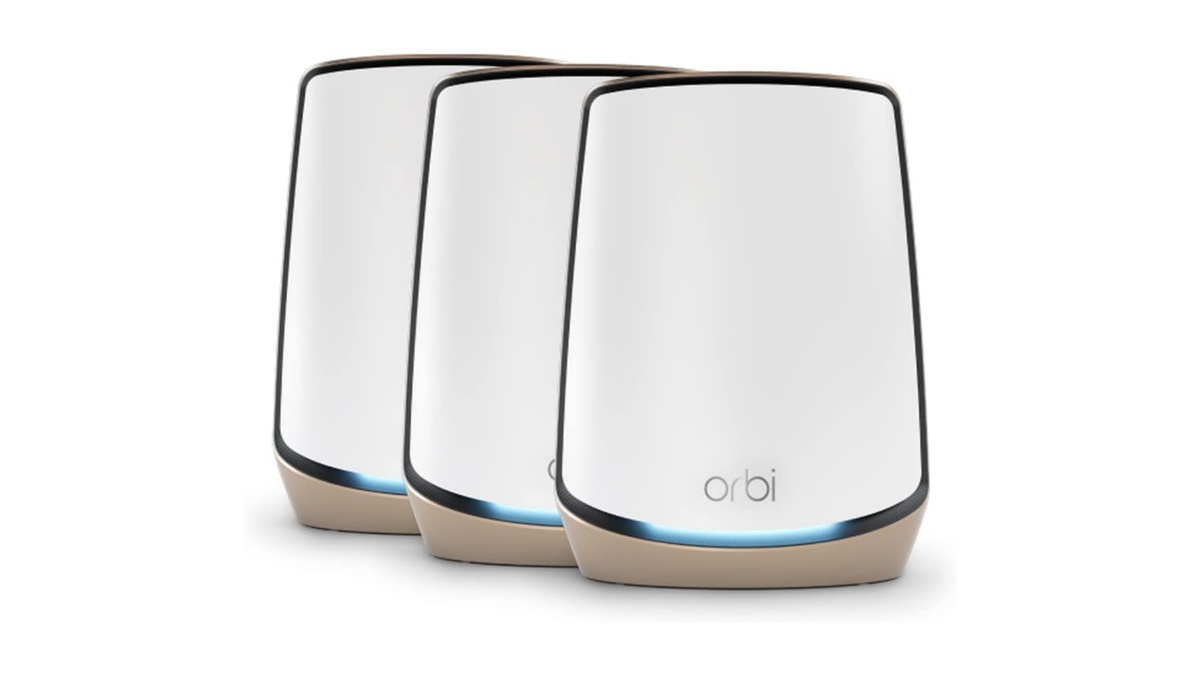
Netgear adds another Orbi series, the Orbi rbk863 which is another series of orbi ax6000 mesh wifi 6 products with multi-gig 10Gbps internet speed. Which one gives you better value between this orbi rbk863 and tplink deco x90?

In this article:

Orbi Rbk860

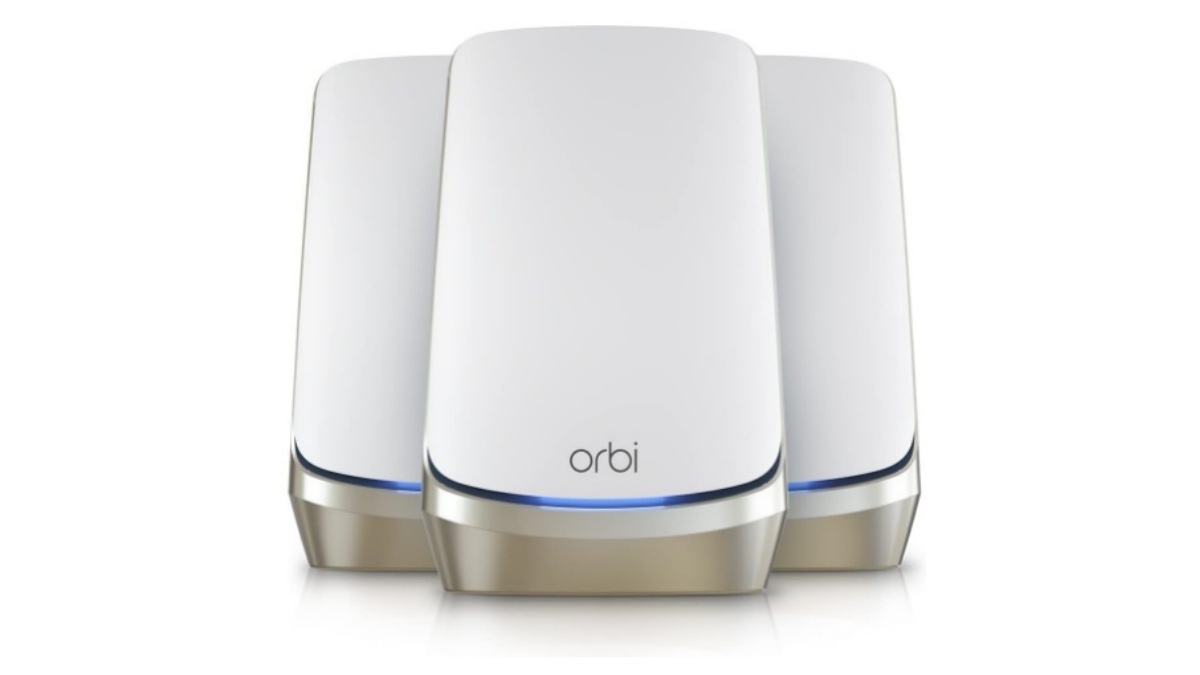
Netgear has released top notch tier products in wifi 6e technology, the orbi rbke963 with axe11000 aggregated bandwidth and designed with four radio bands. This product was released in addition to the most popular netgear orbi rbk852 ever which was once a high end product.

And today, netgear added another orbi rbk863 series which seems to me as new series between popular orbi rbk850 and the top notch orbi rbke960.

Orbi RBK863

Orbi Rbk860 vs Rbke960

If you compare rbk860 with orbi rbke960 you will find that these two series are significantly different, different in network segment, different numbers of radio bands and different wifi technology applied to each of the product series.

Orbi rbke963 series is based on latest enhancement of wifi 6e technology with four radio bands, and delivers total aggregated bandwidth up to 11,000Mbps. On the other hand this new rbk860 series is an ax6000 mesh wifi 6 system with three radio bands.

You can refer to table 1 below for spec differences between orbi rbk960 and rbk860.

10.0Gbps WAN port

The way I see this 10Gbps wan port embedded on either orbi rbke960 or rbk860 is too much. Do you currently have internet service up to 10gbps?

Actually, these wifi router devices which are equipped with 10gbps wan port is deliberately prepared to welcome the new 10G superfast internet technology, which so far has carried out several tests that resulted in download speeds of up to 8gbps, and uploads of up to 6gbps, one of which was done by Comcast in April 2024.

This fast speed 10G internet technology is for cable wired network, not for fiber optic. If so far the cable network infrastructure is docsis 3.1 with speeds up to 2gbps, this 10g internet speed is prepared for upcoming docsis 4.0 cable technology in order to accommodate the speed of 10gbps internet.

Later additions of wifi 7 products most come with 10-Gbps Internet port such as Deco BE85 or Asus BT10.

Spec comparison table

So both orbi rbke960 and orbi rbk860 are prepared to be compliant with the coming soon docsis 4.0 cable modem devices if it has started to be rolled out to the market.

Table 1 below is technical spec difference between Orbi rbk863 and Rbk963.

Orbi seriesOrbi Rbk860Orbi Rbk960
Wifi technologyTri-band ax6000 wifi 6 with 8-streamsQuad-band axe11000 wifi 6e with 16-streams
Signal rates1,200 Mbps @2.4GHz 4×4 2,400 Mbps @5GHz 1 2×2 2,400 Mbps @5GHz 2 2×21200 Mbps @2.4GHz 4×4  2400 Mbps @5GHz 4×4;  2400 Mbps @6GHz 4×4 ;  4800 Mbps @ 5GHz 4×4 (backhaul)
WAN Port1x 10.0 Gbps1x 10.0 Gbps
LAN ports (router and satellite)4x 1.0Gbps LAN ports1x 2.5 Gbps LAN port 3x 1.0 Gbps  LAN Ports
   

You may also see comparison between Asus et12 and orbi rbke963, you can see that the latest asus zenwifi et12 axe11000 is not ready with the 10G internet technology.

So what is the difference between netgear orbi rbk863 (3-pack of Orbi rbk860) and orbi rbk852 (2-pack of Rbk850)?

Orbi Rbk860 vs Rbk850

You may refer to the following table 2 below to see what the difference between orbi rbk860 and rbk850 is. You can see here that the main difference is the 10Gbps WAN port as discussed above. So previous model of orbi rbk852 is not ready for the upcoming 10G fast internet technology, but Orbi rbk863 is. 

Except the fast 10G wan port on rbk860, all other technical specs are the same including the wifi 6 ax6000 design, processor embedded on the board, and physical dimension and body weights.  

Table 2. Orbi Rbk863 vs Rbk853

Orbi ModelNetgear Orbi Rbk863Netgear Orbi Rbk853
Simultaneous tri-band ax6000 wifi 6YesYes
1,200Mbps @2.4GHz 2,400Mbps @5GHz 1 2,400Mbps @5GHz 2YesYes
8pcs high-performance internal antennas with high-power amplifiersYesYes
Router WAN port1x 10.0 Gbps Multi-Gigabit Ethernet WAN port1x RJ45 2.5G BaseT for WAN
LAN Ethernet Ports router and satellite: 4x 10/100/1000Mbps Gigabit Ethernet LAN portsYesYes
Coverage2,700 sq. ft./ unitUp to 2,500 sq ft /unit
2,400 Mbps @5GHz band dedicated backhaul link and Optional wired backhaulYesYes
Powerful Quad-Core 2.2 GHz processor with 512MB NAND Flash and 1GB RAMYesYes
Dimension (Height / Width / Depth: 10 ” x 7.5″ x 2.8″ (254 mm x 190.5 mm x 71.12 mm)YesYes
Weight: 2.86 lbs (1.29kg)YesYes

Now let’s take one of competing products that has been around for a while on the market – the tplink deco x90.

Orbi Rbk863 vs Deco X90

TP-link introduced few new mesh wifi 6 products including deco x68 ax3600, new deco xe75 pro and newer model deco xe200. The last two products are based on wifi 6e technology. Let’s take tplink deco x90 and compare it with this new Orbi Rbk863 and see which one gives you better value.

Deco X90

Please notice that nowadays you can find the newer model of Deco series, Deco x95 that upgrades the Deco x90 with few richer features including more Ethernet ports, and faster speed with higher network segment. Let’s focus on Deco x90 in comparison with Orbi rbk863.

Table 3 below represents the spec comparison between Orbi rbk863 and tplink deco x90 you can use as reference.

Wifi capacity

Both rbk860 and deco x90 are designed with slightly wifi 6 network segments different, however the two bands @5Ghz are different in bandwidth. Orbi with dedicated backhaul @5ghz and up to 2,400Mbps bandwidth leaving the other two bands up to 3,600Mbps are for connected devices.

How about deco x90? Tplink explains that the backhaul method is dedicated @5ghz, but does not explain which @5ghz radio band is used as dedicated backhaul, @1,200 or @4,800. Deco x90 uses ai-mesh to provide solid wifi performance for both backhaul and to clients.

Wired Backhaul

Both orbi and deco offer optional wired Ethernet backhaul by using wired network cable (typically UTP Cat5e or Cat6) connected the router node to the satellite nodes. Wired connection is more reliable connection than wifi one since wired connection is free from radio signal interference.

With deco x90 you can only configure the wired Ethernet backhaul using daisy chain topology because x90 only comes with two ports only. On the other hand with orbi rbk863 you can configure the wired backhaul either using daisy chain topology or star without adding separate Ethernet switch. This is possible because both orbi router and the satellite come with four lan ports. So you can connect each of the satellite nodes to the router node directly using UTP cable in a star manner.        

Ethernet Ports

This is a significant difference between the two products regarding the Ethernet port, not just about the speed capacity as specified as 10.0Gbps WAN port on orbi rbk863. However, it is about the compatibility of the next generation of 10G internet technology. As discussed above, with 10gbps wan port means that your router is future proof to docsis 4.0 cable network technology.

Spec comparison table

The following table 3 shows spec comparison between Orbi Rbk860 vs Deco x90.

Table 3 Orbi Rbk863 vs TP-Link Deco X90

Mesh wifi 6 modelNetgear Orbi Rbk863TP-link Deco X90
Wifi technologySimultaneous tri-band ax6000 mesh wifi 6Simultaneous tri-band ax6600 mesh wifi-6 system  with 8-streams with AI-driven mesh technology
Signal rates1,200Mbps @2.4GHz 4×4 2,400Mbps @5GHz 1 2×2 2,400Mbps @5GHz 2 2×2  4,804  Mbps on 5 GHz (1)  4×4 1,201  Mbps on 5 GHz (2) 2×2
574 Mbps on 2.4 GHz 2×2
Antennas8pcs high-performance internal antennas with high-power amplifiers4x high gain antennas + 2 smart antennas
Ethernet Ports1x 10.0 Gbps Multi-Gigabit WAN port (router) + 4x Gigabit LAN ports (router and satellite)1x 2.5 Gbps port+ 1x gigabit port per Deco unit (WAN/LAN auto-sensing)
BackhaulDedicated backhaul @5GHz and optional wired backhaulDedicated Wifi backhaul @5GHz with smart antennas Optional wired Ethernet backhaul
Coverage2,700 sq. ft./ unit3,000 sq ft / unit
SecurityNetgear armor network protection servicesTP-Link homeshield
ProcessorPowerful Quad-Core 2.2 GHz processor with 512MB NAND Flash and 1GB RAM1.5 GHz Quad-Core CPU
   
Price (Nov 2022 in Amazon)$1099.99 / 3-pack$449.99 / 2-pack

If you want your wifi6 router is gonna be compatible with upcoming 10g internet technology, netgear orbi rbk863 is the best choice. However, if you don’t need to get ready with the upcoming 10G internet technology, tplink deco x90 will be the best choice knowing that the price is much cheaper. Click the product’s link below to learn more details each of the product and see if you can get find deal from Amazon (#ads).

Related products

You may also like to consider the new series of Orbi Rbk763 ax5400 mesh wifi 6 and see how this orbi series is compared with best value deco xe75 pro. This new tplink deco xe75 pro is based on wifi 6e technology in middle network segment. 

Netgear Orbi Rbk763 vs Deco XE75 Pro Which One is Better

With the emerging of wifi 7 products, previous generations of wifi 6/6e products are still worth of considering, they still can perform well for most home sized and most applications available today.

In this article:

Netgear Orbi rbk763, RBK753, AND Deco xe75 were introduced to aim at the mid-range network segment. But what distinguishes the Orbi rbk763 from the previous Orbi rbk753 model, and how does it compare in value to the new Deco xe75?

Orbi Rbk760

Offering a range of products with different specifications, features and price points is essential for vendors to provide customers with more options that meet their specific business needs. Netgear was one of the first to release wifi 6 routers, starting with the Orbi rbk850 and followed by the Orbi rbk750. For the wifi 6e application, Netgear introduced the top-of-the-line Orbi rbke960. And for the wifi 7 application, it offers Orbi 970 series.

Netgear Orbi RBK763

To cover all network segments, Netgear added the Orbi rbk760 series with ax5400 network segment, which had previously been overlooked by Netgear and was being filled by other vendors, like Tplink and Asus.

Orbi Rbk760 vs rbk750 vs rbk850

With the release of orbi rbk760, what is missing from the orbi rbk850 and what is missing from the orbi rbk750 added to this Orbi rbk760, we’ll take a look at the spec differences between these three orbi series.

Typically Orbi rbk760 is sold in 3-pack (aka orbi rbk763), Orbi rbk750 is sold in 2 or 3-pack (orbi rbk752, rbk753), while Orbi rbk850 is sold in 2 or 3-pack (Orbi rbk852 or rbk853). Many people are more familiar with the label name of two or three pack kits instead of the original series of orbi series. Table 1 below shows you spec comparison between the three orbi series in 3-pack kits.

Network segment

The main difference between these Orbi series is the network segment at which they operate. The table in the following section displays the WiFi technology rows and signal rates for each model. All three models use a dedicated backhaul at 5 GHz and 2,400 Mbps. Most Orbi series use a dedicated backhaul link at the 5 GHz band with the option for wired Ethernet backhaul.

Ethernet ports

Each Orbi series distinguishes between the router node and the satellite nodes. The router node includes a WAN port that connects directly to the modem, and typically has more LAN ports than the satellite units. This is useful when configuring optional wired backhaul. With more Ethernet ports on the router unit, a star-wired backhaul topology can be used instead of a daisy chain topology without requiring an additional unmanaged switch.

When the requirement of multi-gig internet service exists, the only orbi series that is ready with this is rbk852, the other two orbi series support limited up to 1.0gbps internet plan.

So makes sure that your internet requirement is not multi-gig when you select either orbi rbk763 or rbk753.

Please notice that the latest wifi 6 Orbi series of Orbi Rbk860 and Orbi Rbk960 come with multi-gig 10Gbps for WAN connection. This will assure that these two Orbi series support the next generation of multi-gig DOCSIS 4.0 technology.    

Processors

Other difference is about the processor embedded on the board. Both orbi rbk850 and rbk750 are embedded with powerful quad core processor. On the other hand the orbi rbk760 is only embedded with a dual core processor; however you can see that it comes with big flash memory capacity as opposed to the other two series.

Table 1 Orbi Rbk763 vs Rbk753 vs Rbk853

Orbi ModelsOrbi Rbk763Orbi Rbk753Orbi Rbk853
Wifi technologyTri-band ax5400Tri-band ax4200Tri-band ax6000
Signal rate @2.4Ghz600Mbps600Mbps1,200Mbps
Signal @5Ghz2,400Mbps 2,400Mbps as backhaul1,200Mbps 2,400Mbps as backhaul2,400Mbps 2,400Mbps as backhaul
WAN Port router1 Gbps1 Gbps2.5Gbps
LAN PortsRouter: 3x 1.0 Gbps Satellite: 2x 1.0Gbps Router: 3x 1.0 Gbps Satellite: 2x 1.0Gbps Router: 4x 1.0 Gbps Satellite: 4x 1.0Gbps 
ProcessorPowerful Dual-Core 1Ghz CPU 4GB eMMC NAND Flash and 1GB RAMPowerful Quad-Core 1.4GHz CPU with 512MB NAND Flash and 1GB RAMPowerful Quad-Core 2.2GHz processor
MSRP  $549.99 (3-pack)$599.99 (3-pack)$999.99 (3-pack)

And see that the msrp for rbk763 is lower than the other two orbi series. Today you may find the prices on some online retail shops are dropped, in some events you can get best deals from the online shops like Amazon.

Now, let’s see how this Orbi rbk763 is competing with more recent wifi 6e technology offered by TP-Link, Deco XE75.

Orbi rbk763 vs Deco xe75

The latest iteration of WiFi 6, has been improved to include an additional 6 GHz radio band alongside the existing 2.4 GHz and 5 GHz bands, resulting in what is now known as WiFi 6E. Netgear has released its first Orbi RBKE963 mesh WiFi 6E series as part of its Orbi lineup, as well as the Netgear RAXE500 WiFi 6E router. On the other hand, TP-Link has introduced a new line of Deco products based on WiFi 6E, with the affordable Deco XE75 being one of them. If you’re trying to decide which one to choose between the Orbi RBK763 and the TP-Link Deco XE75 Pro to meet your needs, you can refer to Table 2 below. The Deco XE75 Pro includes a multi-gig WAN port, unlike the non-Pro series, which only has a 1.0 Gbps WAN port.

Deco XE75 Pro

Wifi

These two products offer the same total aggregated bandwidth and share a three-band design. However, they differ in the number of radio bands they use. The orbi rbk763 utilizes one 2.4GHz and two 5GHz bands, whereas the deco xe75 pro employs three different radio bands, including an additional 6GHz radio band.

By default, the deco xe75’s 6GHz band is designated as a dedicated backhaul. However, if you have other 6GHz-enabled devices, you may need to alter the default backhaul setting to allow for shared network use.

Therefore, the tplink deco xe75 pro offers added value for customers seeking a medium network segment product.

Internet need

If you have an internet plan that’s up to 800Mbps or 1.0Gbps, the Orbi rbk763 with its 1.0Gbps WAN port would suffice. However, if you require multi-gig internet speeds of up to 2Gbps, the deco xe75 pro with its multi-gig WAN port is the better choice. It’s important to assess your business internet requirements before deciding on a router.

The tplink deco xe75 pro offers flexible options that cater to various internet needs, including the added preference for wifi 6e with its 6GHz radio band. If you’re concerned about the availability of compliant adapters that support the 6GHz band, you’ll be glad to know that there are now several wifi 6e adapters that you can connect to the deco xe75 and other mesh wifi 6e products.

Spec comparison table Orbi vs Deco

Table 2 Orbi Rbk763 vs Deco xe75 Pro

Mesh wifi modelOrbi Rbk763 (3-pack)Deco XE75 Pro (3-pack)
Wifi technologySimultaneous tri-band ax5400Simultaneous tri-band axe5400 wifi 6e with AI driven mesh
Signal rates600Mbps @2.4Ghz 2×2; 2,400Mbps @5GHz band 1 2×2; 2,400Mbps @5GHz band 2 2×2;574Mbps @ 2.4GHz; 2×2;   2402 Mbps @ 5GHz; 2×2;   2402 Mbps @ 6 GHz 2×2;
Antennas6x high performance internal antennas with high-powered amplifiers4x High-Gain Internal Antennas
BackhaulDedicated backhaul @2,400Mbps @5GHz and optional wired backhaulDefault is dedicated backhaul @6GHz  and optional wired Ethernet backhaul
Coverage7,500 Sq ft7,500 sq ft
Ethernet PortsRouter Ports : – One (1) 1 Gbps WAN port Three (3) 1 Gbps LAN ports Satellite Ports (each) : Two (2) 1 Gbps LAN ports1x 2.5Gbps WAN port 2x Gigabit Ethernet Ports LAN auto sensing
USB PortN/AN/A
ProcessorPowerful Dual-Core 1Ghz processor 4GB eMMC NAND Flash and 1GB RAM1.7 GHz Quad core CPU
Security ProtectionNetgear armor servicesHome Shield Pro services
Dimension8.3 in x 6.6 in x 2.5 in each / weight 1.6lb each4.1 in x 4.1 in x 6.7 in (105 x 105 x 169 mm)
Price (Apr 2023 in Amazon)$549.99$599.99

Orbi rbk763 is tagged with lower price than deco xe75 pro, not too much different price actually. Now you judge which one is suitable to meet your business, rbk763 with lower price or deco xe75 pro that supports multi-gig internet. Click the product’s link below to read more details and get best deals in Amazon (#ads).

Related products

 With the emerging of wifi 7 routers on the market today, should like to taste the next generation of wifi 7 technology, you may like to see Deco BE85 or Asus BT10.

Netgear Cax80 vs Arris G36 Which One is Worthy

So far, the wifi 6 router products with built-in docsis 3.1 cable modem offered by netgear are nighthawk cax80 and cax30. Netgear cable modem routers combo become main competitors for most popular arris surfboard series.

In this article:

Netgear Cax80

Netgear nighthawk cax80 is an all-in-one device, a wifi-6 router with built-in docsis 3.1 cable modem. In general to create high speed wifi 6 network you require docsis 3.1 cable modem plus wifi 6 router. This router required gigabit wan port to support high speed internet plan from your provider. With netgear cax80 you don’t require separate cable modem; it comes with built-in cable modem on the machine board.

Netgear Cax80

Netgear cax80 vs cax30

After this nighthawk cax80 had been around in the market for a while, netgear added another similar product introduction – nighthawk cax30. What is the difference between the previous netgear cax80 and this newer model netgear cax30?

You can refer to table 1 below that represents spec comparison between netgear cax80 and cax30.

Different network segment

Netgear cax80 works at the middle range of ax6000 network segment. The lower segment is entry level ax1800 or something higher of up to ax3000 or ax4200. Netgear adds cax30 that works at ax2700, slightly below common ax3000 network segment. To me it seems not common to have cax30 with ax2700 instead of ax3000. Later you can compare with arris g36 that also comes with ax3000 network segment.  

Cax80 comes with ax6000 with 8 data streams (4×4 mu-mimo) each band, on the other hand cax30 does ax2700 with 6 data streams. Cax80 is like combination of netgear rax80 ax6000 wifi-6 router with  docsis 3.1 cable modem such as netgear cm2000, or Arris S33. On the other hand, netgear cax30 is like combination of netgear rax40 ax3000 wifi-6 router with netgear cm1000 docsis 3.1 cable modem.

Multi Gig Ethernet

The other difference is the high speed 2.5Gbps Ethernet port embedded on cax80 (1x) plus 4x 1.0 Gbps lan ports. You can compare to netgear cax30 series which only comes with 4x Gigabit LAN ports. Both machine boards come with the same USB 3.0 port you can attach a USB hard disk to share as disk storage across the network.

Thanks to the lan ports both products can support link aggregation when you require multi-gig lan port. Cax80 is ready with 2.5Gbps port and when more multi-gig port is needed you can configure two lan port for teaming port (link aggregation). What this multi-gig lan port is used for? When you need to connect high speed NAS product that supports two Gigabit lan ports and link aggregation, you can configure either cax80 or cax30 to support link aggregation.

Take a look table 1 below for spec comparison between these two products cax80 and cax30.

Table 1 Netgear cax80 vs cax30

Netgear cable modem routerNetgear cax80Netgear cax30 (s – for armor subscription)
Wifi technologySimultaneous dual band ax6000 wifi 6 with 8 streamsSimultaneous dual band ax2700 wifi 6 with 6 streams
Signal rates1.2Gbps @2.4GHz 4×4
4.8Gbps @5GHz 4×4
0.9Gbps @2.4 GHz 3×3;
1.8Gbps @5GHz 3×3
Built-in DOCSIS 31 cable modem OFDM 2×2 + 32×8 Channel bondingYesYes
Ethernet ports1x 2.5Gbps Ethernet LAN port;
4x 1.0Gbps Ethernet LAN ports, dual gigabit Ethernet port aggregation
4x 1.0Gbps LAN Ethernet Ports, dual gigabit Ethernet port aggregation
1x USB 3.0 for storage deviceYesYes
Processor1.5GHz Dual core processor1.5GHz dual core processor
Dimension10.4 in x 8.5 in x 4.3 in / (264 mm x 215 mm x 110 mm)10.0 in x 8.3 in x 4.3 in / (254 mm x 211 mm x 110 mm)
Weight2.55 lb (1.16 Kg)2.10 lb / 0.95 kg

Wider coverage

What if you need to add wider coverage with this Cax80 or cax30? Netgear is ready with its wifi 6 range extender, you can add Netgear eax20 ax1800 range extender or you can add similar ax6000 technology – the Netgear eax80 range extender.

The other model that Netgear offers is Orbi cbk752. Unlike cax80 and cax30 that combines wifi-6 router, Orbi cbk752 is combination of mesh wifi 6 router plus DOCSIS 3.1 cable modem. Orbi cbk752 consists of Orbi cbr750 router and one Orbi cbs750 satellite.

Cbk752 is like combination of Orbi rbk752 with built-in DOCSIS 3.1 cable modem delivering total bandwidth up to 4200Mbps.

Netgear cax80 vs Arris Surfboard G36

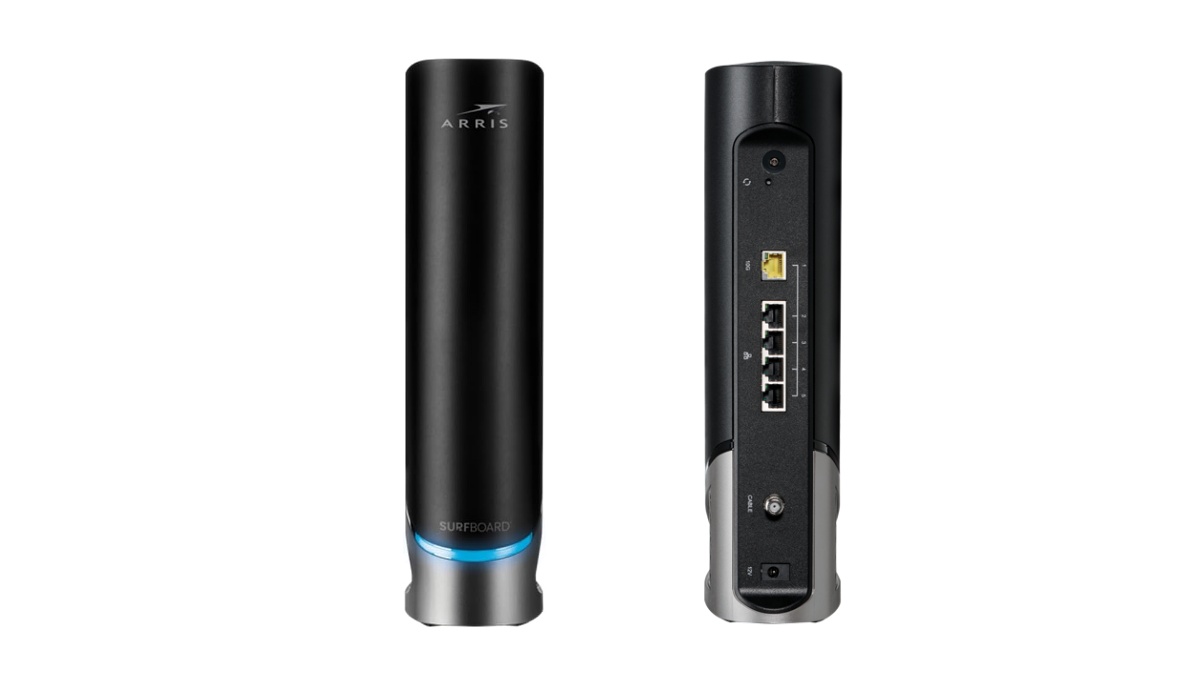
Today you can find few models of all-in-one wifi-6 routers with built-in cable modem from various vendors including Arris, Netgear, Motorola or Asus. The new products introduction by Motorola is mg8725, and you can also find arris with its twin products arris surfboard g34 and g36. The major difference between these two series is that arris g36 comes with multi-gig 2.5Gbps port while g34 doesn’t. 

Arris Surfboard G36

So what is difference between netgear cax80 and arris g36? Please refer to table 2 below for spec comparison between netgear cax30 and arris g36. The spec comparison between cax80 and cax30 has been discussed above, so comparing cax80 ax6000 with arris g36 from my point of view is not fair.

Same Network segment

Like netgear cax80 with ax6000 network segment is common, so is arris g36 with ax3000. You can see that netgear cax30 is designed with uncommon ax2700 segment instead of ax3000 like arris g34 or g36. So with slightly different network segment, you can recon those two products work at the same segment.

LAN Ports

If you require multi-gig 2.5Gbps you may consider netgear cax80 or arris g36. Cax30 doesn’t come with 2.5Gbps port; however you can combine two lan ports to create a teaming port with its link aggregation feature support. It looks complicated for folks with non savvy tech. Moreover, if you require high speed NAS product to support your wifi network environment, arris g36 with 2.5Gbps port is preference knowing that today you can find bunch of NAS products come with 2.5Gbps port, even two ports that support link aggregation as well.  

Spec comparison table

Table 2 below gives you details of spec comparison between netgear cax30 and arris g36.

Table 2 Netgear cax30 vs Arris g36

Gateway ModelNetgear cax30Arris Surfboard G36
Wifi routerSimultaneous dual band ax2700 wifi 6 with 6 streamsSimultaneous dual band ax3000 wifi 6
Signal rates0.9Gbps @2.4 GHz 3×3;
1.8Gbps @5GHz 3×3
1,200Mbps @2.4GHz; 4×4   1,800Mbps @5GHz 3×3
Built-in DOCSIS 31 cable modem OFDM 2×2 + 32 x 8 Channel bondingYesYes
Ethernet Ports4x 1.0Gbps LAN Ethernet Ports, dual gigabit Ethernet port aggregation1x 2.5Gbps LAN Port; 
4x Gigabit LAN ports
USB Port1x USB 3.0 port for share storageN/A
Dimension10.0 in x 8.3 in x 4.3 in / (254 mm x 211 mm x 110 mm)10.87 in x 9.92 in x 3.31 in (276 mm x 251,9 mm x 84 mm)
Weight2.10 lb / 0.95 kg3.15 pounds / 1043 gram
Price$299.00$329.00

Instead of cax30, you may find different label on netgear cax30s with the ‘s’ addition, this refers to the inclusion of one year netgear armor subscription. This is a kind of network protections against any wild internet threats. Prices on online stores such as Amazon, Bestbuy or else are always fluctuating over time, click the product’s link below to learn more details in Amazon (#ads).

Previous model of arris product is arris surfboard sbg8300 which is so popular before arris released these twin models of arris g34 and g36 ax3000. And the latest product is Arris G54 wifi 7 cable modem combo.

Arris surfboard sbg8300 is still based on legacy wireless ac standard with total aggregated bandwidth of up to ac2200. When you have already upgraded your connected devices with latest wifi 6 technology you may consider arris g34 or g36 that come with wifi 6 instead of surfboard sbg8300 which is still based on legacy wifi5.

Orbi Rbke963 vs Linksys 6e vs Deco Which One is Worth Buying

The only Orbi series based on wifi 6e introduced by netgear is the top notch orbi rbke960 series which mostly sold at the market with orbi rbke963 (3-pack) kit.

In this article:

Orbi 960 Series

Netgear doesn’t introduce couple of orbi series based on wifi 6e like other vendors including tplink or asus. You can find tplink introduced few models of deco wifi 6e products including popular deco xe75 pro axe5400 and deco xe200 axe11000. Asus introduces two models of mesh wifi 6e products, asus zenwifi et12 axe11000 as the ultimate wifi 6e product and the middle one is asus zenwifi et8 axe8400. 

Orbi RBKE963

Wifi 6e is the enhancement of standard wifi 6 technology with the introduction of 6ghz radio band in addition of common 2.4ghz and 5ghz ones. This 6ghz band is clean and fast lane and will also be available on the next generation of wifi 7 technology whihc is just around the corner.

Back to netgear orbi rbk963 we will discuss here.

If the Orbi rbk852 still doesn’t give you enough bandwidth to drive all bandwidth-intensive applications, streaming 4k or 8k video, online gaming with high density connected devices, you may consider the ultimate Orbi rbke963. Below you can see comparison between orbi rbke963 and linksys atlas max 6e and also tp-link deco xe200.

Quad band Router

Netgear Orbi Rbke963 is the industry’s first quad radio bands mesh wifi 6e product available in the market today. Later, when new wifi 7 products available in the market you can find the ones with quad radio band including 6ghz band.  

Orbi rbk960 was released to answer the challenge of advanced wifi 6e technology which adds one @6ghz radio band in addition to existing one @2.4ghz radio band and two @5ghz radio bands so that wifi 6e provides three distinct radio bands. Orbi rbk963 is Orbi kit which consists of one orbi rbr960 router plus two orbi rbs960 satellites.

6GHz for connected devices

Most mesh wifi 6e products add one @6GHz radio band in addition to 2.4GHz and 5GHz ones, making this 6GHz band a dedicated backhaul link or sharing with compatible wifi 6e compliant connected devices. Orbi does not use this 6GHz band as a dedicated backhaul link, however it adds another @5GHz radio band as a dedicated backhaul link so that the 6GHz radio band is used for wifi 6e compatible devices.

You can compare it with Linksys Atlas Max 6e, deco xe200 and Asus ET12 which design its 6ghz radio band as dedicated backhaul or shared with other wifi 6e devices.

Orbi doesn’t use 6ghz band as dedicated backhaul is a good thing so you can connect all compliant 6ghz-based devices to this available fast lane band dedicatedly. Currently there are few models of wifi 6e pci-e adapters available in the market such as the OKN ax5400 and Fenvi ax5400. Should you prefer USB model, you can find TP-Link Archer TXE50UH or Netgear A8000.

Router Node and Satellite Node

In contrast to other mesh wifi product models that can be exchanged between router and satellite nodes, Orbi always distinguishes which one is the mesh wifi router and which one is a satellite node. On Orbi rbke963, the difference is physically apparent where the router node comes with 10Gbps multi-gig WAN port in addition to the 2.5Gbps port and 3x other Gigabit LAN ports. On the other hand, the satellite node doesn’t come with 10Gbps WAN port.

To get a deeper insight about this ultimate Orbi series, I’ll get two other wifi 6e products to compare technically: tplink deco xe200 and Linksys Atlas Max 6e.

Orbi rbke963 vs Linksys Atlas Max 6e vs Deco xe200

The ultimate wifi 6e product offered by Linksys so far is linksys atlas max 6e, and the one offered by tplink is deco xe200. Both series are mesh wifi 6e products have been around in the market up to early 2023. Few models of deco wifi 7 series have been showcased in its website.

Linksys Atlas Max 6e

You can refer to table 1 below to show you spec comparison between Orbi rbke963 and Linksys Atlas max 6e, and table 2 does between orbi and deco.

Wifi Segment

It has been discussed briefly above that Orbi uses 4 radio bands and one @5ghz radio band @4800 is used as a dedicated backhaul, so that three other radio bands with total aggregated bandwidth of up to 6,000 Mbps (1,200 + 2,400 + 2,400) are specifically for compliant connected devices.

Unlike Orbi, Linksys atlas max 6e uses dynamic backhaul method; the system will allocate how much bandwidth for backhaul when communication between nodes is needed. The wider bandwidth used for connected devices the greater the bandwidth for link communication between nodes. In general, for backhaul link that shares bandwidth with connected devices, no more than half the maximum bandwidth is used for backhaul link. If Linksys uses dynamic backhaul involving all three radio bands, the maximum bandwidth for backhaul is 4,200mbps while the total bandwidth for clients is also the same (4200Mbps).

Deco XE200

Deco xe200 uses dedicated backhaul @6ghz by default. You can enable this band as network share if you have few 6ghz devices to connect.

Wired backhaul

Besides wifi backhaul, Orbi, deco and Atlas series provide wired backhaul option for connecting between nodes using cat5e or cat6 utp cable. All products have more than two Ethernet ports allowing you to use either star topology or daisy chain wired backhaul topology depending on which one suits your needs.

If the placement of two satellite nodes in series, naturally the daisy chain topology is applicable. If the two satellite nodes are on the left and right side of your mesh router, the star topology is more suitable.

The wired backhaul option is certainly more profitable if running the network cable is not too difficult to do. However, if you have to drill holes in the walls between rooms is a problem, or running network cable through the ceiling is troublesome, it’s a good idea to find the right location for each satellite nodes to use wifi backhaul.

Ethernet ports

Both orbi and deco axe11000 come with multi-gig 10gbps wan port, but linksys doesn’t. linksys atlas max 6e is equipped with 5gbps wan port, half of orbi and deco.

So why 10gbps wan port, is there internet provider ready with 10gbps internet speed for home’s consumers? Yes, if you are in San Francisco, you can advice Sonic fiber optic. However, I believe that the 10gbps internet speed is to welcome the next generation of docsis 4.0 cable lab technology. Currently the available docsis 3.1 cable modem products with 2.5gbps have been offered by few vendors including arris s33, netgear cm2000 or Motorola mb8611. Check here comparison Arris S33 vs CM2000.

LAN Ports

Orbi provides one 2.5Gbps LAN port for both router and satellite in addition to 3x 1.0 Gigabit LAN ports. If you choose wired backhaul then use this 2.5gbps port. However, if the number of satellite nodes is more than one, for example two or three nodes use a multi-gig switch and use star wired backhaul topology to get high speed wired backhaul up to 2.5gbps. You need to use an unmanaged multi-gig switch for example the tp-link TP-Link TL-SG105-M2 which is equipped with 5-port 2.5Gbps port.

Besides the technical hardware spec, orbi gives you separate four SSIDs for home standard network name for the three radio bands (2.4Ghz; 5Ghz and 6Ghz) like mesh wifi in general, special SSID for wifi 6e, special SSID for IoT devices, and the last one is guest network.   

For more details, take a look at the following spec comparison table between these two products, Orbi rbke963 vs Deco XE200.

Spec comparison table Orbi vs Linksys

Table 2 Orbi rbke963 vs Deco xe200

Wifi 6e modelOrbi Rbke963TP-Link Deco XE200
Wifi technologySimultaneous four band axe11000Tri-band axe11000 with 16 streams and AI-driven mesh technology
16 data Streams #YesYes
Signal rates1200 Mbps @2.4GHz 4×4  
2400 Mbps @5GHz 4×4;  
2400 Mbps @6GHz 4×4 ; 4800Mbps @ 5GHz 4×4 (backhaul)
1,148 Mbps @2.4GHz 4×4;
4,804 Mbps @5GHz 4×4;
4,804 Mbps @6GHz 8×8 (backhaul)
Antennas12x high-performance internal antennas with high-power amplifiers16x High-Gain Internal Antennas
Ethernet PortsRouter:
1x 10.0 Gbps WAN port;
1x 2.5 Gbps LAN port;
3x 1.0 Gbps LAN ports  
Satellite:
1x 2.5Gbps LAN
3x 1.0Gbps LAN ports 
1x 10.0Gbps WAN Port;
2x Gigabit LAN Ports
USB portsN/A N/A
Backhaul4800Mbps @5GHz dedicated backhaul and optional wired backhaulDedicated default @6GHz by default, or share network. Optional wired backhaul is also available.
ProcessorPowerful Quad-Core 2.2GHz processor 512MB NAND Flash and 1GB RAM2.2 GHz Quad-Core 64-bit Qualcomm CPU
with 2x 512MB DDR4 Memory
Coverage9000 sq ft (3-pack)6,500 sq ft / 2-pack
SecurityNetgear ArmorWPA2, WPA3, HomeShield
Works with Google assistant and AlexaYesYes
Dimension11 in x 7.5 in x 3.3 in (279.0 mm x 190.5 mm x 83.8 mm)5.12 in × 4.86 in × 9.49 in (130 mm × 123.5 mm × 241 mm)
Price$1,498.99 (3-pack)$799.99 (2-pack)
Price tags

So far, Orbi rbke963 is tagged with the most expensive price than Linksys max 6e and deco xe200. Prices are fluctuating over time, click the product’s link below to see current price, get best deal and read more details each the product in Amazon (#ads).

Related Products

Should you ready with the next generation of wifi 7 standards which has been around on the corner, you may like to consider Deco BE85 or Asus BT10, more bandwidth to cover your homes.

Or you may like compact all in one Cable modem router with latest wifi 7 standards, you may consider Arris G54, wireless 7 BE18000 router with built-in DOCSIS 3.1 cable modem.

Ultimate Mesh Wifi 7 Deco Be85 vs Asus BT10 Which One is Better

As the pioneer in next-generation WiFi 7 technology, TP-Link outshines its competitors, Netgear and Asus, by introducing a groundbreaking lineup of mesh systems. TP-Link proudly presents the Deco BE85 and BE95, along with the Archer series, all built on the advanced WiFi 7 standard. Meanwhile, its competitors, Netgear and Asus, are catching up, placing TP-Link in the forefront of innovation.

In this article:

Deco wifi 7 series

TP-Link Deco BE85 and BE95 mesh systems, in addition of other TP-Link wifi 7 products, are designed to leverage the cutting-edge WiFi 7 technology. With the increasing demand for faster and more reliable internet connections, TP-Link has created these next-generation mesh systems to meet the needs of modern households.

Three distinct radio bands

WiFi 7, also known as 802.11be, represents a significant advancement in wireless technology, offering improved speed, capacity, and performance. TP-Link’s Deco BE85 and BE95 mesh systems take full advantage of this new standard by incorporating three distinct radio bands: 2.4 GHz, 5 GHz, and 6 GHz.

Deco BE85

The inclusion of the 2.4 GHz band ensures broad compatibility with a wide range of devices, including older devices that may not support the newer 5 GHz and 6 GHz bands. The 5 GHz band provides faster speeds and lower latency, making it ideal for bandwidth-intensive activities such as streaming 4K video and online gaming. The addition of the 6 GHz band offers even more capacity and less interference, enabling smooth performance in congested environments.

The latest introduction of wifi 6 products are incorporated the enhancement model of wifi 6e technology by incorporated the new 6GHz radio band.

Let’s focus on deco wifi 7 products offered by TP-Link, deco be85 and deco be95.

Deco Be85 vs Be95

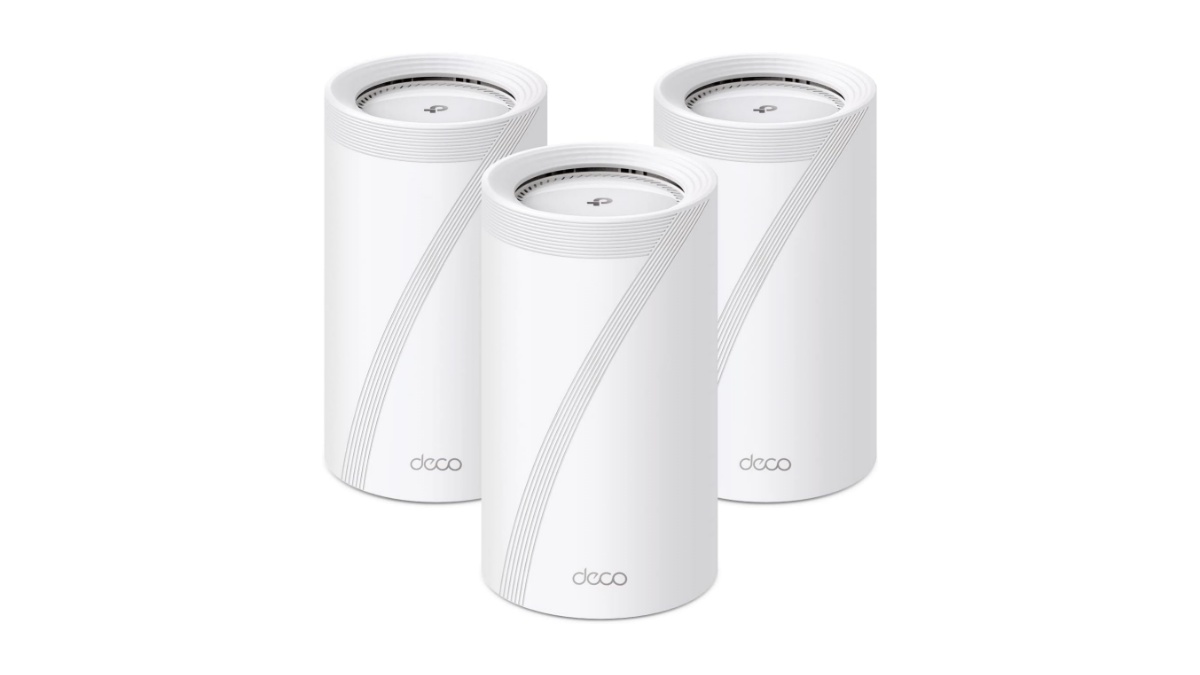
The BE95 and BE85 share identical dimensions and a consistent footprint, featuring a sleek, tower-like cylindrical design. The cylindrical body stands tall, with polished walls that showcase a striking graphical representation of seven stripes ascending from the base to the top of the device.

Deco BE95

Wifi design

The key difference between the BE95 and Deco X85 lies in their band configurations and data stream capabilities.

The Deco BE95 is a quad-band system, offering four radio bands for wireless communication. This allows for increased flexibility and better distribution of network traffic. With aggregated bandwidth of up to 33,000 Mbps, the BE95 can handle higher data transfer rates, ensuring smooth performance even in demanding scenarios. It supports an impressive 16x data streams, 4×4 MU-MIMO each band, which means it can simultaneously communicate with multiple devices, maximizing throughput and reducing latency.

On the other hand, the Deco Be85 is a tri-band system, it provides excellent performance, it may not have the same level of bandwidth as the BE95, with a mentioned value of 22,000 Mbps. Additionally, the Deco Be85 supports 12 data streams, the same 4×4 MU-MIMO each band as BE95 which is still a high number and allows for efficient communication with multiple devices, but it falls short of the 16 streams offered by the BE95.

Connected devices 

Today, you can find few models of wifi 6e adapters that support MU-MIMO you can upgrade your computers to connect optimally to the wifi 6e or wifi 7 products including these Deco be85 and deco be95 using 6GHz band.

Both the Deco BE95 and Deco X85 offer impressive features and capabilities, but the BE95’s quad-band configuration and higher number of data streams provide a potential advantage in terms of handling greater bandwidth and accommodating a larger number of connected devices with faster speeds.

Ethernet Ports

Both the Deco BE85 and BE95 are equipped with multi-gig Ethernet ports, offering high-speed connectivity options for your network. Here are the details of the available ports:

2x 2.5Gbps WAN/LAN Ports: These ports provide versatile functionality, allowing you to use them as either WAN ports to connect to your internet service provider or as LAN ports to connect devices within your network. The 2.5Gbps speed capability ensures faster data transfer rates compared to traditional Gigabit Ethernet ports.

1x 10Gbps LAN/WAN Port: This port offers blazing-fast 10Gbps speeds, making it ideal for connecting devices that require ultra-high bandwidth, such as high-performance servers or network-attached storage (NAS) devices. You can utilize this port as either a LAN port to connect devices within your network or as a WAN port to connect to high-speed internet services, provided you have access to a compatible 10Gbps internet port. Or you may connect to Arris S33 DOCSIS 3.1 cable modem with 2.5Gbps port.

1x Combo 10Gbps LAN/SFP WAN/LAN Port: This combination port provides flexibility for various connectivity options. It supports both 10Gbps Ethernet connections (LAN) and Small Form-factor Pluggable (SFP) connections, which can be used as either a WAN port to connect to high-speed internet services or as a LAN port to connect devices within your network. It’s important to note that you can use either the LAN or SFP functionality at a given time since it’s a single port that can be configured accordingly.

Multi-Gig Internet

Regarding the availability of 10Gbps internet port providers, it depends on your specific location and the internet service providers (ISPs) available in your area. 10Gbps internet connections are generally more common in enterprise or data center environments rather than residential settings. However, the availability and deployment of higher-speed internet services can vary significantly depending on your region and the advancements made by local ISPs.

One thing for sure is that this 10Gbps WAN port is to welcome the next generation of DOCSIS 4.0 cable lab technology that will support multi-gig blast internet speed up to 10Gbps.

Spec comparison table Deco BE series

Table 1 TP-Link deco be95 vs be85

Deco wifi 7TP-Link Deco BE95TP-Link Deco BE85
Wifi SegmentQuad band Be33000 16 streamsTri-band Be22000 12 streams
Signal rates6 GHz-1: 11,520 Mbps (802.11be) 4×4
6 GHz-2: 11,520 Mbps (802.11be) 4×4
5 GHz: 8640 Mbps (802.11be) 4×4
2.4 GHz: 1,148 Mbps (802.11ax) 4×4  
6 GHz: 11,520 Mbps (802.11be) 4×4
5 GHz: 8,640 Mbps (802.11be) 4×4
2.4 GHz: 1,376 Mbps (802.11be) 4×4
Backhaul linkWifi and wired backhaulWired and wifi backhaul
Antennas12x High-Gain Internal Antennas8x High-Gain Internal Antennas
10Gbps Ethernet Ports1x 10 Gbps
1x 10 Gbps SFP+/RJ45 Combo
  1x 10 Gbps 1x 10 Gbps SFP+/RJ45 Combo
2,5Gbps Ethernet Ports
2x  Supports WAN/LAN auto-sensing  
2x Supports WAN/LAN auto-sensing
USB Ports1x USB 3.0 Port1x USB 3.0 Port
Router Mode / Access Point ModeYesYes
HomeShield QoS: QoS by DeviceYesYes
Dimension5.04 in x 5.04 in x 9.29 in (128 mm x 128 mm x 236 mm)5.04 in x 5.04 in x 9.29 in (128 mm x 128 mm x 236 mm)
Price$1.199.99 / 2-pack $999.99 / 2-pack

See that the main difference in terms of aggregated wifi bandwidth, deco be95 with quad band 16 streams delivers wider bandwidth than deco be85 which is only three bands with 12 data streams.  The number of multi-gig Ethernet ports is the same, and both include 10Gbps LAN/SFP combo port. You can use this combo port either as the Ethernet or the SFP port. With SFP port interface, you can utilize it for fiber optic connection either to fast LAN or fiber Internet modem interface.

Deco Be85 vs Asus BT10

Both deco be85 and be95 become the main competitors for Netgear Orbi 970 and Asus BT10 wifi 7 series.  You may also like to to see the lower segment range between Deco BE63 and Asus BT6, the other wifi 7 products in a middle network segment.

Table 2 presents a spec comparison between the TP-Link Deco BE85 and the Asus BT10. These products offer the same generations of WiFi technology, but work at different network segment.

Asus BT10

In terms of total aggregated bandwidth, the Deco BE85 offers wider bandwidth than Asus ET12. Both devices support the 4×4 MU-MIMO feature across each radio band, but Asus BT10 @2.4Gz band is limited to support 2×2 MU-MIMO.

Ethernet Ports

Both Deco BE85 and BE95 come equipped with identical port configurations, featuring 2x 10Gbps and 2x 2.5Gbps Multi-gig ports. In contrast, Asus ZenWiFi BT10 comes equipped with 2x 10.0 Gbps (1x WAN/LAN and 1x LAN) and 1x 1.0Gbps WAN/LAN port. You can either use the multi-gig 10.0Gbps port as WAN or 1.0 Gbps port.

Both Deco BE85 and BT10, you get the advantage of supporting blazing-fast internet speeds of up to 10Gbps, making it future-proof for upcoming multi-gig internet speeds, including compatibility with the next-generation DOCSIS 4.0 cable lab technology.

Both Deco BE85 and BT10 not only offer wider range of high-speed ports but also provides superior support for faster internet speeds, positioning it as a robust solution for future multi-gig internet requirements.

Network protection

The best part with Asus is that it comes equipped with free lifetime business grade Asus AiProtection Pro powered by Trend Micro. On the other hand, with TP-Link deco be85, and also be95, you need to subscribe to paid TP-Link HomeShield plan for network protection. 

Table 2 Deco be85 vs Asus BT10

Ultimate ModelsTP-Link Deco BE85Asus Zenwifi BT10
Wifi TechnologyThree Band BE22000 Mesh Wifi 7  with 12 streamsThree band BE18000 mesh wifi 7  with 10 streams
Signal rates6 GHz: 11,520 Mbps (802.11be) 4×4
5 GHz: 8,640 Mbps (802.11be) 4×4
2.4 GHz: 1,376 Mbps (802.11be) 4×4  
6 GHz: 11,529 Mbps (802.11be) 4×4
5 GHz: 5,764 Mbps (802.11be) 4×4
2.4 GHz: 688 Mbps (802.11be) 2×2  
MLO (Multi Link Operation)YesYes
Maximum Bandwidth Channel320MHz320MHz
BackhaulWifi and wired backhaul aggregation 
Coverage9,000 ft2 / 840 m2 (3-pack)6,000 Sq ft / 2-pack
Antennas8x High-Gain Internal Antennas8x internal antennas
Ethernet Ports1x 10 Gbps 1x 10 Gbps SFP+/RJ45 Combo 2x 2.5 Gbps1x 10G WAN/LAN 1x 10G LAN 1x 1G WAN/LAN  
USB Ports1x USB 3.01x USB 3.0
ProcessorQuad core CPU2.0GHz Quad Core 64-bit Processor
256 MB Flash + 2.0 GB RAM
Security ProtectionTP-Link HomeShieldLifetime free ASUS AiProtection Pro, powered by Trend Micro
Dimension5.04 in x 5.04 in x 9.29 in (128 mm x 128 mm x 236 mm)4.5 in x 4.5 in x 9.4 in
(115 mm x 115 mm x 241 mm)
Price$999.99 /2-pack$827.99 /2-pack

Click the product’s link below to learn more details each of the product, the current price and probably best deal offered by Amazon (#ads).

Related products

For all in one compact device with wifi 7 technology, you may consider new Arris Surfboard G54 BE1800 cable modem wifi 7. A compact wifi 7 router with built-in DOCSIS 3.1 cable modem.

TP-Link Deco XE200 vs Asus ET12 Which One is Better Value

Tp-link has recently launched its new high-end mesh wifi 6e product, the Deco XE200 AXE11000. This cutting-edge product boasts multi-gig internet speed, and arrives amidst a slew of premium offerings from other major vendors such as Netgear, Linksys, and Asus.

In This Article

TP-Link Deco XE200

Tplink’s Deco XE200 is the latest addition to its mesh wifi 6e product lineup, which already includes the Deco XE75 Pro and Deco XE5300 that have been on the market for some time. It appears that tplink is determined not to fall behind in offering top-of-the-line products based on the premium AXE11000 and enhanced wifi 6e technology.

Today, TP-Link has ventured into the realm of next-generation WiFi 7 technology, unveiling a select lineup of products. Among them are the Deco BE95 and Deco BE85 mesh WiFi 7 systems, as well as the Archer BE800 and Archer BE900 WiFi 7 routers.

TP-Link Deco XE200

Now, the question arises: should you opt for the fresh Deco BE85, offering an impressive aggregated bandwidth of up to BE24000, or perhaps consider the ultimate WiFi 6E solution, the TP-Link Deco XE200?

Deco XE200 vs. Deco BE85

In Table 1 below, we present a comprehensive spec comparison between the formidable TP-Link Deco XE200, representing the pinnacle of mesh WiFi 6E technology, and the next-generation Deco BE85, equipped with cutting-edge mesh WiFi 7 technology. One can’t help but notice that the primary distinction lies in the WiFi generation employed in each series. While WiFi 7 is not yet officially released, its promise shines through with double channel bandwidth akin to the Deco XE200, ensuring swifter speeds and support for multi-link operations. With multi-link operation support, the bandwidth connections can be aggregated, providing a broader bandwidth when connected to compliant WiFi 7 devices.

Another notable difference lies in the embedded Ethernet Ports. The new Deco BE85 comes furnished with two multi-Gig 10Gbps WAN ports and two 2.5Gbps LAN ports, expanding your connectivity options significantly.

XE200 vs BE85 Table

Table 1 Deco XE200 vs Deco BE85

Deco ProductsDeco XE200Deco BE85
Wifi SegmentSimultaneous Tri-band axe11000 with 16 streams and AI-mesh technologyTri-band Be22000 12 streams
Signal rates1,148 Mbps @2.4GHz 4×4; 4,804 Mbps @5GHz 4×4; 4,804 Mbps @6GHz 8×8 (backhaul)6 GHz: 11,520 Mbps (802.11be) 4×4
5 GHz: 8,640 Mbps (802.11be) 4×4
2.4 GHz: 1,376 Mbps (802.11be)4×4
Multi Link Operation SupportN/AYes
Backhaul linkDedicated default @6GHz by default, or share network. Optional wired backhaul is also available.Wired and wifi backhaul (backhaul aggregation)
Antennas16x High-Gain Internal Antennas8x High-Gain Internal Antennas
Ethernet Ports1x 10.0Gbps WAN Port; 2x Gigabit LAN Ports1x 10 Gbps 1x 10 Gbps SFP+/RJ45 Combo 2x 2.5Gbps LAN Ports
USB PortsN/A1x USB 3.0 Port
Security & QoSHomeShield,HomeShield QoS: QoS by Device
Channel Bandwidth160 MHz320 MHz
Dimension5.12 in × 4.86 in × 9.49 in (130 mm × 123.5 mm × 241 mm)5.04 in x 5.04 in x 9.29 in (128 mm x 128 mm x 236 mm)
Price$799.99 (2-pack) $999.99 / 2-pack

Click here to learn more details Deco BE85 on Amazon (#ads)

Now back to ourd discussion with TP-Link Deco XE200.

When compared to similar products that have been on the market for some time, such as the Netgear Orbi RBKE963 and Asus ZenWiFi ET12, tplink’s Deco XE200 is more affordable. In fact, it is offered at a more economical price point than both of these products, making it an attractive option for those who want to experience the benefits of wifi 6e technology without breaking the bank.

10G Multi-Gig Internet

What is the bandwidth of your internet services provided by your cable internet provider? Additionally, which cable modem are you currently using? As of now, the maximum speed for consumer Blast internet service does not exceed 2Gbps with the latest DOCSIS 3.1 cable modem technology. Moreover, the fastest consumer cable modem available in the market today features a DOCSIS 3.1 cable modem with a 2.5Gbps Ethernet port, such as the Arris Surfboard S33 and Netgear CM2000.

You may be wondering why the Deco XE200 product features a 10Gbps multi-Gig WAN port. Is it not too excessive for the available internet speed offered to consumers today? While this may be true for cable internet services, it is not the case for fiber optic internet services. Companies like Sonic currently offer multi-gig fiber optic internet services at an affordable price, making the 10Gbps multi-Gig WAN port a valuable feature for those who have access to such internet services.

Upcoming Docsis 4.0

The future of cable internet services technology lies in DOCSIS 4.0 cable networks, which can provide upstream speeds of up to 6Gbps and downstream internet speeds of up to 10Gbps. This hybrid fiber optic and coaxial network is the reason why premium router products available today are equipped with multi-gig WAN ports that will be compatible with this upcoming 10G internet technology.

This is why tplink Deco XE200 and Orbi RBK963 are both equipped with 10Gbps WAN ports, and also ultimate TP-Link Archer and Asus Axe16000 wifi 6e routers. Almost all the next generation of wifi 7 products introduced by TP-Link both Deco and Archer series are equipped with multi-gig 10Gbps WAN ports.

This ensures that these products are future-proofed and ready to take advantage of the higher internet speeds that will be available with DOCSIS 4.0 technology, and the next generation of wifi 7 technology that supports up to 10Gbps internet speed.  

Dedicated backhaul @6ghz band

Enhanced wifi 6e technology has introduced the 6GHz radio band as a new, clean and fast lane for backhaul links between nodes. This feature is enabled by default in the Deco XE200, with a dedicated backhaul that utilizes the 6GHz radio band. However, if you have devices that support the 6GHz radio band, you can configure the default settings to opt for the network mode and connect to the available 6GHz band.

To configure the settings for the Deco XE200, navigate to the “Wi-Fi Setting” section and click on “6 GHz.” From there, select “Wi-Fi network” under “Use 6 GHz Wi-fi for” to switch the default dedicated backhaul setting to share bandwidth with compatible 6GHz connected devices. While there are currently only a few models of PCIe Wi-Fi 6e adapters available in the market, USB models are not yet available.

Given the dominance of the Asus ZenWiFi ET12 and Netgear Orbi RBK963 in the market, it remains to be seen whether the Deco XE200 will be able to capture a significant share.

Deco xe200 vs Asus ET12 vs Orbi Rbk963

To compare the products, the most straightforward approach is to create a table that highlights the specifications and features of each device. Table 1 provides a specification comparison between the Deco XE200 and the Asus ZenWiFi ET12, while Table 2 compares the Deco XE200 to the Orbi RBK963.

Asus ET12

Wifi

All three products operate within the AXE11000 network segment, but each distributes radio bands in a different manner. The XE200 and ET12 are equipped with three radio bands and utilize the 6GHz band as a dedicated backhaul link for each node. However, the XE200 allows users to opt for the 6GHz band as a network mode, rather than a dedicated backhaul link.

The ET12, on the other hand, shares its 6GHz band as shared bandwidth for both backhaul links and compatible 6GHz-based connected devices. The Orbi RBKE963 is designed differently, as it does not use the 6GHz radio band as a dedicated band, instead using one of its available two 5GHz radio bands. With four bands available, the RBK963 can use its 6GHz radio band for compliant 6GHz connected clients.

There is no definitive answer to which type of backhaul is better in a mesh WiFi system, as it depends on various factors such as the number of nodes, distance between nodes, types of devices connected, and the layout of your home or office.

Dedicated or Share Wifi Backhaul

Dedicated backhaul can provide a more stable and reliable connection as it uses a separate radio band exclusively for the communication between nodes, which can minimize interference and latency. However, using a dedicated backhaul may limit the available bandwidth for connected devices, especially in a crowded environment with many devices.

Orbi RBKE963

On the other hand, sharing the WiFi backhaul can provide more available bandwidth for connected devices, but it may result in slower and less stable connections, especially if the nodes are far apart from each other.

Ultimately, the best approach depends on your specific needs and preferences. If you have many devices that require a stable and fast connection, a dedicated backhaul may be a better choice. If you have fewer devices and want to maximize available bandwidth, sharing the WiFi backhaul may work better.

Ethernet Ports

Ethernet ports are crucial for wireless routers in various situations, especially when a stable, high-speed network connection is necessary. For example, in small businesses that use network storage (NAS) to host essential business applications, a reliable and uninterrupted connection is crucial. Although this may seem too technical for the average user, it is common for IT departments that manage large corporate networks. Another example is when you need a reliable wired connection for your game console to ensure smooth, uninterrupted online gaming.

In the tables, the number of Ethernet ports and the WAN port can be found in the sixth row. Tplink Deco XE200 and Orbi RBK963 are equipped with 10G high-speed internet technology, ready for the upcoming DOCSIS 4.0 cable technology. You may connect the wan port to most popular arris s33 docsis 3.1 cable modem.

Orbi always distinguishes which node is a router unit and which ones are satellite nodes without the WAN port.

Network protection

It’s become commonplace for many individuals to overlook the security of their home internet network. Even in small and medium-sized office networks, security is often low on the priority list until a security breach occurs.

Both the Deco XE200 and Orbi RBK963 offer network security services that require annual subscription. In contrast, the Asus ZenWiFi ET12 includes the free, lifetime Asus AiProtection Pro, powered by Trend Micro.

Asus AiPortection Pro

Asus AiProtection Pro is a network security software that comes pre-installed on select Asus routers, including the ZenWiFi ET12. It is powered by Trend Micro, a well-known cybersecurity company, and provides advanced security features such as malicious site blocking, intrusion prevention, and advanced parental controls. AiProtection Pro uses machine learning algorithms to identify and block security threats in real-time, providing users with comprehensive protection against malware, viruses, and other online threats. Additionally, AiProtection Pro also provides network security reports and alerts, making it easier for users to monitor and manage their network security.

TP-Link HomeShield and Netgear Armor are both network security services offered by their respective companies, but not free services like Asus.

TP-Link HomeShield is a subscription-based service that provides a suite of security features to protect your network and connected devices. These features include antivirus and malware protection, intrusion prevention, parental controls, and a built-in VPN for secure remote access. HomeShield also offers real-time monitoring and alerts, as well as the ability to block specific websites or apps.

Netgear Armor, on the other hand, is a security service powered by Bitdefender that provides similar security features as HomeShield. Armor includes antivirus and malware protection, parental controls, and vulnerability assessment for connected devices. Armor also offers real-time alerts and protection against known and unknown threats. Like HomeShield, Armor is a subscription-based service that can be added to select Netgear routers.

The purpose of all these network protections is to ensure that every device connected to the network, including mobile devices, laptops, tablets, and Smartphone, are safeguarded against any potential internet threats.

Deco xe200 vs et12 comparison table

Below shows you spec comparison tables between Deco xe200 vs Asus ET12 and Deco xe200 vs Orbi 960 series.

Table 1 TP-link Deco XE200 vs Asus Zenwifi ET12

Wifi 6e modelTPlink Deco XE200Asus Zenwifi ET12
Wifi technologySimultaneous Tri-band axe11000 with 16 streams and AI-mesh technologySimultaneous tri-band axe11000 with 12 streams support AiMesh router or Aimesh node
Signal rates1,148 Mbps @2.4GHz 4×4; 4,804 Mbps @5GHz 4×4; 4,804 Mbps @6GHz 8×8 (backhaul)1,148 Mbps @2.4GHz 4×4; 4,804 Mbps @5GHz 4×4; 4,804 Mbps @6GHz 4×4 (backhaul)
Antennas16x High-Gain Internal Antennas10x internal antennas
Processor2.2 GHz Quad-Core 64-bit Qualcomm CPU with 2x 512MB DDR4 Memory2.0GHz Quad Core 64-bit Processor 256 MB Flash + 1.0 GB RAM
Ethernet Ports1x 10.0Gbps WAN Port; 2x Gigabit LAN Ports1x 2.5 Gbps WAN 1x 2.5 Gbps LAN 2x 1.0 Gbps LAN
BackhaulDedicated default @6GHz by default, or share network. Optional wired backhaul is also available.Dedicated backhaul @6GHz and optional wired Ethernet backhaul
Coverage6,500 sq ft / 2-pack6,000 Sq ft / 2-pack
SecurityWPA2, WPA3, HomeShieldWPA2; WPA3-personal Guest network 9 rules RADIUS server Free Aiprotection pro  
Works with Alexa and Ok GoogleYesYes
Dimension5.12 in × 4.86 in × 9.49 in (130 mm × 123.5 mm × 241 mm)4.5 in x 4.5 in x 9.4 in (115 mm x 115 mm x 241 mm)
Weight‎4.08 pounds3.3 lb (1,500 g)
Price (Nov 2022 in Amazon)$799.99 (2-pack)$899.99 (2-pack)
Deco xe200 vs Orbi table

In Table 2 below, you can find a comparison of the specifications between Deco xe200 and Orbi rbk963. Unlike Asus, neither of these products offer free network protection. Additionally, while Orbi is more expensive, it comes with more Ethernet ports compared to Deco xe200.

Table 2 TPlink Deco XE200 vs Orbi Rbk963

Wifi 6e modelTPlink Deco XE200Netgear Orbi Rbke963
Wifi technologySimultaneous Tri-band axe11000 with 16 streams and AI-mesh technologySimultaneous four-band axe11000 with 16 streams
Signal rates1,148 Mbps @2.4GHz 4×4; 4,804 Mbps @5GHz 4×4; 4,804 Mbps @6GHz 8×8 (backhaul)1200 Mbps @2.4GHz 4×4   2400 Mbps @5GHz 4×4;  2400 Mbps @6GHz 4×4 ;   4800Mbps @ 5GHz 4×4 (backhaul)
Antennas16x High-Gain Internal Antennas12x high-performance internal antennas with high-power amplifiers
Processor2.2 GHz Quad-Core 64-bit Qualcomm CPU with 2x 512MB DDR4 MemoryPowerful Quad-Core 2.2GHz processor 512MB NAND Flash and 1GB RAM
Ethernet Ports1x 10.0Gbps WAN Port; 2x Gigabit LAN PortsRouter:   1x 10.0 Gbps WAN port;   1x 2.5 Gbps LAN port;   3x 1.0 Gbps LAN ports       Satellite:  1x 2.5Gbps LAN  3x 1.0Gbps LAN ports 
BackhaulDedicated default @6GHz by default, or share network. Optional wired backhaul is also available.4800Mbps @5GHz dedicated backhaul and optional wired backhaul
Coverage6,500 sq ft / 2-pack6,000 sq ft / 2-pack
SecurityWPA2, WPA3, HomeShieldWPA2; WPA3 Guest network Netgear armor plan
Works with Alexa and Ok GoogleYesYes
Dimension5.12 in × 4.86 in × 9.49 in (130 mm × 123.5 mm × 241 mm)11 in x 7.5 in x 3.3 in (279.0 mm x 190.5 mm x 83.8 mm)
Weight‎4.08 pounds3.0lb (1,360 g)
Price (Nov 2022 in Amazon)$799.99 (2-pack)$1,499.99 (3-pack)

What Next

Now that you have a better understanding of each of the three products, it’s time to explore further. The Deco XE200 and Orbi RBK963 are both equipped with the latest 10G internet technology, whereas the Asus ZenWifi ET12 comes with the added benefit of free lifetime Asus AiProtection Pro.

To learn more about each product and find the best deals on Amazon, click on the links provided below (#ads).

Related products

Many people prefer simple compact all in one cable modem combo, you may consider new released of Arris G54 BE18000, a wifi 7 router with built-in DOCSIS 3.1 cable modem.

Arris Surfboard S33 vs Netgear CM2000 Cable Modem

Arris Surfboard S33 is one of popular DOCSIS 3.1 cable modem products on the market, the main competitor of Netgear CM2000. How good Arris S33 vs Netgear CM2000 is performed?

In this article

Surfboard S33 is one of  Arris flagship cable modem products. It’s considered one of the best options available in the market and competes closely with the Netgear CM2000. How do these two products stack up against each other?

When it comes to online gaming, a fast and reliable internet connection is crucial. Gamers also want to ensure their game console is connected solidly to the Wi-Fi router, without any interference from other devices that could slow down the network or cause latency issues.

Arris Surfboard S33 DOCSIS 3.1

To ensure you have fast and reliable internet, it’s important to use a high-speed cable modem and a broadband internet plan with sufficient bandwidth from your cable provider. One option for a high-quality modem is the Surfboard S33 cable modem, which is manufactured by Arris – a leading vendor in this space.

Arris Surfboard S33

The Arris Surfboard S33 is a cable modem that is designed to provide fast and reliable internet connectivity to users. Arris is a well-known brand in the networking industry and has been producing modems and other networking equipment for many years. The popularity of the brand can be attributed to its focus on quality, performance, and innovation.

The Surfboard S33 is a popular cable modem model from Arris that has gained a lot of attention from users due to its high performance and advanced features. It is designed to support the latest DOCSIS 3.1 standard, which allows for faster internet speeds and improved stability. The modem also support DOCSIS 3.0 infrastructure with 32 downstream and 8 upstream channels, which further enhances its speed and connectivity.

In terms of competitors, the Surfboard S33 faces stiff competition from other modem models such as the Netgear CM2000 and the Motorola MB8611. These modems offer similar performance and features, and users often choose between them based on personal preferences and pricing. So far, these three products are so popular to allow you subscribe blast internet plan up to 2.5Gbps from your cable providers.

Overall, the Arris Surfboard S33 is a high-quality modem that provides fast and reliable internet connectivity. It is a popular choice among users and competes well with other leading modem models in the market.

When is DOCSIS 4.0 coming?

The DOCSIS 3.1 cable technology is currently the fastest cable technology available in the market. However, the next generation of cable technology, DOCSIS 4.0, is expected to support up to 10Gbps – also known as 10G internet technology. It’s unclear when this technology will become available, but it could be in the next few months or years.

In the meantime, there are already a few high-speed WiFi 6E products on the market that come with a multi-gig 10Gbps WAN port. This port is designed to be ready for the future release of DOCSIS 4.0, which will support even higher internet speeds. For example, the Netgear Orbi rbke963 axe11000 and TP-Link Deco Xe200 Axe11000 are both equipped with this multi-gig 10Gbps WAN port.

The next generation of WiFi technology, WiFi 7, is just around the corner and has already been applied to a few models of WiFi 7 products such as Linksys Velop Pro 7, and TP-Link Deco Be95 Be33000, or TP-Link Archer BE550 wifi7 router, which are available on the market. And today, you can find Arris offers the ultimate cable modem with wifi 7 router, click here to read more details Arris G54 Cable modem wifi 7.

If you require a high bandwidth internet plan, it’s essential to have a high-speed DOCSIS 3.1 cable modem. The Arris Surfboard S33 and its competitor, the Nighthawk CM2000, both offer high-speed cable modem options that are compatible with DOCSIS 3.1 and can support fast and reliable internet connectivity.

Stylist Design

The Surfboard S33 has a stylish design that features a beautiful model with smooth curves and no sharp corners. The body of the modem has vents on the upper side, as well as on the lower left and right sides, with deep grooves that give it an artistic appearance.

In comparison, the Nighthawk CM2000 from Netgear has a solid and sturdy body without the graceful curves offered by the S33. While it may not be as visually appealing as the Surfboard S33, the Nighthawk CM2000 is designed to be robust and durable, ensuring that it can withstand regular use without any issues.

Multi Gigabit Ethernet port

There are many WiFi 6 routers available today that come equipped with a multi-gigabit Ethernet WAN port, allowing them to take full advantage of the multi-gigabit Ethernet port of the DOCSIS 3.1 cable modem. One example is the TP-Link Archer ax11000, which comes with a 1×2.5Gbps WAN port.

Both the Nighthawk CM2000 and the Arris Surfboard S33 are equipped with a 1×2.5Gbps Ethernet port. However, the Surfboard S33 also comes with an additional 1x Gigabit Ethernet port that can be used as a separate network. This port can be used to connect to other WiFi 6 routers with a gigabit WAN port, such as the Asus rt-ax55 ax1800 router. This allows for even greater flexibility and control over your home network setup.

Doesn’t Support LAC

It’s worth noting that while the Surfboard S33 comes with two Ethernet ports, it does not feature link aggregation. If you plan to use the second Ethernet port as a separate network, you would need two separate public IP addresses if you want to create two separate networks from a single Arris S33 modem. This is because each network would need its own unique public IP address to communicate with the internet.

Normally, internet service providers (ISPs) only provide one public IP address per residential account. However, some ISPs may provide additional public IP addresses for an additional fee or for business accounts. Without a second public IP address, it may be possible to create a second network using Network Address Translation (NAT) or a Virtual Local Area Network (VLAN) setup, but this can be more complex to configure and may not be suitable for all network setups.

S33 vs CM1100

The Surfboard S33 sets itself apart from other cable modems that have link aggregation between their two Ethernet ports, such as the Netgear CM1100. While there are several models of WiFi routers that come with a WAN port that supports aggregated link, which combines the WAN port and one of the LAN ports (usually the first LAN port), the S33 does not offer this feature.

For example, the Netgear Nighthawk RAX78 comes equipped with 1x Gigabit WAN port and 4x Gigabit LAN port. You can take advantage of the WAN port and the first LAN port (located next to the WAN port) to activate the aggregated link WAN port and connect to the Netgear CM1100 cable modem. However, this feature is not available with the Surfboard S33.

If your current WiFi router only has a 1 Gigabit WAN port and supports an aggregated WAN port with a LAN port, it may be a good idea to invest in the Netgear CM1100 cable modem. This modem is equipped with two Ethernet ports that support an aggregated WAN port, allowing you to take advantage of the faster speeds offered by a multi-gig Ethernet port.

Highlights

  • High speed DOCSIS 3.1 cable modem for high speed Internet up to 2.5Gbps
  • 1x Multi gigabit 2.5Gbps for new high speed Multi gigabit Wifi router and 1x Gigabit Ethernet port for separate second network
  • 2×2 OFDM DOCSIS 3.1 channels and 32 x 8 channels bounded DOCSIS 3.0
  • Compatible with major US cable providers including Cox, Spectrum, Xfinity and still more.
  • Modern and stylist style looks nice in your room
Cons
  • comes with two ports but doesn’t support link aggregation

The Arris Surfboard S33 DOCSIS 3.1 cable modem is currently priced at around $170 on Amazon. If you’re looking for a comparison, the competing product Nighthawk CM2000 is priced higher at around $350 on Amazon.

Additionally, if you’re interested in other Surfboard series modems that come with an AC3200 wifi-5 router, you can compare the Surfboard Sbg8300 vs Nighthawk X4s by clicking here. However, if you would like to invest the recent DOCSIS 3.1 cable modem with wifi combo, check here most popular cable modem router combo 2023.

Surfboard S33 vs Nighthawk CM2000

The Arris Surfboard S33 is available at a much lower price compared to its competitor, the Nighthawk CM2000. Although both products are technically similar, the Surfboard S33 has an added advantage of having two Ethernet ports, while the CM2000 only has one.

Netgear CM2000 Cable Modem

Ethernet Ports

Notably, the Surfboard S33 comes equipped with two Ethernet ports, which allows for the creation of two separate networks. If you have two different wifi routers, you can establish two distinct wifi networks. However, as mentioned earlier, a second public IP address is necessary to create the second network.

A premium wifi-6 router that features a multi-Gigabit WAN port, such as the TP-link Archer ax11000 wifi-6 gaming router, can maximize the 2.5Gbps multi-Gigabit Ethernet port of the Surfboard S33.

Take a look at table 1 below which shows technically a comparison table between Arris Surfboard s33 and Netgear Nighthawk cm2000.

Table 1 Surfboard s33 vs Nighthawk

ModelArris Surfboard S33Netgear Nighthawk CM2000
Cable modemDOCSIS 3.1 cable modemDOCSIS 3.1 cable modem
Speed2×2 OFDM DOCSIS 3.1 up to 2.5Gbps and 32×8 channel bonding DOCSIS 3.0 up to 1Gbps 2×2 OFDM DOCSIS 3.1 up to 2.5Gbps and 32×8 channel bonding DOCSIS 3.0 up to 1Gbps 
Ethernet ports1x 2.5Gbps high speed Internet port 1x Gigabit Ethernet port 1x 2.5Gbps
Price in Amazon$170.00$299.00

Price Points

Currently, the price difference between the S33 and CM2000 is not as much as when they first released to the market. In fact, the prices for both modems have decreased significantly since last year. However, the prices on online stores like Amazon are fluctuating over time, and frequently they over best deals.

Click the product links below to learn more details the product in Amazon (#ads).

The Ultimate Arris G54 BE18000 Cable Modem Wifi 7 Router

Arris takes a significant leap ahead of other cable modem vendors with the groundbreaking introduction of the Arris Surfboard G54 BE18000 WiFi 7 Router, featuring a built-in DOCSIS 3.1 cable modem.

In this article

WiFi 7 represents the next evolution in wireless technology, supporting three distinct radio bands: 2.4GHz, 5GHz, and the newly introduced 6GHz band. While the 6GHz radio band is present in WiFi 6E products, there hasn’t been a compact DOCSIS 3.1 cable modem product with WiFi 6E technology until now. Arris makes its mark in the WiFi 7 arena with the debut of the Arris G54.

Arris Surfboard G54

What this Arris G54 does

Similar to its predecessors, the Arris G34 and Arris G36, the Arris G54 stands out as an all-in-one compact device seamlessly integrating a DOCSIS 3.1 cable modem and WiFi router. In contrast to the initial two products featuring WiFi 6 technology, this latest iteration, Arris G54, is meticulously designed based on the cutting-edge WiFi 7 technology.

Cable modem with quad band wifi

The Arris G54 takes the lead as the first DOCSIS 3.1 cable modem with quad-band WiFi, making it the inaugural cable modem-router combo crafted with WiFi 7 technology. While its predecessor, the Arris G36, competed vigorously against the likes of Motorola MG8725 and Netgear C80, the G54 stands unrivaled in its class.

Based on BE18000 wifi 7 technology, this G54 delivers total bandwidth of up to 18,000Mbps:

  1. Up to 11,520 Mbps @6GHz band 1
  2. Up to 2.880 Mbps @5GHz band 2
  3. Up to 2.880 Mbps @5GHz band 3
  4. Up to 574 Mbps @2.4GHz band 4

The extensive bandwidth coverage of the Arris G54’s quad bands ensures a robust signal envelops your entire home, offering solid connectivity across each of its four bands and spanning up to 5,000 sq ft.

Curious about adapters that support the 6GHz radio band? Rest assured, several WiFi 6E adapter models are available in the market today, including options such as the Asus PCE-AXE58T, Archer TX75E, and Fenvi FV-AXE3000 WiFi 6E adapters. All the three are PCI-based wifi 6e adapters. what about USB adapters? you can find Netgear A8000, TP-Link Archer TXE50UH, and still more. Click here to see Netgear A800 details on Amazon.

 10Gbps Internet Plan

The perennial question arises: Why invest in multi-gigabit speed router when your internet plan doesn’t support multi-gig speed? This is a valid inquiry, especially considering that the fastest DOCSIS 3.1 cable modems currently feature a 2.5Gbps Ethernet port, linking to your multi-gig WiFi routers like the Arris S33 or Netgear CM2000.

The advantageous aspect of the Arris G54 is its compatibility with multi-gig internet plans, supporting speeds of up to 10Gbps if your cable internet provider already facilitates this level of speed. The maximum download speed of DOCSIS 3.1 cable technology is complemented by an upstream speed of up to 1Gbps.

Conversely, CableLabs unveils that the forthcoming generation of DOCSIS 4.0 will usher in support for multi-gig internet speeds up to 10Gbps through its cutting-edge 10G technology, boasting a downstream speed of up to 6Gbps.

Highlights

  • Wifi 7 router with built-in DOCSIS 3.1 cable modem
  • Supports cable internet plan up to 10Gbps downstream
  • High speed BE18000 quad band wifi 7 router
  • Comes with 1x10Gbps and 4x Gigabit Ethernet ports

Cons

  • Doesn’t come equipped with USB ports

Arris G54 vs Arris G36

The previous products of Arris G36 is based on wifi 6 technology, generally the next model should be based on wifi 6e. However, Arris jumps higher from the product with AX3000 segment up to BE18000 with different wifi generation.

Arris G36 supports internet plan up to 2.5Gbps, this is appropriate for most homes with solid AX3000 signal up to 2,500 sq ft. if the requirement of multi-gig internet plan up to 10Gbps, and covering larger homes up to 5,000 sq ft, and connecting higher dense connected devices, you need to invest more bucks to get the newer Arris G54 model to support all your network business needs.

Take a look at the following spec comparison table between Arris G54 and G36.

Table 1 Arris G54 vs G36

Arris LineupArris G54Arris G36
WifiQuad band BE18000 wifi 7Dual band AX3000 wifi 6
Internet PlanUp to 10Gbps cable internet planUp to 2.5Gbps cable internet plan
Ethernet Ports1x 10Gbps + 4x Gigabit LAN Ports1x 2.5Gbps + 4 Gigabit LAN Ports
CoverageUp to 5,000 sq ftUp to 2,500 sq ft
List Price$599.00$339.99

Separate Wifi 7 router plus modem

So far you can find few models of wifi 7 routers available in the market today including TP-Link Archer BE800, Netgear RS700S, and Asus RT-BE96U. With cable internet plan, you need to connect to high speed DOCSIS 3.1 cable modem that supports multi-gig internet speed plan, and so far you can find Arris S33, Netgear C2000, or Motorola MB8611 that come equipped with 2.5Gbps Ethernet port.

Let’s see the specs of the three wifi 7 router products in the following spec comparison table below.

Table 2. Wifi 7 routers

Wifi 7 routerArcher BE85Netgear RS700sAsus RT-BE96U
Wifi SegmentTri-band BE19000Tri-band BE19000Tri-band BE19000
Ethernet Ports1x 10 Gbps WAN/LAN 1x 10 Gbps SFP+/RJ45 Combo WAN/LAN 4x 2.5 Gbps LAN1x 10Gbps WAN Port with Link aggregated up to 20Gbps 1x 10Gbps LAN Port 4x 1.0Gbps LAN Ports with aggregated link1 x 10Gbps for WAN/LAN 1 x 10Gbps for LAN 1 x RJ45 1Gigabit for WAN/LAN 3 x RJ45 1Gigabit for LAN,
USB Port1x USB 3.01x USB 3.0 Type-A for network storage1x USB 3.2 Gen 1 1x USB 2.0
List Price$599.99$699.99$699.99

When you compare the three wifi 7 router products above, you can find that they come with the same wifi 7 technology, three radio bands and work at the same BE19000 network segment. Arris G54 is designed with BE18000 quad band wifi 7.

To connect to the multi-gig cable internet plan, you need separate DOCSIS 3.1 cable modem that so far only support internet plan up to 2Gbps. In contrast, Arris G54 is two devices in one, it come with built-in DOCSIS 3.1 cable modem that supports internet plan up to 10Gbps.

G54 is preference?

It means that Arris Surfboard G54 is preference, lower budget and more advantages as opposed to those three wifi 7 router products plus a DOCSIS 3.1 cable modem.

Click the link below to learn more details about this Arris Surfboard G54 product, and see current price and best deals on Amazon (#ad).

Clink here to see Arris G54 on Amazon (#Ad)

Related products

For ultimate mesh wifi 7 products offered by netgear, you may consider Orbi 973 quad band mesh wifi 7 system. This ultimate Orbi 970 series delivers speed up to BE27000 with quad bands. Or you may also like to see TP-Link with its Deco BE85 quad band BE33000 mesh wifi 7 system.

Exit mobile version