Maecenas sollicitudin

California, United States.

Category title

Autem vel eum iriure dolor in hendrerit in vulputate velit esse molestie consequat, vel illum dolore eu feugiat nulla facilisis at vero eros et dolore feugait.

Category Archive Wifi 6E

Netgear Orbi RBK673

Netgear Orbi Rbk763 vs Deco XE75 Pro Which One is Better
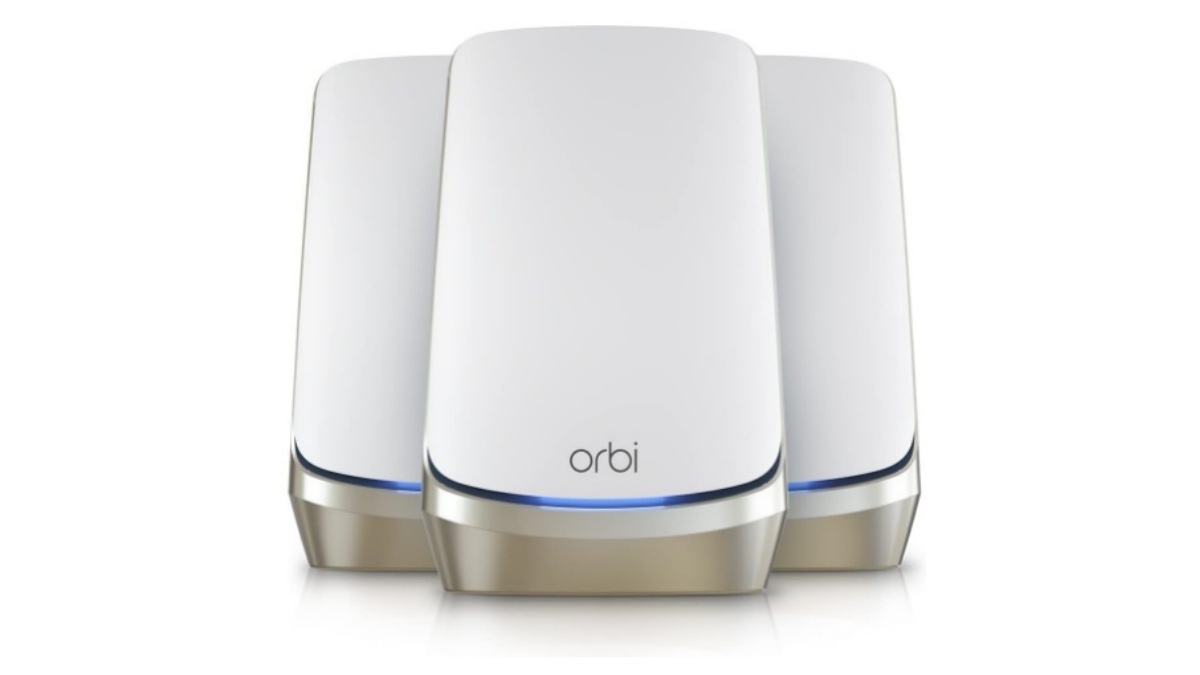
With the emerging of wifi 7 products, previous generations of wifi 6/6e products are still worth of considering, they still can perform well for most home sized and most applications available today.

In this article:

Netgear Orbi rbk763, RBK753, AND Deco xe75 were introduced to aim at the mid-range network segment. But what distinguishes the Orbi rbk763 from the previous Orbi rbk753 model, and how does it compare in value to the new Deco xe75?

Orbi Rbk760

Offering a range of products with different specifications, features and price points is essential for vendors to provide customers with more options that meet their specific business needs. Netgear was one of the first to release wifi 6 routers, starting with the Orbi rbk850 and followed by the Orbi rbk750. For the wifi 6e application, Netgear introduced the top-of-the-line Orbi rbke960. And for the wifi 7 application, it offers Orbi 970 series.

Netgear Orbi RBK763

To cover all network segments, Netgear added the Orbi rbk760 series with ax5400 network segment, which had previously been overlooked by Netgear and was being filled by other vendors, like Tplink and Asus.

Orbi Rbk760 vs rbk750 vs rbk850

With the release of orbi rbk760, what is missing from the orbi rbk850 and what is missing from the orbi rbk750 added to this Orbi rbk760, we’ll take a look at the spec differences between these three orbi series.

Typically Orbi rbk760 is sold in 3-pack (aka orbi rbk763), Orbi rbk750 is sold in 2 or 3-pack (orbi rbk752, rbk753), while Orbi rbk850 is sold in 2 or 3-pack (Orbi rbk852 or rbk853). Many people are more familiar with the label name of two or three pack kits instead of the original series of orbi series. Table 1 below shows you spec comparison between the three orbi series in 3-pack kits.

Network segment

The main difference between these Orbi series is the network segment at which they operate. The table in the following section displays the WiFi technology rows and signal rates for each model. All three models use a dedicated backhaul at 5 GHz and 2,400 Mbps. Most Orbi series use a dedicated backhaul link at the 5 GHz band with the option for wired Ethernet backhaul.

Ethernet ports

Each Orbi series distinguishes between the router node and the satellite nodes. The router node includes a WAN port that connects directly to the modem, and typically has more LAN ports than the satellite units. This is useful when configuring optional wired backhaul. With more Ethernet ports on the router unit, a star-wired backhaul topology can be used instead of a daisy chain topology without requiring an additional unmanaged switch.

When the requirement of multi-gig internet service exists, the only orbi series that is ready with this is rbk852, the other two orbi series support limited up to 1.0gbps internet plan.

So makes sure that your internet requirement is not multi-gig when you select either orbi rbk763 or rbk753.

Please notice that the latest wifi 6 Orbi series of Orbi Rbk860 and Orbi Rbk960 come with multi-gig 10Gbps for WAN connection. This will assure that these two Orbi series support the next generation of multi-gig DOCSIS 4.0 technology.    

Processors

Other difference is about the processor embedded on the board. Both orbi rbk850 and rbk750 are embedded with powerful quad core processor. On the other hand the orbi rbk760 is only embedded with a dual core processor; however you can see that it comes with big flash memory capacity as opposed to the other two series.

Table 1 Orbi Rbk763 vs Rbk753 vs Rbk853

Orbi ModelsOrbi Rbk763Orbi Rbk753Orbi Rbk853
Wifi technologyTri-band ax5400Tri-band ax4200Tri-band ax6000
Signal rate @2.4Ghz600Mbps600Mbps1,200Mbps
Signal @5Ghz2,400Mbps 2,400Mbps as backhaul1,200Mbps 2,400Mbps as backhaul2,400Mbps 2,400Mbps as backhaul
WAN Port router1 Gbps1 Gbps2.5Gbps
LAN PortsRouter: 3x 1.0 Gbps Satellite: 2x 1.0Gbps Router: 3x 1.0 Gbps Satellite: 2x 1.0Gbps Router: 4x 1.0 Gbps Satellite: 4x 1.0Gbps 
ProcessorPowerful Dual-Core 1Ghz CPU 4GB eMMC NAND Flash and 1GB RAMPowerful Quad-Core 1.4GHz CPU with 512MB NAND Flash and 1GB RAMPowerful Quad-Core 2.2GHz processor
MSRP  $549.99 (3-pack)$599.99 (3-pack)$999.99 (3-pack)

And see that the msrp for rbk763 is lower than the other two orbi series. Today you may find the prices on some online retail shops are dropped, in some events you can get best deals from the online shops like Amazon.

Now, let’s see how this Orbi rbk763 is competing with more recent wifi 6e technology offered by TP-Link, Deco XE75.

Orbi rbk763 vs Deco xe75

The latest iteration of WiFi 6, has been improved to include an additional 6 GHz radio band alongside the existing 2.4 GHz and 5 GHz bands, resulting in what is now known as WiFi 6E. Netgear has released its first Orbi RBKE963 mesh WiFi 6E series as part of its Orbi lineup, as well as the Netgear RAXE500 WiFi 6E router. On the other hand, TP-Link has introduced a new line of Deco products based on WiFi 6E, with the affordable Deco XE75 being one of them. If you’re trying to decide which one to choose between the Orbi RBK763 and the TP-Link Deco XE75 Pro to meet your needs, you can refer to Table 2 below. The Deco XE75 Pro includes a multi-gig WAN port, unlike the non-Pro series, which only has a 1.0 Gbps WAN port.

Deco XE75 Pro

Wifi

These two products offer the same total aggregated bandwidth and share a three-band design. However, they differ in the number of radio bands they use. The orbi rbk763 utilizes one 2.4GHz and two 5GHz bands, whereas the deco xe75 pro employs three different radio bands, including an additional 6GHz radio band.

By default, the deco xe75’s 6GHz band is designated as a dedicated backhaul. However, if you have other 6GHz-enabled devices, you may need to alter the default backhaul setting to allow for shared network use.

Therefore, the tplink deco xe75 pro offers added value for customers seeking a medium network segment product.

Internet need

If you have an internet plan that’s up to 800Mbps or 1.0Gbps, the Orbi rbk763 with its 1.0Gbps WAN port would suffice. However, if you require multi-gig internet speeds of up to 2Gbps, the deco xe75 pro with its multi-gig WAN port is the better choice. It’s important to assess your business internet requirements before deciding on a router.

The tplink deco xe75 pro offers flexible options that cater to various internet needs, including the added preference for wifi 6e with its 6GHz radio band. If you’re concerned about the availability of compliant adapters that support the 6GHz band, you’ll be glad to know that there are now several wifi 6e adapters that you can connect to the deco xe75 and other mesh wifi 6e products.

Spec comparison table Orbi vs Deco

Table 2 Orbi Rbk763 vs Deco xe75 Pro

Mesh wifi modelOrbi Rbk763 (3-pack)Deco XE75 Pro (3-pack)
Wifi technologySimultaneous tri-band ax5400Simultaneous tri-band axe5400 wifi 6e with AI driven mesh
Signal rates600Mbps @2.4Ghz 2×2; 2,400Mbps @5GHz band 1 2×2; 2,400Mbps @5GHz band 2 2×2;574Mbps @ 2.4GHz; 2×2;   2402 Mbps @ 5GHz; 2×2;   2402 Mbps @ 6 GHz 2×2;
Antennas6x high performance internal antennas with high-powered amplifiers4x High-Gain Internal Antennas
BackhaulDedicated backhaul @2,400Mbps @5GHz and optional wired backhaulDefault is dedicated backhaul @6GHz  and optional wired Ethernet backhaul
Coverage7,500 Sq ft7,500 sq ft
Ethernet PortsRouter Ports : – One (1) 1 Gbps WAN port Three (3) 1 Gbps LAN ports Satellite Ports (each) : Two (2) 1 Gbps LAN ports1x 2.5Gbps WAN port 2x Gigabit Ethernet Ports LAN auto sensing
USB PortN/AN/A
ProcessorPowerful Dual-Core 1Ghz processor 4GB eMMC NAND Flash and 1GB RAM1.7 GHz Quad core CPU
Security ProtectionNetgear armor servicesHome Shield Pro services
Dimension8.3 in x 6.6 in x 2.5 in each / weight 1.6lb each4.1 in x 4.1 in x 6.7 in (105 x 105 x 169 mm)
Price (Apr 2023 in Amazon)$549.99$599.99

Orbi rbk763 is tagged with lower price than deco xe75 pro, not too much different price actually. Now you judge which one is suitable to meet your business, rbk763 with lower price or deco xe75 pro that supports multi-gig internet. Click the product’s link below to read more details and get best deals in Amazon (#ads).

Related products

 With the emerging of wifi 7 routers on the market today, should like to taste the next generation of wifi 7 technology, you may like to see Deco BE85 or Asus BT10.

Orbi Rbke963 vs Linksys 6e vs Deco Which One is Worth Buying

The only Orbi series based on wifi 6e introduced by netgear is the top notch orbi rbke960 series which mostly sold at the market with orbi rbke963 (3-pack) kit.

In this article:

Orbi 960 Series

Netgear doesn’t introduce couple of orbi series based on wifi 6e like other vendors including tplink or asus. You can find tplink introduced few models of deco wifi 6e products including popular deco xe75 pro axe5400 and deco xe200 axe11000. Asus introduces two models of mesh wifi 6e products, asus zenwifi et12 axe11000 as the ultimate wifi 6e product and the middle one is asus zenwifi et8 axe8400. 

Orbi RBKE963

Wifi 6e is the enhancement of standard wifi 6 technology with the introduction of 6ghz radio band in addition of common 2.4ghz and 5ghz ones. This 6ghz band is clean and fast lane and will also be available on the next generation of wifi 7 technology whihc is just around the corner.

Back to netgear orbi rbk963 we will discuss here.

If the Orbi rbk852 still doesn’t give you enough bandwidth to drive all bandwidth-intensive applications, streaming 4k or 8k video, online gaming with high density connected devices, you may consider the ultimate Orbi rbke963. Below you can see comparison between orbi rbke963 and linksys atlas max 6e and also tp-link deco xe200.

Quad band Router

Netgear Orbi Rbke963 is the industry’s first quad radio bands mesh wifi 6e product available in the market today. Later, when new wifi 7 products available in the market you can find the ones with quad radio band including 6ghz band.  

Orbi rbk960 was released to answer the challenge of advanced wifi 6e technology which adds one @6ghz radio band in addition to existing one @2.4ghz radio band and two @5ghz radio bands so that wifi 6e provides three distinct radio bands. Orbi rbk963 is Orbi kit which consists of one orbi rbr960 router plus two orbi rbs960 satellites.

6GHz for connected devices

Most mesh wifi 6e products add one @6GHz radio band in addition to 2.4GHz and 5GHz ones, making this 6GHz band a dedicated backhaul link or sharing with compatible wifi 6e compliant connected devices. Orbi does not use this 6GHz band as a dedicated backhaul link, however it adds another @5GHz radio band as a dedicated backhaul link so that the 6GHz radio band is used for wifi 6e compatible devices.

You can compare it with Linksys Atlas Max 6e, deco xe200 and Asus ET12 which design its 6ghz radio band as dedicated backhaul or shared with other wifi 6e devices.

Orbi doesn’t use 6ghz band as dedicated backhaul is a good thing so you can connect all compliant 6ghz-based devices to this available fast lane band dedicatedly. Currently there are few models of wifi 6e pci-e adapters available in the market such as the OKN ax5400 and Fenvi ax5400. Should you prefer USB model, you can find TP-Link Archer TXE50UH or Netgear A8000.

Router Node and Satellite Node

In contrast to other mesh wifi product models that can be exchanged between router and satellite nodes, Orbi always distinguishes which one is the mesh wifi router and which one is a satellite node. On Orbi rbke963, the difference is physically apparent where the router node comes with 10Gbps multi-gig WAN port in addition to the 2.5Gbps port and 3x other Gigabit LAN ports. On the other hand, the satellite node doesn’t come with 10Gbps WAN port.

To get a deeper insight about this ultimate Orbi series, I’ll get two other wifi 6e products to compare technically: tplink deco xe200 and Linksys Atlas Max 6e.

Orbi rbke963 vs Linksys Atlas Max 6e vs Deco xe200

The ultimate wifi 6e product offered by Linksys so far is linksys atlas max 6e, and the one offered by tplink is deco xe200. Both series are mesh wifi 6e products have been around in the market up to early 2023. Few models of deco wifi 7 series have been showcased in its website.

Linksys Atlas Max 6e

You can refer to table 1 below to show you spec comparison between Orbi rbke963 and Linksys Atlas max 6e, and table 2 does between orbi and deco.

Wifi Segment

It has been discussed briefly above that Orbi uses 4 radio bands and one @5ghz radio band @4800 is used as a dedicated backhaul, so that three other radio bands with total aggregated bandwidth of up to 6,000 Mbps (1,200 + 2,400 + 2,400) are specifically for compliant connected devices.

Unlike Orbi, Linksys atlas max 6e uses dynamic backhaul method; the system will allocate how much bandwidth for backhaul when communication between nodes is needed. The wider bandwidth used for connected devices the greater the bandwidth for link communication between nodes. In general, for backhaul link that shares bandwidth with connected devices, no more than half the maximum bandwidth is used for backhaul link. If Linksys uses dynamic backhaul involving all three radio bands, the maximum bandwidth for backhaul is 4,200mbps while the total bandwidth for clients is also the same (4200Mbps).

Deco XE200

Deco xe200 uses dedicated backhaul @6ghz by default. You can enable this band as network share if you have few 6ghz devices to connect.

Wired backhaul

Besides wifi backhaul, Orbi, deco and Atlas series provide wired backhaul option for connecting between nodes using cat5e or cat6 utp cable. All products have more than two Ethernet ports allowing you to use either star topology or daisy chain wired backhaul topology depending on which one suits your needs.

If the placement of two satellite nodes in series, naturally the daisy chain topology is applicable. If the two satellite nodes are on the left and right side of your mesh router, the star topology is more suitable.

The wired backhaul option is certainly more profitable if running the network cable is not too difficult to do. However, if you have to drill holes in the walls between rooms is a problem, or running network cable through the ceiling is troublesome, it’s a good idea to find the right location for each satellite nodes to use wifi backhaul.

Ethernet ports

Both orbi and deco axe11000 come with multi-gig 10gbps wan port, but linksys doesn’t. linksys atlas max 6e is equipped with 5gbps wan port, half of orbi and deco.

So why 10gbps wan port, is there internet provider ready with 10gbps internet speed for home’s consumers? Yes, if you are in San Francisco, you can advice Sonic fiber optic. However, I believe that the 10gbps internet speed is to welcome the next generation of docsis 4.0 cable lab technology. Currently the available docsis 3.1 cable modem products with 2.5gbps have been offered by few vendors including arris s33, netgear cm2000 or Motorola mb8611. Check here comparison Arris S33 vs CM2000.

LAN Ports

Orbi provides one 2.5Gbps LAN port for both router and satellite in addition to 3x 1.0 Gigabit LAN ports. If you choose wired backhaul then use this 2.5gbps port. However, if the number of satellite nodes is more than one, for example two or three nodes use a multi-gig switch and use star wired backhaul topology to get high speed wired backhaul up to 2.5gbps. You need to use an unmanaged multi-gig switch for example the tp-link TP-Link TL-SG105-M2 which is equipped with 5-port 2.5Gbps port.

Besides the technical hardware spec, orbi gives you separate four SSIDs for home standard network name for the three radio bands (2.4Ghz; 5Ghz and 6Ghz) like mesh wifi in general, special SSID for wifi 6e, special SSID for IoT devices, and the last one is guest network.   

For more details, take a look at the following spec comparison table between these two products, Orbi rbke963 vs Deco XE200.

Spec comparison table Orbi vs Linksys

Table 2 Orbi rbke963 vs Deco xe200

Wifi 6e modelOrbi Rbke963TP-Link Deco XE200
Wifi technologySimultaneous four band axe11000Tri-band axe11000 with 16 streams and AI-driven mesh technology
16 data Streams #YesYes
Signal rates1200 Mbps @2.4GHz 4×4  
2400 Mbps @5GHz 4×4;  
2400 Mbps @6GHz 4×4 ; 4800Mbps @ 5GHz 4×4 (backhaul)
1,148 Mbps @2.4GHz 4×4;
4,804 Mbps @5GHz 4×4;
4,804 Mbps @6GHz 8×8 (backhaul)
Antennas12x high-performance internal antennas with high-power amplifiers16x High-Gain Internal Antennas
Ethernet PortsRouter:
1x 10.0 Gbps WAN port;
1x 2.5 Gbps LAN port;
3x 1.0 Gbps LAN ports  
Satellite:
1x 2.5Gbps LAN
3x 1.0Gbps LAN ports 
1x 10.0Gbps WAN Port;
2x Gigabit LAN Ports
USB portsN/A N/A
Backhaul4800Mbps @5GHz dedicated backhaul and optional wired backhaulDedicated default @6GHz by default, or share network. Optional wired backhaul is also available.
ProcessorPowerful Quad-Core 2.2GHz processor 512MB NAND Flash and 1GB RAM2.2 GHz Quad-Core 64-bit Qualcomm CPU
with 2x 512MB DDR4 Memory
Coverage9000 sq ft (3-pack)6,500 sq ft / 2-pack
SecurityNetgear ArmorWPA2, WPA3, HomeShield
Works with Google assistant and AlexaYesYes
Dimension11 in x 7.5 in x 3.3 in (279.0 mm x 190.5 mm x 83.8 mm)5.12 in × 4.86 in × 9.49 in (130 mm × 123.5 mm × 241 mm)
Price$1,498.99 (3-pack)$799.99 (2-pack)
Price tags

So far, Orbi rbke963 is tagged with the most expensive price than Linksys max 6e and deco xe200. Prices are fluctuating over time, click the product’s link below to see current price, get best deal and read more details each the product in Amazon (#ads).

Related Products

Should you ready with the next generation of wifi 7 standards which has been around on the corner, you may like to consider Deco BE85 or Asus BT10, more bandwidth to cover your homes.

Or you may like compact all in one Cable modem router with latest wifi 7 standards, you may consider Arris G54, wireless 7 BE18000 router with built-in DOCSIS 3.1 cable modem.

TP-Link Deco XE200 vs Asus ET12 Which One is Better Value

Tp-link has recently launched its new high-end mesh wifi 6e product, the Deco XE200 AXE11000. This cutting-edge product boasts multi-gig internet speed, and arrives amidst a slew of premium offerings from other major vendors such as Netgear, Linksys, and Asus.

In This Article

TP-Link Deco XE200

Tplink’s Deco XE200 is the latest addition to its mesh wifi 6e product lineup, which already includes the Deco XE75 Pro and Deco XE5300 that have been on the market for some time. It appears that tplink is determined not to fall behind in offering top-of-the-line products based on the premium AXE11000 and enhanced wifi 6e technology.

Today, TP-Link has ventured into the realm of next-generation WiFi 7 technology, unveiling a select lineup of products. Among them are the Deco BE95 and Deco BE85 mesh WiFi 7 systems, as well as the Archer BE800 and Archer BE900 WiFi 7 routers.

TP-Link Deco XE200

Now, the question arises: should you opt for the fresh Deco BE85, offering an impressive aggregated bandwidth of up to BE24000, or perhaps consider the ultimate WiFi 6E solution, the TP-Link Deco XE200?

Deco XE200 vs. Deco BE85

In Table 1 below, we present a comprehensive spec comparison between the formidable TP-Link Deco XE200, representing the pinnacle of mesh WiFi 6E technology, and the next-generation Deco BE85, equipped with cutting-edge mesh WiFi 7 technology. One can’t help but notice that the primary distinction lies in the WiFi generation employed in each series. While WiFi 7 is not yet officially released, its promise shines through with double channel bandwidth akin to the Deco XE200, ensuring swifter speeds and support for multi-link operations. With multi-link operation support, the bandwidth connections can be aggregated, providing a broader bandwidth when connected to compliant WiFi 7 devices.

Another notable difference lies in the embedded Ethernet Ports. The new Deco BE85 comes furnished with two multi-Gig 10Gbps WAN ports and two 2.5Gbps LAN ports, expanding your connectivity options significantly.

XE200 vs BE85 Table

Table 1 Deco XE200 vs Deco BE85

Deco ProductsDeco XE200Deco BE85
Wifi SegmentSimultaneous Tri-band axe11000 with 16 streams and AI-mesh technologyTri-band Be22000 12 streams
Signal rates1,148 Mbps @2.4GHz 4×4; 4,804 Mbps @5GHz 4×4; 4,804 Mbps @6GHz 8×8 (backhaul)6 GHz: 11,520 Mbps (802.11be) 4×4
5 GHz: 8,640 Mbps (802.11be) 4×4
2.4 GHz: 1,376 Mbps (802.11be)4×4
Multi Link Operation SupportN/AYes
Backhaul linkDedicated default @6GHz by default, or share network. Optional wired backhaul is also available.Wired and wifi backhaul (backhaul aggregation)
Antennas16x High-Gain Internal Antennas8x High-Gain Internal Antennas
Ethernet Ports1x 10.0Gbps WAN Port; 2x Gigabit LAN Ports1x 10 Gbps 1x 10 Gbps SFP+/RJ45 Combo 2x 2.5Gbps LAN Ports
USB PortsN/A1x USB 3.0 Port
Security & QoSHomeShield,HomeShield QoS: QoS by Device
Channel Bandwidth160 MHz320 MHz
Dimension5.12 in × 4.86 in × 9.49 in (130 mm × 123.5 mm × 241 mm)5.04 in x 5.04 in x 9.29 in (128 mm x 128 mm x 236 mm)
Price$799.99 (2-pack) $999.99 / 2-pack

Click here to learn more details Deco BE85 on Amazon (#ads)

Now back to ourd discussion with TP-Link Deco XE200.

When compared to similar products that have been on the market for some time, such as the Netgear Orbi RBKE963 and Asus ZenWiFi ET12, tplink’s Deco XE200 is more affordable. In fact, it is offered at a more economical price point than both of these products, making it an attractive option for those who want to experience the benefits of wifi 6e technology without breaking the bank.

10G Multi-Gig Internet

What is the bandwidth of your internet services provided by your cable internet provider? Additionally, which cable modem are you currently using? As of now, the maximum speed for consumer Blast internet service does not exceed 2Gbps with the latest DOCSIS 3.1 cable modem technology. Moreover, the fastest consumer cable modem available in the market today features a DOCSIS 3.1 cable modem with a 2.5Gbps Ethernet port, such as the Arris Surfboard S33 and Netgear CM2000.

You may be wondering why the Deco XE200 product features a 10Gbps multi-Gig WAN port. Is it not too excessive for the available internet speed offered to consumers today? While this may be true for cable internet services, it is not the case for fiber optic internet services. Companies like Sonic currently offer multi-gig fiber optic internet services at an affordable price, making the 10Gbps multi-Gig WAN port a valuable feature for those who have access to such internet services.

Upcoming Docsis 4.0

The future of cable internet services technology lies in DOCSIS 4.0 cable networks, which can provide upstream speeds of up to 6Gbps and downstream internet speeds of up to 10Gbps. This hybrid fiber optic and coaxial network is the reason why premium router products available today are equipped with multi-gig WAN ports that will be compatible with this upcoming 10G internet technology.

This is why tplink Deco XE200 and Orbi RBK963 are both equipped with 10Gbps WAN ports, and also ultimate TP-Link Archer and Asus Axe16000 wifi 6e routers. Almost all the next generation of wifi 7 products introduced by TP-Link both Deco and Archer series are equipped with multi-gig 10Gbps WAN ports.

This ensures that these products are future-proofed and ready to take advantage of the higher internet speeds that will be available with DOCSIS 4.0 technology, and the next generation of wifi 7 technology that supports up to 10Gbps internet speed.  

Dedicated backhaul @6ghz band

Enhanced wifi 6e technology has introduced the 6GHz radio band as a new, clean and fast lane for backhaul links between nodes. This feature is enabled by default in the Deco XE200, with a dedicated backhaul that utilizes the 6GHz radio band. However, if you have devices that support the 6GHz radio band, you can configure the default settings to opt for the network mode and connect to the available 6GHz band.

To configure the settings for the Deco XE200, navigate to the “Wi-Fi Setting” section and click on “6 GHz.” From there, select “Wi-Fi network” under “Use 6 GHz Wi-fi for” to switch the default dedicated backhaul setting to share bandwidth with compatible 6GHz connected devices. While there are currently only a few models of PCIe Wi-Fi 6e adapters available in the market, USB models are not yet available.

Given the dominance of the Asus ZenWiFi ET12 and Netgear Orbi RBK963 in the market, it remains to be seen whether the Deco XE200 will be able to capture a significant share.

Deco xe200 vs Asus ET12 vs Orbi Rbk963

To compare the products, the most straightforward approach is to create a table that highlights the specifications and features of each device. Table 1 provides a specification comparison between the Deco XE200 and the Asus ZenWiFi ET12, while Table 2 compares the Deco XE200 to the Orbi RBK963.

Asus ET12

Wifi

All three products operate within the AXE11000 network segment, but each distributes radio bands in a different manner. The XE200 and ET12 are equipped with three radio bands and utilize the 6GHz band as a dedicated backhaul link for each node. However, the XE200 allows users to opt for the 6GHz band as a network mode, rather than a dedicated backhaul link.

The ET12, on the other hand, shares its 6GHz band as shared bandwidth for both backhaul links and compatible 6GHz-based connected devices. The Orbi RBKE963 is designed differently, as it does not use the 6GHz radio band as a dedicated band, instead using one of its available two 5GHz radio bands. With four bands available, the RBK963 can use its 6GHz radio band for compliant 6GHz connected clients.

There is no definitive answer to which type of backhaul is better in a mesh WiFi system, as it depends on various factors such as the number of nodes, distance between nodes, types of devices connected, and the layout of your home or office.

Dedicated or Share Wifi Backhaul

Dedicated backhaul can provide a more stable and reliable connection as it uses a separate radio band exclusively for the communication between nodes, which can minimize interference and latency. However, using a dedicated backhaul may limit the available bandwidth for connected devices, especially in a crowded environment with many devices.

Orbi RBKE963

On the other hand, sharing the WiFi backhaul can provide more available bandwidth for connected devices, but it may result in slower and less stable connections, especially if the nodes are far apart from each other.

Ultimately, the best approach depends on your specific needs and preferences. If you have many devices that require a stable and fast connection, a dedicated backhaul may be a better choice. If you have fewer devices and want to maximize available bandwidth, sharing the WiFi backhaul may work better.

Ethernet Ports

Ethernet ports are crucial for wireless routers in various situations, especially when a stable, high-speed network connection is necessary. For example, in small businesses that use network storage (NAS) to host essential business applications, a reliable and uninterrupted connection is crucial. Although this may seem too technical for the average user, it is common for IT departments that manage large corporate networks. Another example is when you need a reliable wired connection for your game console to ensure smooth, uninterrupted online gaming.

In the tables, the number of Ethernet ports and the WAN port can be found in the sixth row. Tplink Deco XE200 and Orbi RBK963 are equipped with 10G high-speed internet technology, ready for the upcoming DOCSIS 4.0 cable technology. You may connect the wan port to most popular arris s33 docsis 3.1 cable modem.

Orbi always distinguishes which node is a router unit and which ones are satellite nodes without the WAN port.

Network protection

It’s become commonplace for many individuals to overlook the security of their home internet network. Even in small and medium-sized office networks, security is often low on the priority list until a security breach occurs.

Both the Deco XE200 and Orbi RBK963 offer network security services that require annual subscription. In contrast, the Asus ZenWiFi ET12 includes the free, lifetime Asus AiProtection Pro, powered by Trend Micro.

Asus AiPortection Pro

Asus AiProtection Pro is a network security software that comes pre-installed on select Asus routers, including the ZenWiFi ET12. It is powered by Trend Micro, a well-known cybersecurity company, and provides advanced security features such as malicious site blocking, intrusion prevention, and advanced parental controls. AiProtection Pro uses machine learning algorithms to identify and block security threats in real-time, providing users with comprehensive protection against malware, viruses, and other online threats. Additionally, AiProtection Pro also provides network security reports and alerts, making it easier for users to monitor and manage their network security.

TP-Link HomeShield and Netgear Armor are both network security services offered by their respective companies, but not free services like Asus.

TP-Link HomeShield is a subscription-based service that provides a suite of security features to protect your network and connected devices. These features include antivirus and malware protection, intrusion prevention, parental controls, and a built-in VPN for secure remote access. HomeShield also offers real-time monitoring and alerts, as well as the ability to block specific websites or apps.

Netgear Armor, on the other hand, is a security service powered by Bitdefender that provides similar security features as HomeShield. Armor includes antivirus and malware protection, parental controls, and vulnerability assessment for connected devices. Armor also offers real-time alerts and protection against known and unknown threats. Like HomeShield, Armor is a subscription-based service that can be added to select Netgear routers.

The purpose of all these network protections is to ensure that every device connected to the network, including mobile devices, laptops, tablets, and Smartphone, are safeguarded against any potential internet threats.

Deco xe200 vs et12 comparison table

Below shows you spec comparison tables between Deco xe200 vs Asus ET12 and Deco xe200 vs Orbi 960 series.

Table 1 TP-link Deco XE200 vs Asus Zenwifi ET12

Wifi 6e modelTPlink Deco XE200Asus Zenwifi ET12
Wifi technologySimultaneous Tri-band axe11000 with 16 streams and AI-mesh technologySimultaneous tri-band axe11000 with 12 streams support AiMesh router or Aimesh node
Signal rates1,148 Mbps @2.4GHz 4×4; 4,804 Mbps @5GHz 4×4; 4,804 Mbps @6GHz 8×8 (backhaul)1,148 Mbps @2.4GHz 4×4; 4,804 Mbps @5GHz 4×4; 4,804 Mbps @6GHz 4×4 (backhaul)
Antennas16x High-Gain Internal Antennas10x internal antennas
Processor2.2 GHz Quad-Core 64-bit Qualcomm CPU with 2x 512MB DDR4 Memory2.0GHz Quad Core 64-bit Processor 256 MB Flash + 1.0 GB RAM
Ethernet Ports1x 10.0Gbps WAN Port; 2x Gigabit LAN Ports1x 2.5 Gbps WAN 1x 2.5 Gbps LAN 2x 1.0 Gbps LAN
BackhaulDedicated default @6GHz by default, or share network. Optional wired backhaul is also available.Dedicated backhaul @6GHz and optional wired Ethernet backhaul
Coverage6,500 sq ft / 2-pack6,000 Sq ft / 2-pack
SecurityWPA2, WPA3, HomeShieldWPA2; WPA3-personal Guest network 9 rules RADIUS server Free Aiprotection pro  
Works with Alexa and Ok GoogleYesYes
Dimension5.12 in × 4.86 in × 9.49 in (130 mm × 123.5 mm × 241 mm)4.5 in x 4.5 in x 9.4 in (115 mm x 115 mm x 241 mm)
Weight‎4.08 pounds3.3 lb (1,500 g)
Price (Nov 2022 in Amazon)$799.99 (2-pack)$899.99 (2-pack)
Deco xe200 vs Orbi table

In Table 2 below, you can find a comparison of the specifications between Deco xe200 and Orbi rbk963. Unlike Asus, neither of these products offer free network protection. Additionally, while Orbi is more expensive, it comes with more Ethernet ports compared to Deco xe200.

Table 2 TPlink Deco XE200 vs Orbi Rbk963

Wifi 6e modelTPlink Deco XE200Netgear Orbi Rbke963
Wifi technologySimultaneous Tri-band axe11000 with 16 streams and AI-mesh technologySimultaneous four-band axe11000 with 16 streams
Signal rates1,148 Mbps @2.4GHz 4×4; 4,804 Mbps @5GHz 4×4; 4,804 Mbps @6GHz 8×8 (backhaul)1200 Mbps @2.4GHz 4×4   2400 Mbps @5GHz 4×4;  2400 Mbps @6GHz 4×4 ;   4800Mbps @ 5GHz 4×4 (backhaul)
Antennas16x High-Gain Internal Antennas12x high-performance internal antennas with high-power amplifiers
Processor2.2 GHz Quad-Core 64-bit Qualcomm CPU with 2x 512MB DDR4 MemoryPowerful Quad-Core 2.2GHz processor 512MB NAND Flash and 1GB RAM
Ethernet Ports1x 10.0Gbps WAN Port; 2x Gigabit LAN PortsRouter:   1x 10.0 Gbps WAN port;   1x 2.5 Gbps LAN port;   3x 1.0 Gbps LAN ports       Satellite:  1x 2.5Gbps LAN  3x 1.0Gbps LAN ports 
BackhaulDedicated default @6GHz by default, or share network. Optional wired backhaul is also available.4800Mbps @5GHz dedicated backhaul and optional wired backhaul
Coverage6,500 sq ft / 2-pack6,000 sq ft / 2-pack
SecurityWPA2, WPA3, HomeShieldWPA2; WPA3 Guest network Netgear armor plan
Works with Alexa and Ok GoogleYesYes
Dimension5.12 in × 4.86 in × 9.49 in (130 mm × 123.5 mm × 241 mm)11 in x 7.5 in x 3.3 in (279.0 mm x 190.5 mm x 83.8 mm)
Weight‎4.08 pounds3.0lb (1,360 g)
Price (Nov 2022 in Amazon)$799.99 (2-pack)$1,499.99 (3-pack)

What Next

Now that you have a better understanding of each of the three products, it’s time to explore further. The Deco XE200 and Orbi RBK963 are both equipped with the latest 10G internet technology, whereas the Asus ZenWifi ET12 comes with the added benefit of free lifetime Asus AiProtection Pro.

To learn more about each product and find the best deals on Amazon, click on the links provided below (#ads).

Related products

Many people prefer simple compact all in one cable modem combo, you may consider new released of Arris G54 BE18000, a wifi 7 router with built-in DOCSIS 3.1 cable modem.

Exit mobile version